This newspaper's reporter cai zhou zheng
On 9 february, the jiangsu province two-way programme of action for the empowerment of artificial intelligence and intellectual property (2026-2030) (hereinafter referred to as the programme of action) was officially launched as the country's first special programme on the two-way empowerment of artificial intelligence and intellectual property. The programme of action, with 23 specific initiatives in 7 areas, promotes innovation protection in the artificial intelligence industry, efficiency of intellectual property services, synergies between artificial intelligence and intellectual property rights, and provides a strong incentive for jiangsu to seize high points in the artificial intelligence industry. On that day, the jiangsu centre for intellectual property and intellectual innovation was simultaneously unveiled。
Academia protection: building a “right moat” for ai innovation
“as a technology-intensive industry, the artificial intelligence industry has a distinct feature of a rapid and dynamic accumulation of innovation, and there is a strong demand for intellectual property protection and empowerment.” li jie, director-general of intellectual property rights, jiangsu province, described the action programme as a five-dimensional installation of a “know-how safety valve” for the development of the artificial intelligence industry, focusing on elemental security, patent layout, outcome transformation, branding and abuse protection。
Building innovation barriers through patent layout is a core initiative. The programme of action clearly sets out a hard target of “no less than 20 per cent increase in patents for effective inventions in the area of artificial intelligence”, which coincides with a series of practical initiatives: support for the formation of innovative coalitions between enterprises and institutions of higher learning, the creation of high-value patent incubators on forward tracks such as mega-focused models, smarts, human-shaped robots, etc.; continuous publication of industrial intellectual property analysis and key technology patent navigation reports, which provide precise guidelines for innovation subjects; and improved access to fast-track access to power and overseas distribution channels to assist firms in global competition。
This setup is well ahead of schedule. In april 2025, the centre for intellectual property protection of jiangsu province published the white paper on patents for artificial intelligence in jiangsu province, which provides a comprehensive analysis of the global, chinese and jiangsu patenting situation in the artificial intelligence industry, in particular, an in-depth analysis of patent holders, priority technologies, development directions, risk points in areas of intellectual intelligence, and provides a reference for optimizing industrial innovation ecology and the participation of innovation subjects in global competition in the relevant sectors. “in-depth knowledge of industry patent layouts and research and development priorities is the secret for winning the artificial intelligence front track. We will be guided by the programme of action in conducting patent analysis and patent navigation in a timely and sustained manner.” according to wang ali, director of the centre for intellectual property protection in jiangsu province。
Elementary safeguards are equally essential. The programme of action proposes to improve the rules and compliance guidelines for data protection in the area of artificial intelligence. Of concern are new business practices in new areas such as open-source community building, training in artificial intelligence data, and artificial intelligence opc entrepreneurship. In response, the city of nanjing has launched a “first-testing cattle knife” and published the manual for the survival of intellectual property rights in the zhuang wu district, which provides a chain-wide intellectual property protection programme for start-up subjects such as “one-person companies” and allows ai entrepreneurs to play a light role。
Ai empowerment: getting the informed services out of "smart acceleration"
The sudden development of cutting-edge technology, which challenges intellectual property rights work in terms of data volume surges, complex business scenes, increased precision requirements, and the core capabilities of artificial intelligence analysis, knowledge mapping and full-time monitoring are becoming “gold keys” to solve these challenges。
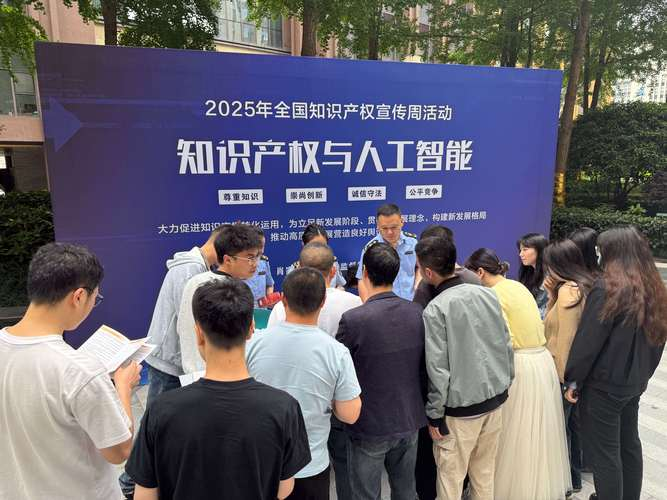
The programme of action focuses on the five main directions of artificial intelligence enabling the creation, application, protection, service and governance of intellectual property rights and promotes the intellectual transformation of the entire chain of intellectual property rights: the use of ai technology to achieve efficiency gains in the development of innovative intelligent navigation and patent applications review; the development of a system for matching technology supply and demand, patent value evaluation and enterprise innovation capacity assessment to allow for a faster transformation of innovation results; the development of a mechanism for the early warning of risk to infringe intelligence, network monitoring and overseas risk to make protection more efficient; the optimization of public services, legal services and talent development models to make services more accurate; and the building of a platform for government decision-making to support governance more scientific。
“in the past, it took 1 to 2 weeks for r & d personnel to develop appropriate technical programmes in response to a particular technical challenge. Today, the ai tool can become a `sympathetic expert' to accompany researchers and developers from definitional problems, to guide them step by step, and to export high-lying technologies in about two hours.” the head of the eureka r & d innovation of the ai agent platform is deeply touched, and current artificial intelligence has great advantages in terms of studying technological trends, capturing clues of abuse and matching supply and demand resources. As an ai-driven sti and ipr information service provider, smart buds are based on the "big model of smart budd vertical fields" and open-source large models. Since last april, more than 30 ai smarts have been developed, covering multiple scenarios such as new search for patents, anti-violation retrieval, r & d decision-making, and enabling more than 500,000 professional users。
Jiangsu's “assisted intelligence + intellectual property” practice is at the forefront of the country, and in december 2025 three projects were successfully selected for the national “assisted intelligence +” public service application list. Among them, the changzhou intellectual property authority's “commonly known” “twilight” smart body provides multilingual translation and early warning of infringement; the “intelligence matrix on intellectual property innovations in public service” at nanjing polytechnic university provides a perfect match between patent-results and scenes; and the “ai+ big data empowerment brand five-d panorama management” system of nanjing globe information technology ltd., which covers the full life-cycle monitoring of trademarks, innovations that are making intellectual property services more intelligent and efficient。
Ecoecology co-emergency: building a two-way enabling “innovation biosphere”
“the programme of action's construction of a two-way enabling system is a necessary requirement for the implementation of the deployment of national and provincial `artificial intelligence+' operations, as well as a key initiative based on jiangsu's practical and developmental bottlenecks.” according to lee jie, the core of policy lies in a landscape-driven, ecologically supported, deeper integration of artificial intelligence with intellectual property and mutual achievement。
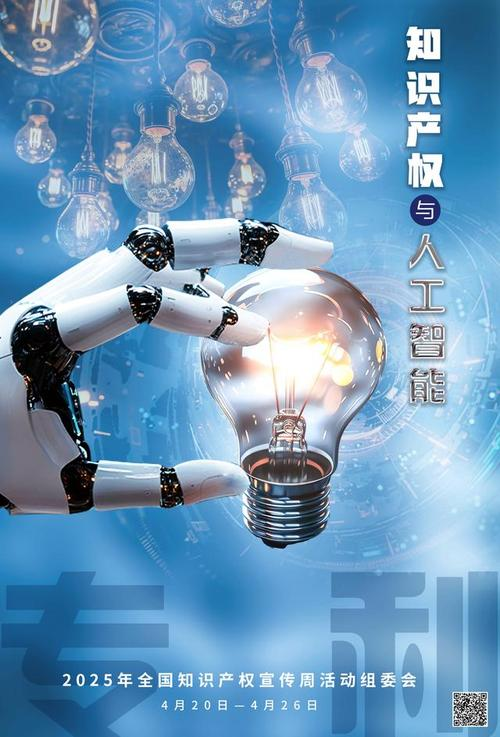
Building intellectual property rights (ipr) credible data spaces is the foundation of ecological construction. The programme of action makes it clear that it will integrate global cross-cutting intellectual property data and integrate external data across a wide range of domains, such as industrial operations, scientific and technological research and development, financial investment, market regulation and jurisprudence, with a view to achieving a secure and efficient integration of multidimensional data. At the same time, a full-cycle data security platform has been set up to clarify the supply, use, service, operation and regulation of the full chain of authority and responsibility, to create a clear, secure and manageable intellectual property data governance system that provides data support for two-way empowerment。
The platform and the setting up of the scene are also key. The province will build a good jiangsu intellectual property rights and intellectual innovation empowerment centre to address industrial development challenges using artificial intelligence technologies; create a “advanced intelligence+” priority project bank, publish a large intellectual property model and application development disclosure mission; and create an “intellectual property intellectual applications shop” to select and publish typical cases and create a typical “advisory intelligence+intellectual rights” application scene with market pull。
Human resources and service security are ecologically sustainable drip irrigation. The province will expand the national intellectual property protection centre in the area of patenting the artificial intelligence industry and create specialized pre-trial teams; foster high-end service providers to develop service teams with a professional background in artificial intelligence technology and intellectual property; and support institutions of higher education in the development of a cross-section of artificial intelligence and intellectual property to develop complex talent for two-way endowments。
From the precision of the development of artificial intelligence industries to the efficiency of intellectual property intelligence services to the synergy of innovative ecology, jiangsu will focus on breaking the pits of artificial intelligence industry innovation and cognitive services with the emergence of 23 hard-core initiatives to provide a replicable “kangsu experience” for the country to explore a two-way enabling path。