Reason one: global warming makes the atmosphere more unstable and prone to unusual weather。
Two concepts need to be mentioned if they are to be interpreted in terms of atmospheric physics. One is the polar vortex, the other is the high-altitude current。
The polar vortex is a continuous and large-scale cold cyclone, located in the upper troposphere and in the middle of the stratosphere. The geomagnetics of the north and south poles of the earth will block the cooling air from the universe outside the earth, while at the same time creating a polar vortex over the north and south poles. According to toyo, while the polar vortex, which had always existed at both poles, was relatively stable and large, global warming was followed by a dynamic shift from pre-existing stability, with the possibility of a small vortex, with the small vortex generated by the arctic polar vortex moving southwards, resulting in an area being “frozen”。
High-altitude currents are the strong and narrow high-speed air-flow belts that lead east and west towards the earth and are present at the top of the troposphere and in the stratosphere. High-altitude flash currents are driven by temperature differences between the arctic and mid-latitudes, from west to east, and the faster the temperature differentials, the more straighter the flow path, the slower the temperature differentials, and the more wave-shaped the route. If the arctic warms, the temperature differentials between the arctic and mid-latitudes are reduced, the waves of high-altitude flashes are increased, and regions with both ends of amplitude are prone to extreme weather. According to toyo, changes in polar vortex and high-altitude flash currents point to greater atmospheric instability, which has been broken by the relative stability and regularity that existed in a given region, leading to irregular seasonal weather。
Reason two: super el niño disturbance, increasing extreme weather。
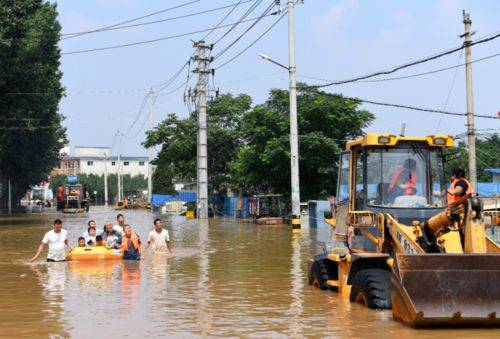
The year 2015 was marked by the historically remarkable super-el niño, an abnormally warm ocean in much of the pacific in the equatorial middle east and a sustained el niño phenomenon. Yutsu said that super el niño had led to a high frequency of extreme weather during the current round, especially heavy rains and floods concentrated in north and south america at the end of last year. The ocean and the atmosphere are interacting and super el niño will increase the occurrence of extreme weather in the future。