To understand the unique ability of china's electricity grid to cope with extreme weather events, the most intuitive approach is not to take a broad view of the “high capital investment”. These vague conclusions are compared with a few contrast samples that have experienced similar intensity extreme weather events, economic volumes and proximity levels of electricity demand。
The three subjects i have chosen are india, which experienced extreme temperatures of 50°c in 2026, texas, which experienced extreme snowfall in 2021, and the european union, which has been hit by heat waves in recent years。
Their common premise with china is that the extreme weather intensity experienced in the last decade is fully equal, and even the impact of local extreme events is even smaller, but the final guarantee results and china’s extreme contrast, contrasting the core difference variables, can well explain the sources of resilience of china’s electricity grid。
Three cross-reference samples, full dimensions under the same disaster
The experience of these three samples, which we have all experienced in the past decade or so: the 2008 southern ice catastrophe, the extreme heat of kawasu in 2022, the intense typhoon that landed on the south-east coast, and the intensity of extreme weather is not even lower, but the final results vary from day to day。
Three core variance variables are the real source of resilience of the electricity grid in china
By contrast, these three core issues, which have not been resolved by the reference sample, are precisely the core capabilities of the chinese electricity grid, which has been in place for more than a decade, and none of which is “naturally formed”:
The first difference is the pre-engineered global hardware disaster prevention re-engineering, rather than the spoiled re-engineering。
In response to three typical extreme weather types, icy, high temperatures and typhoons, the domestic electricity grid has completed the technological phase of the whole scene: the constant melting of ice technology has completely broken the tension between the traditional melting ice and the need for power outages, a direct drop of more than 90 per cent in the rate of thunderline jumps, an average recovery of grid failure under a typhoon is 80 per cent longer than in traditional patterns, and the average time of power outages in the affected regions is more than 70 per cent lower than before modification。
This regularization of upgrading inputs is chronically lacking in electricity grid systems in india, texas and the eu。
The second difference is the global unique national unified cross-regional distribution network。
China currently has a trans-regional power capacity of 370 million kilowatts across provinces. By 2026, 45 ultra-high-voltage transmission channels had been delivered. By 2025, the largest physical transmission of electricity across the trans-regional route reached 151 million kilowatts, an increase of 9 million kilowatts over the peak of 2024, and even a direct cross-regional transmission of 2 billion kilowatts from the southern region。
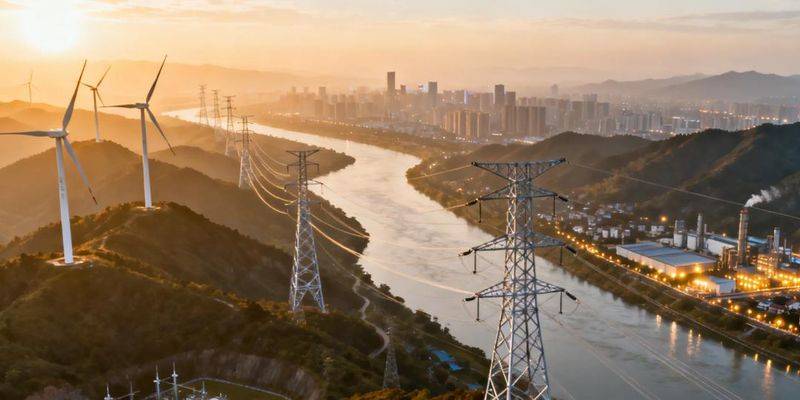
This massive power interconnection of thousands of kilometres of dimensions is beyond the reach of any other country or region in the world: texas has voluntarily abandoned cross-regional connectivity, and even 7. 2 per cent of trans-national power transmissions in 27 eu countries have pushed forward for more than a decade without meeting the standards, and it is simply impossible to create such a nation-wide control capability。
The third difference is a chain-wide network of reservoirs and co-deposit mechanisms. By the end of april 2026, coal storage at the national integrated power plant had stabilized at around 200 million tons for more than 30 days, new energy + new energy reserves had exceeded 100 million kilowatts of total capacity to regulate their energy, and large models of power grids in the south could predict extremely high-temperature load fluctuations 14 days in advance, with a forecast accuracy rate exceeding 98 per cent。
At the same time, the national demand side response capacity has reached 3 to 5 per cent of the local maximum power load, and the adjustable capacity for access to the shenzhen virtual power plant platform alone exceeds 1. 4 million kilowatts, which can be rapidly peaked at peak times with little awareness of the users, a complete system of regulation from the power side to the grid and then to the user side, which is completely out of shape in three control samples。
The boundaries of this pattern are not allowed to be rigid. Set
What needs to be stated is that this system of extreme weather response has clear pre-conditions and is not directly replicable by any country:
First, it is based on the integrated operation of the national grid. The eu is an independent and sovereign nation of 27, and it is not possible to hand over its sovereign right to move its electricity in a unified way across the country。
Second, china’s coal piping system, based on domestically owned and controlled coal production, is highly dependent on fossil energy imports, and it is impossible to achieve a coal reserve in power plants for more than 30 days. The final set of capabilities is also the result of years of succession, when we began to systematically push high pressure and anti-ice modification after the southern ice disaster in 2008, and not in a vacuum。
Previous articles on the united states foreign policy website have evaluated the systemic stability of china's electricity grid under extreme scenarios, which has created unique infrastructure competitiveness and significantly superior to the marketed electricity systems of the united states and europe。
In the past, many people thought that the “redundancy” of the grid for extreme scenarios was a waste of money, and that, in the immediate aftermath of the increasing frequency of extreme weather around the globe, the early destruction of circuits, high-pressure channels, and coal reserves were the real bottom of 1. 4 billion people who did not have to face a 10-hour single-day power outage。