I. What's an electric field
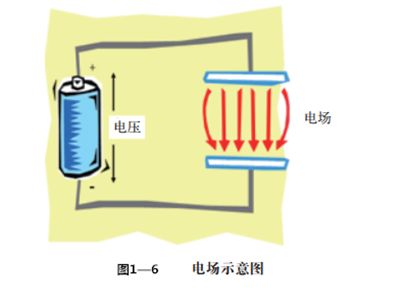
It is common to say that the presence of a voltage creates an electric field, and the greater the voltage, the larger the field (see figures 1-6)。
The strength of the field is the physical amount indicating the strength and direction of the field, expressed in pictures, in volts per metre (v/m)。
What's a magnetic field
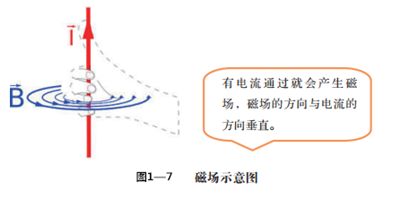
It is common to say that electricity flows through create magnetic fields, and the larger the currents, the stronger the magnetic fields are produced (see figures 1-7)。
Magnetic induction strength is the physical amount indicating the strength and direction of the magnetic field, expressed in pictures in tesla (t)。
What's an electromagnetic field
Modified fields produce magnetic fields, while altered fields generate electric fields. Changing electric fields and changing magnetic fields constitute a unified and indivisible field, namely, electromagnetic fields (see figures 1-8, 1-9)。
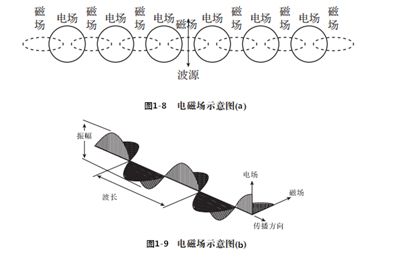
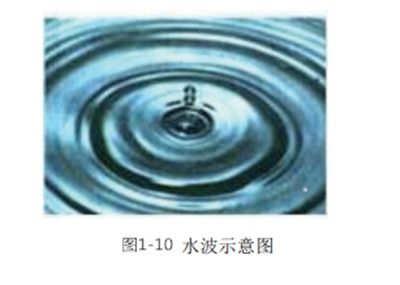
The electromagnetic field is transmitted in wave form to form electromagnetic waves. The electromagnetic waves can't be seen or touched, and we can imagine them as water waves. When we throw a piece of rock into the river, the water surface forms a wave of water that flows around the river, centred on it (see figure 1-10). Because air and objects absorb and reflect electromagnetic waves, electromagnetic waves can only spread to a limited extent in space。
What's electromagnetic radiation
We know that changing electric and magnetic fields form an electromagnetic wave to space. In professional terms, electromagnetic radiation generally refers to an electromagnetic wave with a frequency of 3 khz ~ 300 ghz, which is an energy stream created by the interaction of a changing electric field and a changing magnetic field. The transmission of signals, such as radio, television and communications, uses the properties of electromagnetic radiation。
It is noted in the national label `electromagnetic compatibility in electrical terminology' (gbt 4365-2003): `electromagnetic induction may be included in electromagnetic radiation'. The concept of electromagnetic radiation in environmental protection therefore includes both radiation and sensory aspects。
V. What's the frequency and wavelength of electromagnetic waves
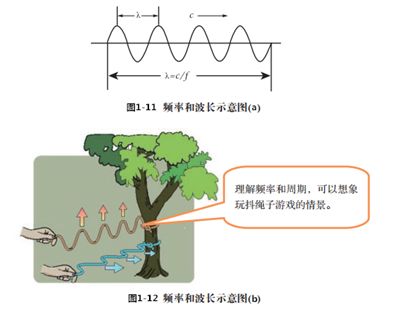
The frequency in which the substance completes cyclical changes in one second is known as frequency, commonly expressed as f, in hz. Wavelengths are usually defined as the distance between two waves or valleys adjacent to each other, commonly expressed in millimetres (m) (see figures 1-11, 1-12)。
What's an electromagnetic spectrum
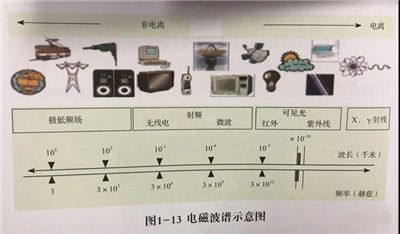
The various electromagnetic waves are arranged according to the frequency (or wavelength) of the electromagnetic waves and are called the electromagnetic spectrum (see figures 1-13)。
The spectrum can be divided into gamma rays, x-rays, ultraviolet, visible light, infrared, radio waves, industrial frequency electromagnetic fields, etc. By frequency range from high to low. Although both gamma and x-ray are essentially electromagnetic waves with very short wavelengths, they are in the category of ionizing radiation。
Vii. What is power density
Power density is the electromagnetic wave power in the area of amplitude vertically in the direction of transmission, expressed in s and in w/m2 (w/m2). Radio waves with frequencies above 30 mhz are generally evaluated by their power density in the environment。
Power density is an important indicator of the radiation intensity of high-frequency electromagnetic fields。