Have you ever thought about the fact that a powerful magnet of the size of a nail cap, attached to a burglary door for seconds, opens the door silently — no scratches, no sound, no alarms, faster than opening the door with a key。
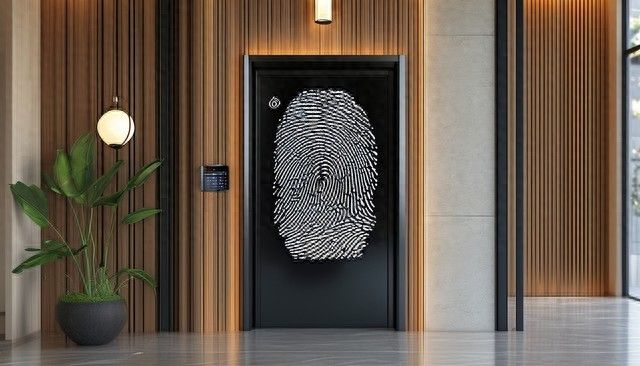
It's not a movie bridge, it's not a alarm. As of april 2026, security alerts had been issued continuously by the national multi-district police, informing of multiple cases of “magnet lock-in” burglaries. A quarterly check by the general directorate of market supervision shows that 38. 5 per cent of household locks are inadequate for strong magnetic attacks。
Particular attention is drawn to the fact that the new national standard " technical requirements for security of locks " , which was introduced on 1 march of this year, part 2: security of locks (gb 21556. 2-2025), has included strong magnetic attacks as a mandatory security indicator. In short, locks that do not meet the anti-magnetic criteria are already unqualified。
Many felt that “my home is a safe door, locks are cheap and cannot be opened so easily”. But the truth is that thieves don't use their locks, they don't have to break code fingerprints, they use magnets to inhale their internal iron parts through the door and bypass all protections。
Today, the principle of locking the magnet, which are the most dangerous, the one-minute self-checking method, the change of locks are standard and one-off. After reading, you can check and correct yourself and secure the first security line in your home。
I. Why would a magnet open the door? The principle is so simple
Get to the core: the thief does not use a regular refrigerator paste, it's a strong magnet of cylindrical beryllium (the rare earth magnet), which is small in size, is extremely magnetic, can be up to a hundred times the size of a normal magnet, and can snuff the iron in the locks with a few centimetres of doors or stitches。
The locks are divided into two scenarios, corresponding to different locks:
1. Old machine lock: suck back the tongue and open for 5 seconds
Old locked tongues (slant tongues, square tongues) are designed with pure iron or plain steel, without magnetic protection. The thief attached the magnet outside the door to his tongue position, and the magnet directly sucked the tongue back to the lock and opened the door as soon as he twisted his hand, for a full 5-10 seconds。
A more subtle technique: to shove a little disk into the door in advance, to close the door with a lock on it, and not be able to pop up completely, it's a "fake lock" -- you think it's closed, and the thief can get in。
2. Low-priced smart locks: interference with circuits, all password fingerprints disabled
Many people spend a lot of money putting smart locks, thinking "fingerprint + password" is absolutely safe. However, smart locks with low-priced impurities or without magnetic design, internal electromagnetic ionisers, drivers are iron and are free of magnetic shield layers。
Strong magnetic proximity directly interferes with internal circuits and mechanical structures, triggers the disassembly lock - the password, the fingerprints, the swipe card, and the lock opens directly. Police experiments have shown that this type of lock is in front of a strong magnetic force, with almost zero protection。
In conclusion, the iron is in the lock, it's unmagnetic, it's magnetic, it's anti-magnetic, it's stainless, it's useless。
Two, these three types of locks are the most dangerous. Your family probably uses them
Not all locks fear magnets, but the following three categories are “hard-hit areas”, covering more than 80 per cent of ordinary families, and the police specifically recommended immediate replacement。
1. Old a/b mechanical locks (old sub-districts, most rented houses)
• key characteristics: one font, cross, single-sided, single-faced shallow teeth (class a, high-risk); double-denture, simple curves (class b, dangerous)。
• seal lock characteristics: easy to suck with refrigerator stickers, loose locks, use for more than five years。
• security phase: protection technology is open for less than one minute and magnets are unlocked without pressure。
2. Low-priced, uncertified smart locks (net purchases, impurities)
• price: less than $300, known as “full automatic, multifunctional”。
• marking: no electromagnetic interference, 3c authentication, ga/t 73-2015 national marking。
• internal: electron nudity, non-magnetic shielding, circuit boards without magnetic design。
• true case: in 2024, in an apartment in hangzhou, the suspect placed the n52 magnet next to the smart-locked fingerprint area, opening the door for six seconds without warning or trace。
3. Closed doors are not locked (90 per cent of households frequently make mistakes)
No matter how high it is, it's not locked = it's just a slash, it's not popping. Short slant tongues, weak stress, and magnets shrink as soon as they suck, amounting to offering a back door to the thief。
A lot of people walk out the door, and they never lock-- this is the easiest situation for magnets to unlock, with less than three seconds。
Let's see. Is your lock these three types? In any case, it must be taken into account without delay and without regret。
Three or three steps of self-censorship. No money, no locks
Without looking for a teacher or paying for it, and following the three steps taught by the police, one minute will determine whether the lock is safe and accessible to everyone。
Step one: look at the key, determine the core level directly (most visual)
• keys are one word, cross, single-faced single-branded a-class locks, high-risk, must be replaced。
• keys are double teeth, simple curves, b-locks, hazard, suggested change。
• keys are foliage, snake-shaped tanks, internal and external complex structures → c/super-c locks, which are relatively safe。
Step 2: magnetic tests, detection of tongue-lock anti-magnetic capabilities (most critical)
Look for the home refrigerator sticker, the strong magnetic toy, the lock close to the door, the lock core, the bottom seat:
• symptoms: the lock, the sound of the “single”, the loose hand, the magnetic incompetence, the loopholes。
• symptoms: lock-and-twirl stripes, no reaction – magnetic compliance, relative safety。
Note: tests do not have to be too hard and close; normal weak magnets do not react, with a slightly stronger magnet。
Step 3: counterlock, lock stability (most useful)
1. Close the door unlocked and pull the doorknob hard: it's clear, it's sewn, it's only slashy, it's high risk。
2. When the door is closed, look at the side lock: 2-3 locks (with a thick tongue) are safe; only 1 slant, unchanged locks are ageing and unsafe。
Self-check findings:
• 3-step full compliance: magnetic clearance, c-class lock cores, unlocking normal, secure, and relocking on a daily basis。
• any step that fails to meet the target: there is a loophole, locks are changed or locks are upgraded as soon as possible, and there is no problem。
Four, change the lock! 2026 new national standard five, no pits
Do not buy while changing the locks. Secure these five lines against the new state border sign of 2026 (gb 21556. 2-2025, ga/t 73-2015)。
1. Lock cores shall be selected for level c/super c (minimum safety standards)
• national standard requirements: level c lock core protection technology is open for 270 minutes and over c is longer。
• structural requirements: multiple rows of bombs, composites, blades or bilateral column structures; prohibition of single word, cross-crossing simple bullet structures。
• selection point: look at the lock-chip packaging, labeled as c/ superc, ga/t 73-2015, rather than “upgrade b” (old standard, phased out)。
2. Must have protection against strong magnetic attack (new national marker mandatory)
• test criteria: qualified lockers are subject to a 0. 5t powerful magnetic field interference test (equivalent to the magnet of a strong magnet)。
• qualification performance: the locks are not abnormally opened, the tongue locks are retweaked and the hands are loose; the smart locks require an electromagnetic interference alert and an automatic alert in case of a strong magnetic alert。
• selected points: ask the merchant “can we unlock the magnet” and ask for a report on the anti-magnetic test and not for an oral promise。
3. Locks and tongue-strength compliance (pry + magnetic double insurance)
• lock shell: steel plate thickness of 2. 5 mm, non-conformable and unbreakable。
• main lock: 304 stainless steel, thickening (8 mm in diameter) capable of bearing the pressure of 2,000 n on the side of cylindrium, securing, sawing and pulling。
• quantity of tongue locks: at least two tongues (1 slant + 1 thicker) will appear after the counter-lock, the more secure the more secure。
4. Smart locks meet 3 additional requirements (electronic + mechanical two safety)
• there must be an independent mechanical emergency key: an electronic lock without a mechanical key, which does not meet the new national standard and fails to open the door after a power outage or failure。
• total metal locks + magnetic shield design: internal electric power, stainless steel shield in the clutch, resistant to strong magnetic interference。
• branding and certification: formal branding, 3c certification, electromagnetic disruption certification; impurities with prices below $500, carefully purchased。
5. Do not neglect installation and sale (last security step)
• installation: search for qualified professional masters, lock cores, locks installed, free and seamless。
• after sale: 2 years of quality protection, nup brand, follow-up maintenance guaranteed。
In summary, the locks are changed: c/super-c lock core + magnetic all stainless steel locks + regular brands + professional installation, which is done at four points, and magnetic locks are largely ineffective。
Five, three good everyday habits. It's cheaper than changing locks
The change of locks will cost money to do these three things on a day-to-day basis, at zero cost to improve safety and not to wait until something happens。
1. The door is locked and checked before sleeping
• no matter how long it takes to get out of the house, lock the door and let the tongue out completely, the magnet cannot be inhaled。
• pre-slept check: whether the door is locked back and whether the windows are closed, especially for low-level households, leaving no gap。
2. Do not plug doors and check locks regularly
• do not plug paper, diskettes, bumper strips in doors, which can be easily used by thieves to create false locks。
• check every three months: whether the locks are loose, the tongues are loose, the keys are worn, there are problems with timely maintenance or replacement。
3. Don't be greedy and buy croquets
• mechanical locks: priority is given to level c/superc, magnetic, total stainless steel, at a price of $200-500, with a higher value。
• smart locks: if the budget is $500-1,500, if the official brand is selected, if it has an anti-magnetic certificate and a mechanical emergency key, not to buy an impurity of less than $300, safety is not guaranteed。
End: no matter how safe it is, don't let a little leak ruin the family
The magnetic locking is not a rumour; it is a real security risk, and it is a covert, untraceable and difficult to solve. Many families feel that “unlucky will not happen to me”, but accidents often occur when careless。
The principles of today's discourse, self-censorship methods, lock exchange standards and daily habits are based on police early warning and state-of-the-art security standards, which are real, rigorous and accessible. Ten minutes of self-rehabilitation will enable the first line of defence to be secured and additional security provided to the family。
In conclusion, i would like to ask you: is your doorlock class c? Did you do the anti-magnetic test? Does it lock you when you go out? Welcome to the comment section, share your experiences and views and build a secure home