In short, the capacitor is like a "micro-assembly battery" whose core function is to store the charge (i. E. Energy). However, it is far more resilient than that, and in electronic circuits it is a multi-faceted player that plays a variety of key roles, such as filtering, coupling, bypassing and timing. Without it, a lot of electronics around us can't work properly!
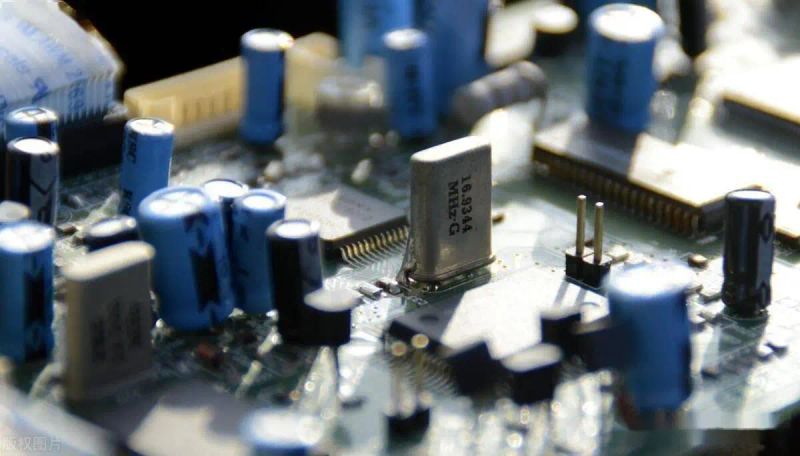
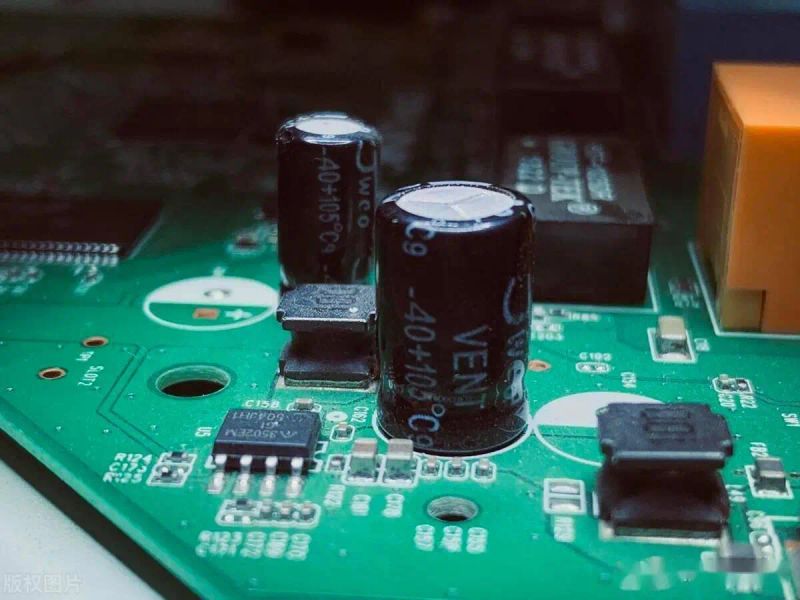
Hello! Let's talk today about a very basic but extremely important component of the electronic world — electricity. You may have seen those little cylindrical or patched-up kids on the circuit board. They're electric. So what are these little pieces of metal doing on the circuit? Let's have a little insight!
First, central function: storage of charge (storage)
It's the most fundamental characteristic of the electric. You can imagine it as a small pool that can be filled and discharged very quickly. When there is a need on the circuit, the capacitor can release the stored charge quickly and provide instantaneous large currents; or when the power source is unstable, it can temporarily store energy and act as a buffer。
Example of application scenario: camera flash. Photographs require powerful current-driven flash tubes, and batteries themselves may not be able to provide such large currents in an instant, when done by precharged large-capacitor flashes。
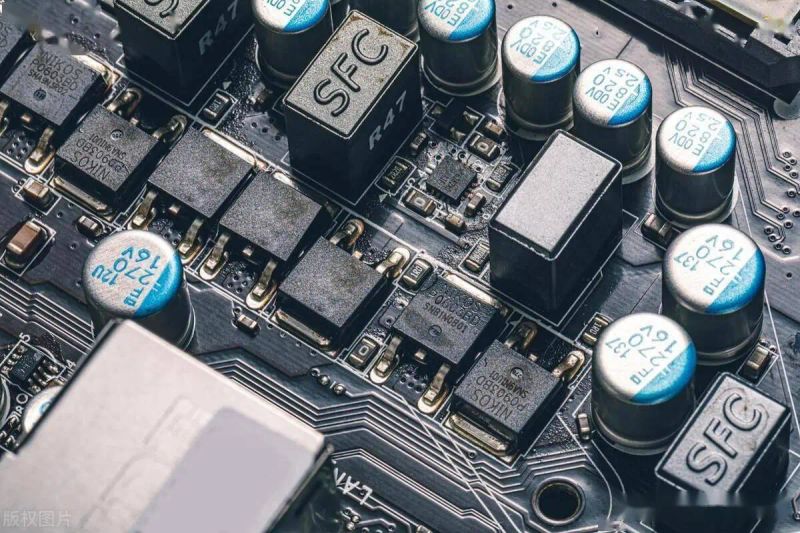
Second, communication passage, straight-stream isolation (filtration and coupling)
The capacitor has a very interesting feature: it allows the signal to pass, but it stops the direct signal。
Filtering: this feature makes electricity a good filter. In power circuits, the conversion of communication power from outlets to direct currents is often not sufficiently “smooth” and carries a number of impregnated waves. It is like a “water reservoir” that can “clause” these fluctuations and produce more pure and stable direct currents to ensure the stability of electronic equipment. We used to say "power filters" mainly rely on it。
Convergence: in multi-level magnifying circuits, we want to transmit the first level of communication signals to the next level, but we do not want the first level's straight-flowing working state (discretion) to affect the next level. At this point, a conjunction of a condensed cap at two levels would be a clever way to “collide” the communication signals and to separate them directly。
Iii. Providing access and stable operation (by-pass and off-line)
Sideways: in electrical circuits, the level of electricity at certain points needs to be stabilized and not subject to excessive noise interference. The capacitor can provide a “low-resisting by-pass route” between these points and the wire (or power lines) for those high-frequency noise signals, allowing the noise to follow this “short cut” and thus maintain the level of electrical stability at critical points。
Detachment: especially in digital or high-speed circuits, chips work at times that consume large currents, which may cause fluctuations in power voltage, thereby disrupting other chips on the same power line. Placing a small electrical cap (decoupling) near the tip of the chip's power supply, which provides the instant current required for the chip quickly, while absorbing voltage fluctuations, acts as a “decoupling” to prevent interference from spreading。
Iv. Control time, generating rhythm (scheduled time)
Capability and resistance (r) are combined (known as rc circuits) and can be used to control time. Capability charging and discharge take a certain amount of time, which can be precisely controlled by changing the size of the resistance or the cap。
Examples of application scenarios: many time-delay switches, respiratory light effects, oscillators (wilders that generate specific frequency signals), etc., use rc circuit charging properties to achieve timing。
In summary:
The electric capacitor, though small, is significant and diverse. It not only saves energy like a “battery” but also filters it as a “sift”, acts as a “bridge” to complete the signal coupling, acts as a “spill channel” to make the bypass coupling, and is more capable of forming a “symphonic separator” in conjunction with electrical resistance. It is these rich functions that make the capacity an indispensable foundational element of modern electronic circuits。