Also at the top of the global market for liquor, tiagio sells alcohol in 180 countries, while the percentage of the five-year farm out of the sea is less than 0. 3 per cent — what is the difference
The reason for this is that the two are directly rivals on the list: in 2025, mao stood at the top of brand finance's board with a brand value of $5,380 million, while tiageo, the parent company of a series of global brands, such as junihuga and hercules, earned nearly $20. 2 billion in fiscal year 2025, covering nearly 180 countries。
Two enterprises are at the top of the same list, while the global penetration rate is separated from the mariana trench。
Mao tai and tiageo, your logic is not the same
The high valuation of the pao come from the absolute monopoly of the chinese market。
In 2025, the total company received $17,254 million (approximately $23. 6 billion), net profits of $8,320 million, a maori rate of over 90 per cent and a net profit rate of over 50 per cent. More strikingly, its market value is about 66 per cent of the total market value of a-stock liquor companies. In the high-end white wine market in china, the huts account for one third。
At the heart of the high market value is not global sales, but the national triple river of time, consensus, culture – a production cycle barrier of 310,000 tons of glycol reserves, a consumption consensus of "default choice" in high-end business dinners, and an identity premium for "chinese cultural symbols."。
What about tiageo? About $20. 2 billion is collected, but the net profit is only about $2. 4 billion and the net profit is 11. 6 per cent. The profit margin is much worse because it operates more than 200 brands globally, with 180 countries, each market facing different regulations, channels and competition. It earns "wide" money, and the "deep" money -- a national windfall business。
But here's the problem: theagio's "widening" can continue to expand, and the "deepness" of the hut can't be replicated overseas。
It's not just a taste problem
The toilet isn't trying to go out. In the first quarter of 2026, the maotai overseas battalion received only $152 million, representing less than 0. 3 per cent of the total, a sharp decline in comparison to the previous quarter of five years — a figure that was even lower than the previous quarter. While the country has a global distribution of 66 countries and territories, with 124 overseas distributors, the main consumer remains chinese overseas, with almost zero local consumers。
An expert in the wine industry is telling the truth: foreigners' acceptance of the strong taste of white wine is not a central obstacle — vodka is colorless and tasteless worldwide. Two things really stuck in the toilet:
Single product structure. For a long time, overseas markets sell only 53 degrees to the ceiling, with no multiple options like whiskey for low-level, ice-free and cocktails. Whisky can be drunk from a bar to a home living room with ice, and the toilet can't find a place in other scenes except for a chinese dinner。
Culturally incorrect. The depth of white wine consumption binds the "social rituals of chinese dinners" - seating, toasting, reverence, determining how much to drink by level and relationship. Such cultural rules are neither understood nor used by overseas consumers. And tiageo's whiskey has already jumped out of the table and became a vehicle for personal enjoyment and social freedom。
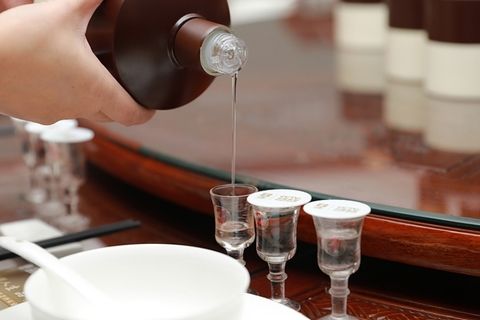
The chinese restaurant is white to the small glass. Wine
Professor wang li xin, shenzhen university, noted that chinese wine companies had not yet established a system of words that matched international consumers and had not translated the philosophy of one human being into a language understood by overseas audiences。
Your moat is a stumbling block overseas
The strength of the pao in the country — time barriers, consumer consensus, cultural symbols — has completely failed in the overseas scene。
Time barriers at home mean that products are scarce and priced; overseas means that consumers have no chance of even testing — a thousand-dollar bottle of soy sauce, who buys it without a quality base? The consumer consensus is a domestic "hot for important guests only"; overseas, there is no ground for it. Cultural symbols are national business cards in the country; the perception abroad is stuck in the "high-end chinese gift" divide from daily drinking。
The mao management itself acknowledges that internationalization is now in the early stages of the transition from "product exports" to "brand exports". The sharp fall in offshore camps in the first quarter of 2026 was, in essence, such a concentrated outbreak, in addition to taking the initiative to fix the "revenue" channel。
One data is cruel: china's share of white wine exports is only 2. 5 per cent of the world's liquor. The rules, standards and voice of the global liquor market are largely defined in terms of whiskey, brandy, etc. Powder wants to break a circle overseas, it's not enough to have good wine -- it has to learn to speak again。
The gap is true, but the answer is in comparison
The conclusion is clear: mao's "first in the world" is testimony of china's market capacity, not a measure of global influence. It is built on a supermarket of 1. 4 billion people to put up the top of the global brand value of alcohol, but truly global liquor head players must be able to stand steady in multiple markets。
There is, however, a positive shift: in 2025, there were 23 new overseas channel providers, food fairs and master classes in seoul, korea, and, more importantly, management has become aware of the need to shift from "channel-driven" to "consumer-driven"。
The real game is not to move to the paris supermarket, but to get young people abroad to know, taste and get used to a piece of chinese sauce that belongs to them. This road will take at least five years to start。