When the price curve of a bottle of wine begins to gain more attention than the consumption curve, it already deviates from the essence of “commodity”. Over the past two decades, guizhou mao tai liquor corporation has almost been shaped into a type of “financial asset”: price increases, high mobility and even some kind of “hard currency” attribute. Today, this narrative is cracking。
It is well read that, in 2025, for the first time since the tabloids were put on the market, there was a “diplomatic decline” in the revenue and net profits; in the first quarter of 2026, there was an increase of 6. 54 per cent in the revenue and a 1. 47 per cent increase in net profits. The surface is warming and the quality of growth is clearly weak. The deeper change is that the market is redefining the pavilion — from “assets that can be hoarded” to “the wine used for drinking”. This is not simple cyclical fluctuations, but rather a recasting of value logic。
I. Increased gains and gains: myths begin to “lost profits”
If only the amount of $53,909 million received in the first quarter of 2026 and the net profit of $27,243 million were to be seen, the toilet remained one of the most profitable companies in the a stock. But what is truly alarming is changes in the structure of growth。
Revenues increased by 6. 54 per cent, net profits increased by only 1. 47 per cent, minus 1. 45 per cent. Such “scissors” are extremely rare in the white wine industry. Often, the profit elasticity of high-end white wine is higher than income elasticity and, if reversed, means that the profit structure is deteriorating substantially。
More intuitive signals are derived from the profit margin: the māori rate was 89. 9 per cent, a 2. 2 percentage point decrease over the same period, and the net interest rate was 52. 22 per cent, a 2. 67 percentage point decrease over the same period. For an enterprise with a “brand premium” at its core, the synchronized decline in profitability is far more lethal than the growth in income. This means that the “lower quality” is being replaced by “face growth”。
What's the problem? The answer is not complicated: the amount is holding, the price is falling。
The first quarter earned $4,6005 million in revenues, an increase of 5. 62 per cent over the same year, but growth was largely dependent on increased investments rather than higher prices. The official instruction price ($1,499 – $1539), which was raised only at the end of march, made little contribution to the quarter。
In other words, it is going through a thing that was almost impossible in the past — growth by “selling more alcohol” rather than “selling more expensive”. Behind this is a change in the logic of demand。
Direct sales inflation: hidden risks under channel re-engineering
Another key set of data is the dramatic change in the channel structure: direct sales revenue of $29,504 million, an increase of 27. 1 per cent over the same period, or 54. 8 per cent; wholesale agents income of $24,382 million, a decrease of 10. 9 per cent over the same period; and the number of dealers, a decrease of 255, from 2353 to 2098. This is a typical “de-intermediate” process. On the face of it, it was a win over digital direct sales, particularly the i-max platform, which generated $21,553 million, an increase of 267. 2 per cent over the same period。
The problem, however, is that the past business model was never just a “sale of alcohol”, but a “channel finance”. Advance payments by distributors create large contractual liabilities, amounting to interest-free financing for companies, and constitute an important feeder of price stability。
What does it mean to have a contract liability of only $3. 03 billion, a sharp drop of 65. 6 per cent over the same period? This means that dealers are no longer willing to “grow money for money”. The official explanation, however, was mainly that "a shift from a non-plain to a surrogate pattern has reduced a large amount of the dealer's advance", which represents a fundamental shift in expectations of future prices。
One more detail: accounts receivable increased from $2. 69 million to $323,446 million, an increase of 1140 per cent. While the absolute value is small, the trend is critical. In the past, the pattern of “earners and goods” was relaxed and credit began to tilt downstream. When the channel is transformed from a “financial reservoir” to a “risk conductor”, the business model of the enterprise has changed qualitatively。
Iii. Price failures: systemic retreats in financial attributes
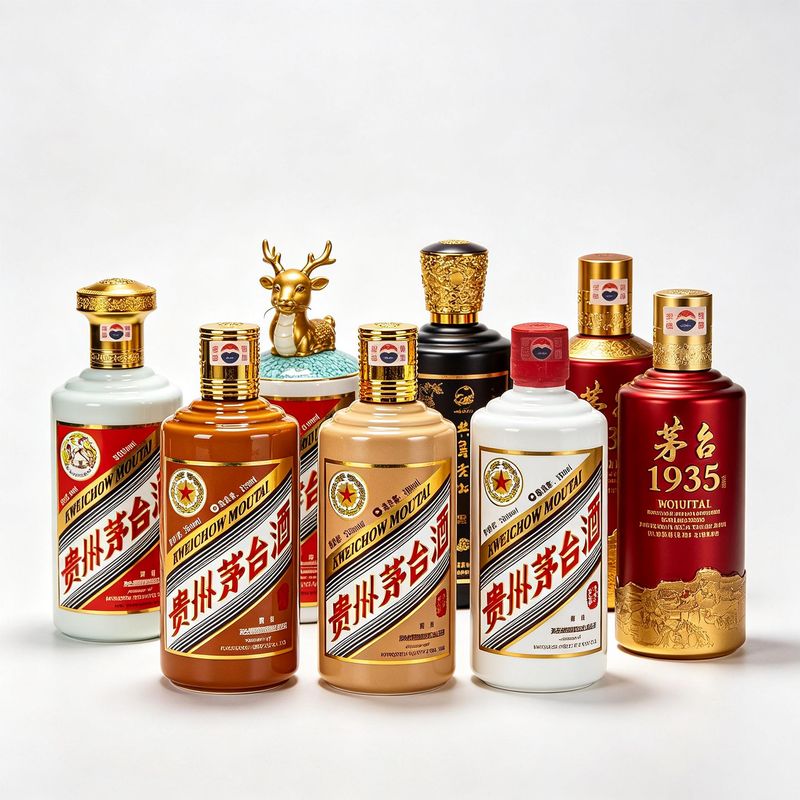
It is not the decline in profitability, but the weakening of the price system that really shakes the foundations. Recall the price trend for the last two years: at the beginning of 2024, the original box was about $3,000, dropped to 2330 at the end of 2024, and in 2025 it fell by 2,000 yuan, 1800 yuan, a minimum of 1590 yuan. The two-decalogues fell to $1399 in real terms (subsidized, pierced by $1499)。
This is hardly a precedent in the history of chinese white wine. The value of prices has never been more than “how much to sell”, more than market consensus. When prices break official guidance prices, it means that the market starts voting with feet。
In the past, the core that underpinned the high prices of the huts was not consumer demand, but “an expectation of appreciation”. A lot of people buy huts: no bottles, no consumption, no hoarding. This demand is essentially an investment demand. Once prices are no longer rising unilaterally, logic is rapidly reversed。
According to estimates by third-party agencies, social stocks at the end of 2025 were approximately 120 million bottles, equivalent to 2-3 years of sales. These stocks come from dealers, cows, smoke hotels and individual investors。
Market patterns tell us that when prices fall: the burden of inventory assets increases, sales drops further and is expected to deteriorate further, which is typically a “de-finance step”。
In 2025, wholesale prices fell from $2220 at the beginning of the year to $1485 at the end of the year, a drop of about 33. 1 per cent, and even a cut to the waist (from $3800 to $1,800 for snakes). This is not short-term fluctuations, but a systemic retreat in financial attributes。
Returning conduct: reduction of reduction
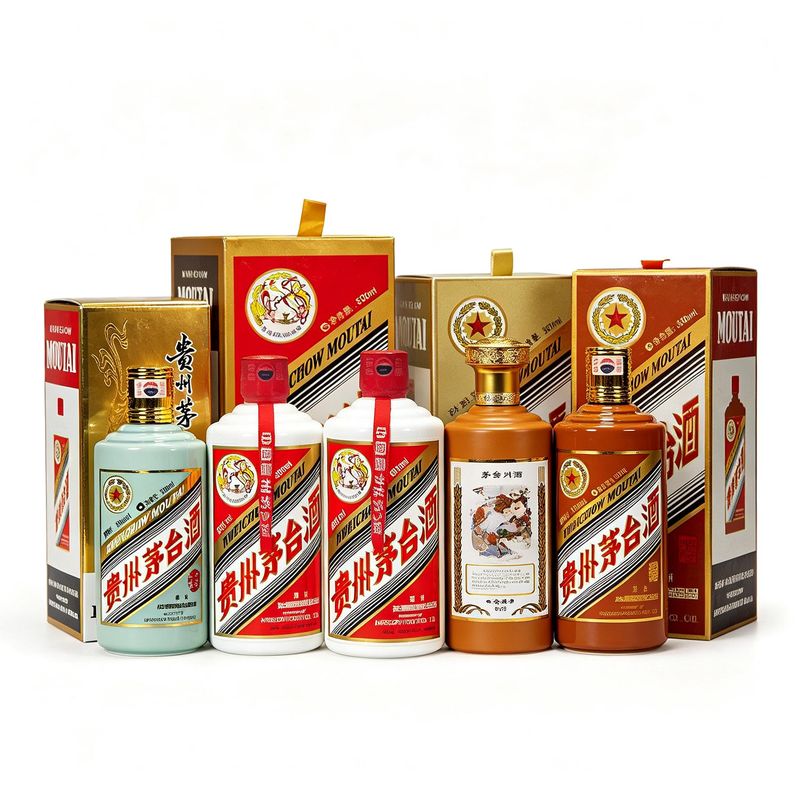
When the pao returns from “investments” to “consumer goods”, a cruel reality begins to emerge: real needs are much smaller than past appearances. Past consumption structures were broadly as follows: hospitality, gifts, investment hoarding. Of these, investment needs account for a significant proportion。
Now business scenes are shrinking, gifts are more rational, investment needs are rapidly retreating, and the rest is purely “drinking demand”. This part of the demand is highly price-sensitive。
When the price fell from $3,000 to $1600, the huts did become more “people-friendly”, but also lost their “frequent photoring”。
One of the typical changes is, "you get what you need to get." this appears to be a return to health, but it actually means a contraction of the demand base. It also explains why there was a double decline in 2025, with only a “measurable premium” in 2026, and the market is shifting from an “expected drive” to a “consumption drive”。
V. Falling of a set of drink: disappearance of the second qual
It is a long-standing structural problem: overdependence on flying. Over 85 per cent of the revenue is derived from siphon wine and about 15 per cent from the series. As a result, companies have been trying to build a “second growth curve”, with a core product of 1935。
How'd it go? The price system was completely collapsed: it was over 1,600 dollars in the early days of the market, fell to about 600 dollars in 2025, the official guide price was 1,188 dollars, and the dealer lost approximately 200 dollars per bottle。
This is not a simple price fluctuation, but a failure in product positioning. The 2025 quarterly data show that, even more serious, the sharp increase in bills receivable from $14 million to $5. 21 billion suggests that companies are starting to use “credit sales” to drive their exports。
Short-term reports can be glorified, while long-term credit is available through overdraft channels. When channels do not make money or even lose, so-called “growth” is simply the risk of delay。
Vi. Young people's miscalculation: 460 million for lessons learned
If failure of the wine series is a matter of access, failure of rejuvenation is a strategic error。
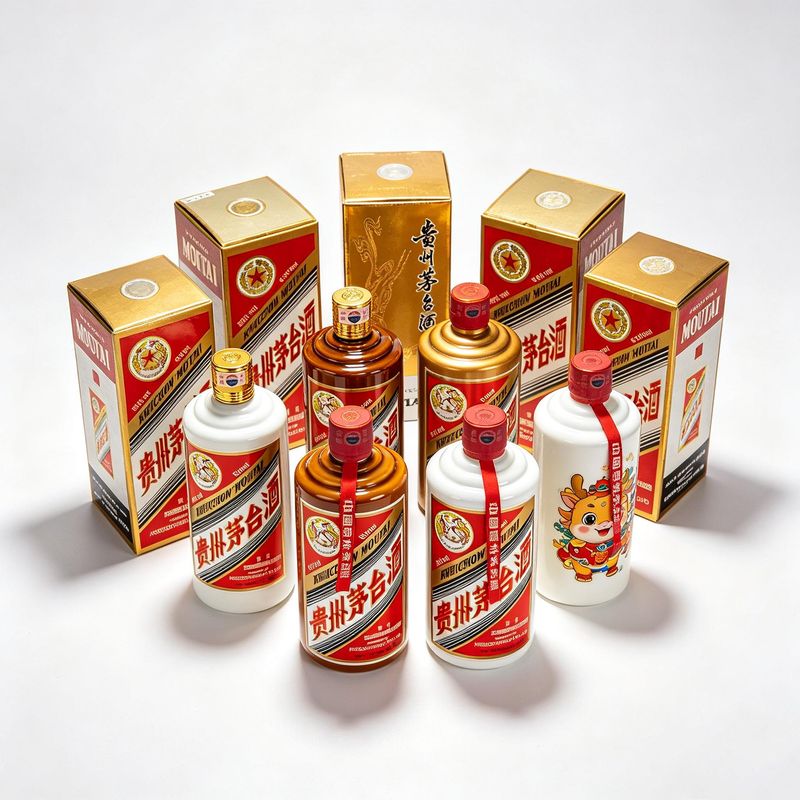
Over the past few years, the pavilions have been frequently crossed across borders: ice cream, coffee (coffee latte), chocolate, and only the pavilion ice cream business, with a cumulative marketing investment of $460 million in the three years of 2022-2024, culminating in the dissolution of the ice cream business and a rapid decline in the heat of cross-border products。
What's the problem? Many think that young people don't drink alcohol because it's not new enough. The reality is even more straightforward, as young people do not recognize the social culture enshrined in white wine. What they avoid is rank, pay and power on the table。
Making a toilet into ice cream doesn't change that perception. This is a typical “product layer innovation masking cognitive fractures”. The essence of rejuvenation is to reshape the consumer landscape and value expression rather than to replace it with a packaging。
Vii. The internationalization dilemma: imagineing the gap between space and reality
Another path that has been given high hopes is internationalization. Real data generated $152 million, or 0. 28 per cent, in the first quarter of the year, with a target of 10 per cent by 2029. Given the current progress, it is extremely difficult。
Reasons are not complex: differences in eating culture, different consumption habits of alcohol and limited brand perception to the chinese community. White wine goes to sea and is never a work that a single enterprise can do. It is more like a long-term cultural output than a short-term market expansion。
The real trouble: from the “while bullet logic” to the “drink logic”
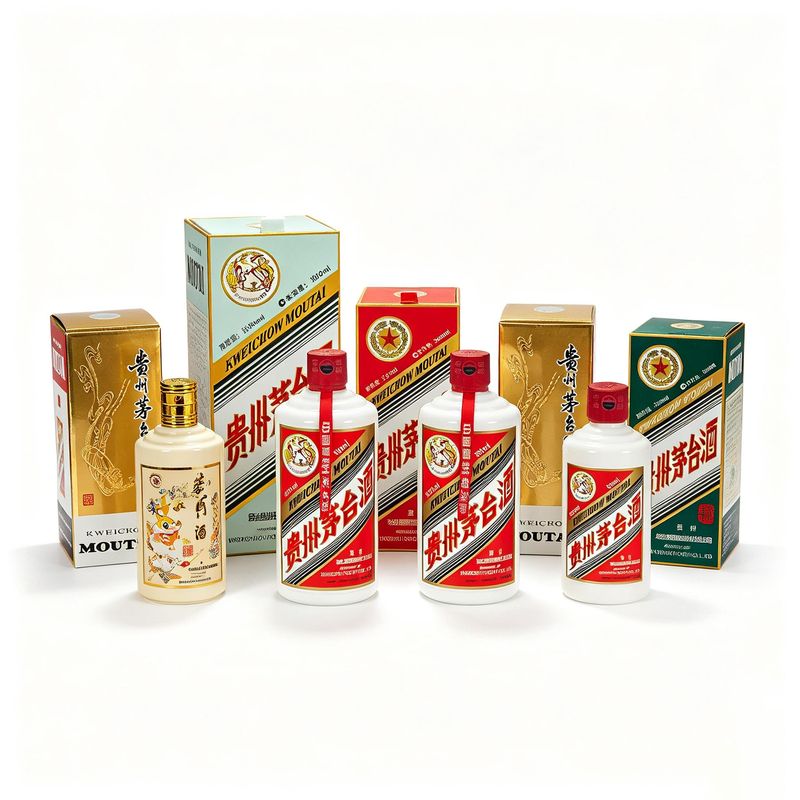
If all the problems are tied together, a common pointer is found: the toilet is undergoing a “value revaluation”。
Past logic: scarcity + financial attributes, channel hoarding + price increases, investment demand dominance. Current trends: return of consumption, rational prices, shrinking channels. This means that the toilet has to answer a central question: how much is it worth when it is no longer fired? This is the key to determining the future。
The true moat, never in price
Even in the face of so many challenges, there is still a strong fundamental face: brand recognition is irreplaceable, cash flows remain strong, with a daily net profit of about $225 million (2025). But one thing needs to be seen: the historical moat is not equal to future growth。
When markets move from “speculation” to “consumption”, where the real value of the enterprise is determined, there are only two factors: whether the product is worth drinking and whether the price matches the experience. The ultimate problem of the toilet is never complicated: it's a bottle of wine. The value of the wine is ultimately realized at the table, not in the warehouse。
When more and more people are aware of this, the “dry-drinking age” will move away. This is both a pain and an opportunity for the hut. The premise is that it is willing to really go back to a simplest point of departure — to open it up, not to leave it。