"building is solid music, music is mobile architecture." the white as pure as snow mountains, the red as hot as fire, the yellow as pure and thick, the blue as vast, the green as life, and the bright as the green as it is, weave the unique vision of tibetan buildings. These colours are life responses that combine people with nature, with ideas, and that bring together people, imprinting the natural environment and folklore. In recent days, journalists have interviewed dr. Jumba tsien, an assistant researcher at the institute of national arts of the tibet autonomous region, and have taken us on a quest to uncover the mysterious veil hidden in the depths of the tibetan traditional architecture。
Core chromatography
The five original colour core chromatography extends the aesthetic concept to nature. Objects
In traditional buildings in tibet, white is a symmetrical symbol of purity and goodness. For example, at the budala palace in the centre of lhasa, the world-renowned ancient construction was predominantly white. Moreover, every year on the eve of the new year of the tibetan calendar, the house of budala will usher in an annual practice of “brushing”, whereby people pray for a new year of peace. “the most famous white paints are sheep and sheep. Every year around 25 september, the white paint produced in these two places continues to be transported to lhasa in preparation for the `branding'。
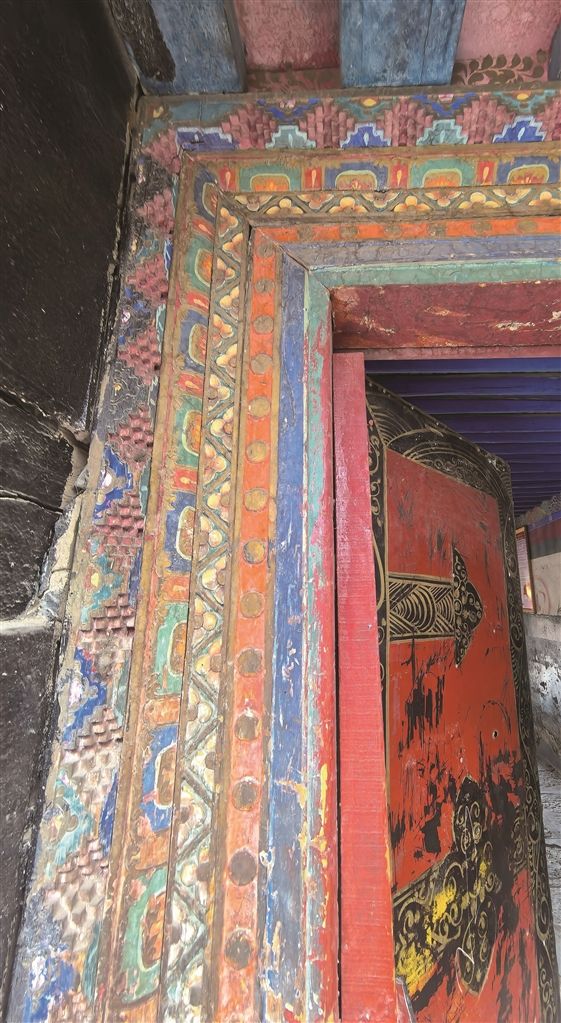
The painting of traditional tibetan dwellings. In addition to the most daily whites, the red is a common colour in the ancient construction of tibet, which symbolizes power and status in a long historical process and exemplifies the prestige and prestige of buildings. Yellow has a special place in tibet's architectural colour system, usually in the highest-ranking palace buildings. It symbolizes eternity and represents supreme glory. Black, which is used mostly in windows, door troubles, beams, and corner hooks, is not only a symbol of prestige, but also a functional function that effectively absorbs indoor temperatures and also acts as a visual definition of space. Accompanying blue and green is used mainly for mural and decorative components, which add inspiration and beauty to the building。
The five colours of red, yellow, blue, white and green form the core chromatography of tibetan traditions, according to jamba. Tibetan architecture, fine arts, painting and even clothing, everyday goods... Will have, more or less, five original shadows. This unique aesthetic concept stems from the perception of this land and space: yellow refers to yellow earth, green to green mountains, red to fire, blue to blue sky and white to white clouds. And when the colours that come from nature fall into the architecture of nature's landscapes, they form the mirrors of nature and architecture, which together produce a colourful, harmonious and symbiotic picture of the beauty of tibet's land。
Classic texture
The folk mural reflects the secular life of the han tibetan people in the history of history
In the vast territory of tibet, the murals are widely distributed among the palaces, the secular houses, the estates, the houses of nobility and the interior and outer walls of the shops. These murals have a central theme, such as folklore, blessed meanings, secular life, and a happy harvest, which not only have great artistic value but also decorative functions。
When you set foot in a residential house, the first two very symbolic murals are shown: on the left is “the ruler of the tiger” and on the right is “the bond of fortune”. The tiger heads out, meaning that the house of the guardian is safe, and the elephant heads in, symbolizes the gain。
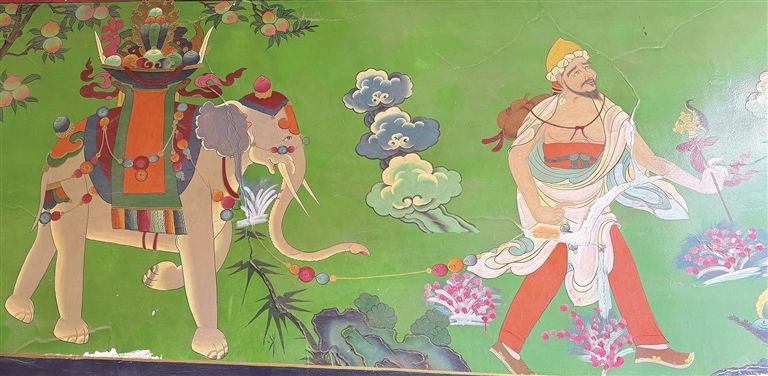
Tibetans live in the gates of the wall of the wall, drawing the "christ of wealth". A slow walk into the courtyard, where the images of the harmony, the six-long life map, the blessed eight-year-old, and so on are shown in the curtains. These patterns contain a good prayer for respect, happiness and harmony, a long and healthy life, and a happy and harmonious life. It is worth mentioning that, since the beginning of the day, tibetan murals have also incorporated many elements of the chinese region's joy, such as yasei, fukuo suu kyi, dragon feng, entangled police, batprint, etc. The integration of these elements is a vivid demonstration of the deep friendship between the han tibetan nation and its history。
Into the interior, the murals of secular life, which are characteristic of the dwellings, are visible. In the production scenes, there are images of farming, textiles, brewing of alcohol, hawks and fairs, which vividly reveal the state of life of the tibetan people in an diligent manner; in the folk festival scenes, such as the tibetan new year, the festivities, weddings, races, dances and so on, there is a strong national ethos; in the buildings and objects, walls such as houses, quails, tents, hidden furniture, teas, etc., highlight the unique architectural styles and living instruments of tibet; and in the paintings of nature and symbols, elements such as snow mountains, sanctuaries, rolls, grasses, etc., are attached to the piety and praise of nature。
“in colour and structure, tibetans paint the walls of their homes with brightness, festivities, the name of their lord, and a powerful visual shock and beauty.” jumba tzu-jin says. In addition, some classic patterns are frequently present in the lives of tibetans. For example, police, winter, pomegranates, grapes, etc. Are brought in from the central region, symbolizing the rich, the rich and the rich and the rich; the sweet grass and the sauna are the highland plants, meaning happiness and good luck. In animal tattoos, such as dragons, phoenix, tritium, yaks, elephants, deer, cranes, etc., represent the integration of diverse cultures and, above all, the condensation of the chinese national community。
Architecture aesthetics
The styles are very different. Tibet is unique in every region. Beautiful
In view of the unique aesthetics of tibetan architecture, tibetan cities have different architectural styles and charisma. Lhasa and shannan city, whose buildings are marked by precision, with their tattoos dominated by rolls and clouds, et cetera, are finely carved and complex. Each detail, from a fine carving to a beautiful painting, shows the charisma of the craftsman and his heart, and the hymn of grace. The construction of the city of japan has won with a heavy sense of weight, with the highest degree of decorative density and detail. It is characterized by sculpture, hierarchies, long character-forming, finely well-stained and very little white. Wood components are often carved and recolored in layers, with great visual effects. The buildings of chang city are decorated in wood and are engraved in depth, with a strong sense of initiative, a strong image of dragons, lions, elephants, etc., a strong line of action, and a high level of air and energy. And the buildings in the ali region are based on an old-fashioned spirit, a simple material, a simple and elegant decoration that reveals the original and pure beauty。
In terms of colour expression, tibetan buildings have a white, red, gold-based tone, with black window frames and edge walls, which are contrasted and clearly hierarchical, creating a geographically marked visual language. The structure of the interior of the building is organized in an orderly manner, with the main structure dominated by stone and ground materials, the beams made in a simple and simple form, the fine decorative techniques of carving and painting, etc., and the cross-graphing of both decorative and cultural terms。
From a holistic perspective, tibetan architecture is both functional and aesthetic, with a self-contained system of structural construction, space organization and decorative expression, and is a very representative part of the construction culture of ethnic minorities in china, with the intellectual and cultural spirit of the tibetan people。