In the summer, hand-swaming, the sharp rise in cell temperature is a problem for almost all players. Every year, manufacturers double the dispersive parameters, from 8,000 to 10,000 square millimetres of vc, and a variety of space-grade nanomaterials piled up in the sky。
But tearing open the marketing package and i found an interesting fact: the physical principles of cell-phone heat have not changed much in 20 years, and all technological innovations are essentially a compromise between space and cost. What really determines the experience is never the size of the parameter, but the ability to catch the continuous output. Why do you say that? Let's break down this overmarket technology。
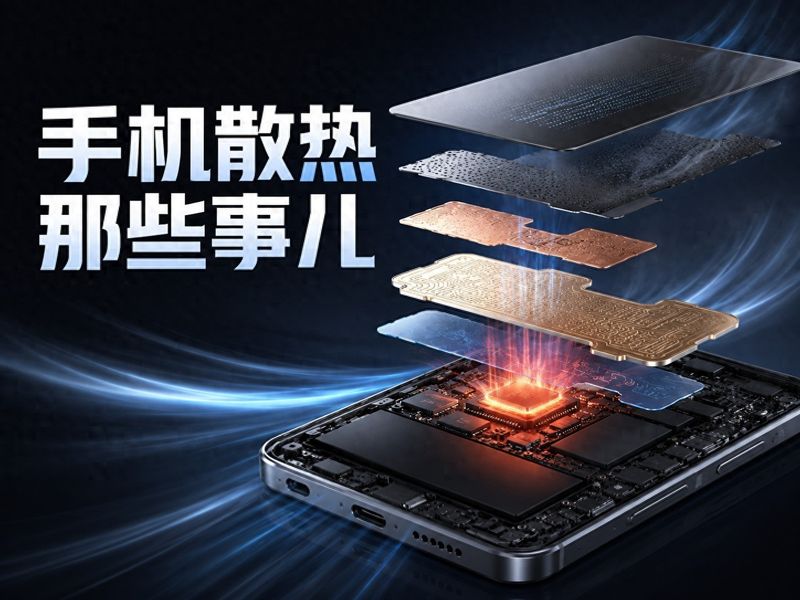
Cellular internal dispersive structure decomposition: display of mobile chips and multilayered dissipated heat components with thermal text
Dismantling the three layers of logic: the heat is the three physicss
The mobile phone spreads through is a three-step process: it produces heat and heat, and all technological options are optimized around these three steps, and no magic black technology can escape the thermodynamic framework。
The starting point for the heat is the soc chip, which can reach 90 °c in a heavy game. The first step is to get the heat out of the chip at a single point. The key here is not big vcs, but unobserved heat gel or silicon。
The two solid surfaces are collated with less than 10 per cent of the actual area of exposure, filled with only 1 per cent of the metal air in the cracks, and the heat interface material fills these cracks with a smooth flow of heat from the chip to the average plate. Without this layer of material, even the vc does more than a mobile phone and cannot catch the heat from the chips, details that many manufacturers would not have mentioned in their marketing。
When the heat enters the vc average heat table, the core logic becomes a phase cycle: the essence of the vc is a flat-pressed heat tube that is vacuumed inside and injects a small amount of pure water into the working medium。
The water in the heat source is evaporated to absorb the heat, the vapour spreads to the entire vc cavity, and is condensed and heated in low-temperature areas, and the condensed water flows back to the heat source through a fine structure, with the cycle spreading evenly over the entire plane。
The advantage of the vc average thermal plate is that the two-dimensional thermal effect is much better than that of the traditional thermal tube, and that any two-point temperature difference on the plane can be contained at 10°c without the problem of local hotspot overheating。
After coming out of vc, the heat is further spread through the outer graphite or graphite, then covered through the center frame to the outer surface of the airframe, and eventually dispersed into the air through radiation and natural convection. If there is a built-in fan, the effect is to accelerate the air convection and reduce the time of last-step heat dispersion。
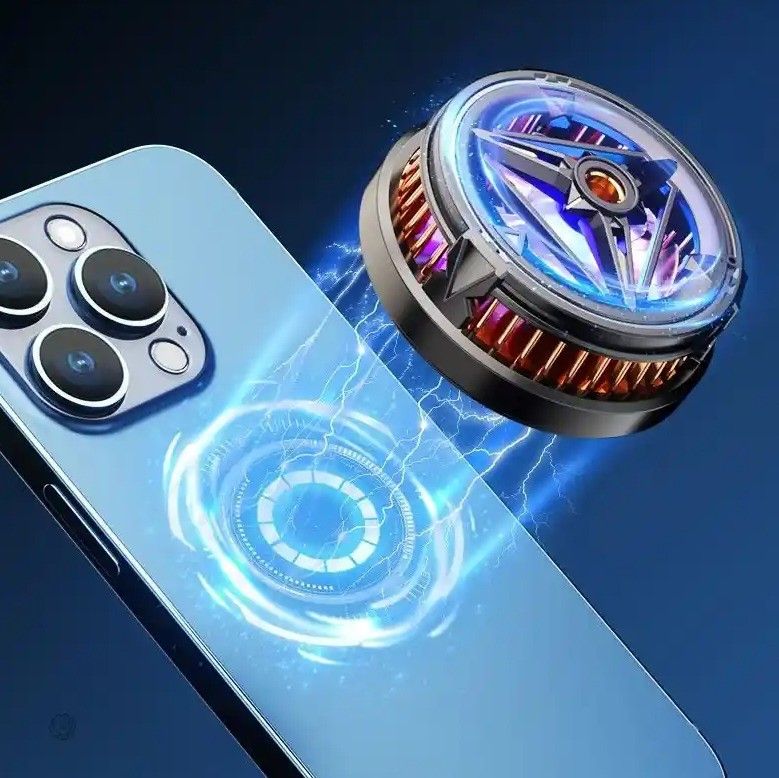
Cell phone and magnetic diffusion repository: magnetic diffusion repository by blue cellular lamp
Vendor's invisible war: never stacked up to settle scores
Now, the distribution of heat in the industry has become a purely vc-wide digital game: you do 8,000 and i do 10,000, and he can even make 40,000 square millimetres, as if the larger the area, the better. Few people ask: "where did the interior of the cell phone come from
Space distribution within mobile phones is zero-sum game: batteries take space, camera models take space, screens, master panels, speakers have space, and the heat is always sideware. It is not material that the manufacturer is really rolling, but how to balance it in a limited space。
This is an aberration from marketing: the spread of heat from the doubling of the area of the vc is in fact marginal decline, with a temperature rise of less than 0. 3°c for every 1,000 square millimetres added。
Different manufacturers have opted for a completely different solution: the size of the stack is essentially a space-for-heat-for-heat formula that spreads more heat and naturally lowers local temperatures, but has to compress battery capacity or increase body thickness。
Another approach is active heat dispersion: the active excretion of heat from built-in fans and even water pumps is indeed more frequent in unit time, but the probability of long-term use of grey-card fans increases at the cost of increased effort, noise and mechanical reliability。
Type of programme
Core strengths
The hidden cost
Big vc stack
No source, no noise
Inner space
Active heat spread
Heat-efficient
Increased effort, reduced reliability
Material upgrade
Small heat booster
Raise machine bom cost
These programmes are not absolutely right or wrong in themselves, and technological advances are real, but marketing narratives expand much faster than technology. When a piece of ordinary graphite can be packaged into space-grade material, it is difficult for consumers to see actual experience through parameters。
How do ordinary users choose? Two indicators are smaller than vc. Spectrum
If you really care about the heat of a mobile phone, such as a heavy-handed player, or a mobile phone that is often used in high-temperature outdoors, don't look at the vc size of the launch, depending on two more realistic indicators。
The first indicator is continuity. A lot of cell phone runs are pretty good, starting to drop the frequency after five minutes. The essence of this is that the heat can't hold up the constant output。
Data from the june 2026 data from pacific technologies show that professional electro-mechanical phones are designed with a reasonable dissipation design that allows for a 30-minute limit of 3 per cent for the running frame of the oracle, with no down frequency at all. This long-term stable frame curve is more reflective of real heat dispersion than any vc size parameter, and you can't play for five minutes。
The second consideration is the impact of environmental use. It is not a question of cell phone design, it is determined by the laws of thermodynamics — the less the temperature difference, the less the heat spread。
In this extreme scenario, a dozens of semiconductor heat clips tend to have a more direct effect than thousands of square millimetres of vc piles of manufacturers, which, after all, directly create a low temperature-for-heat environment for mobile phones, increasing temperature differentials at the source。
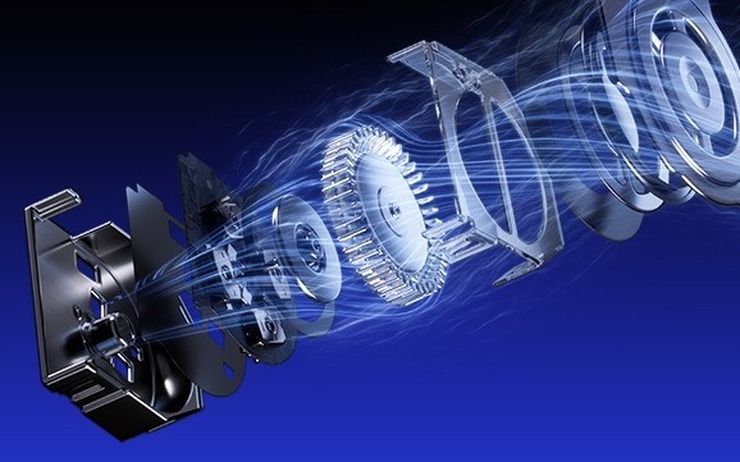
Dispersion structure of the dispersing fan: shows the layered components and air flow effects of the dispersing fan
Many of the flagship phones are now set aside for magnetic dissipation, which by its very nature implies the fact that extreme dissipation needs to be addressed by external solutions, and that internal dispersion needs only to satisfy the daily scene。
This is actually another marketing error: mobile phones do not have to pile up heat to deal with extreme scenes, most users spend most of their time in greenhouses, leaving too much space for extreme scenes, which are essentially wasteful of consumer packages and airframe space。
The future of heat dissipation: the direction is not actually a pile
Having said that, you should be able to see that the core contradiction of cell phone heat is never good enough, but not enough space. All technological advances, essentially, crowd out more heat dispersion efficiency in unit space。
The future direction is not really a larger vc, but rather a synergetic optimization of structures and materials: for example, process improvements in fine structures can make vc cycle more efficient; new heat-resilient materials can make interfaces less heat-retarding; and ai temperature-control algorithms can prejudge loads in advance and reduce unnecessary heat generation。
For ordinary users, the most cost-effective option is actually simple: day-to-day use does not have to close the gap of thousands of square millimetres, and heavy game players go directly with a heat-spread backpack, which is better than buying large vcs at high cost。
The mobile phone industry now likes to roll up everything: big bottom, big memory, big heat, as if the bigger the bigger the better. But most of the time, marketing magnifies anxiety, parameters mask demand, and what you really need is just the temperature that allows you to finish a game。
When all the producers are in the vc area, the real progress actually takes place in an invisible place: a little improvement in interface materials, a little optimization of the fine structure, these invisible details are the key to a real increase in heat dispersion efficiency. It's just that the details can't be a big print on the ppt。
Cell phone