Leadership life cycle theory ppt
Wake up and get angry
Contents
Contents
Overview of leadership life cycle theory
Core perspectives of the leadership life cycle theory
Practical application of leadership life-cycle theory
Leadership life-cycle theory challenges and future directions
Leadership life-cycle theory case analysis
Overview of leadership life cycle theory
The leadership life cycle theory, also known as the leadership style theory, is a theory that examines the applicability of leadership styles at different ages and in career development。
Definitions
The doctrine emphasizes that leadership styles should be adapted to the maturity of subordinates, both in terms of working capacity and working attitude。
Characteristics
The production of leadership life-cycle theory is based on a variety of leadership theories and research, such as leadership quality theory, leadership behaviour theory and situational leadership theory。
As research deepens and practical experience accumulates, leadership life-cycle theory is being refined and developed to better respond to the needs of modern organizational management。
Development
Background
Core perspectives of the leadership life cycle theory
Select the appropriate style of leadership based on the maturity of the subordinate, such as guidance, participation or delegation of authority。
Leadership style
Maturity
Relations
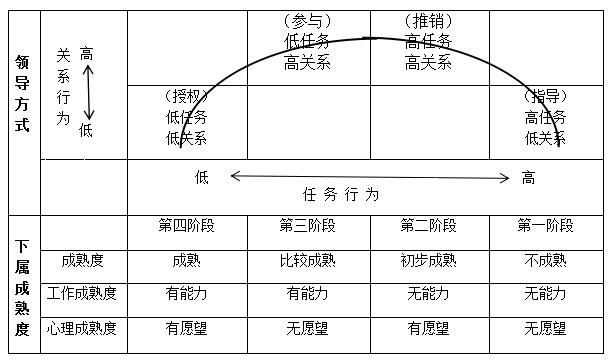
The level of skills, knowledge and experience of subordinates and their self-management capabilities。
As the maturity of subordinates increases, leadership styles should gradually shift from guidance to empowerment, giving subordinates more autonomy and decision-making power。
03
02
01
Encourage or limit the leadership style of subordinates in decision-making。
Leadership style
The role and participation of subordinates in decision-making processes。
Participation in decision-making
Leadership has a significant impact on the participation of subordinates in decision-making, and participatory and empowered leadership styles are more conducive to enhancing the participation of subordinates and the quality of decision-making。
Relations
Organizational performance
Level of achievement of organizational objectives, staff satisfaction and overall operational effectiveness。
Leadership style
Leadership style that has an impact on organizational performance。
Relations
There is a close relationship between leadership styles and organizational performance, and the right style of leadership can improve organizational performance, while the wrong style of leadership may lead to a decline in organizational performance。
Practical application of leadership life-cycle theory
Mature judgement
To assess the maturity of subordinates in terms of their knowledge, skills, abilities and working attitudes, and to understand their stage of development。
Leadership style selection
Choose the appropriate style of leadership based on the maturity of subordinates. For low-maturity subordinates, authoritative leadership styles, clear job requirements and expectations, and for high-maturity subordinates, more democratic leadership styles, greater autonomy and participation in decision-making。
Confidence-building
Building trust relations with subordinates so that they can feel the interest and support of leadership and enhance their willingness and confidence in decision-making。
:: clarify organizational goals and expectations through leadership styles to inform subordinates about their roles and responsibilities in achieving organizational goals。
Clear objectives
Incentives to staff through appropriate leadership styles to enhance their motivation and satisfaction, thereby improving performance throughout the organization。
Incentives for employees
To promote teamwork through leadership styles and to enhance communication and collaboration among team members to achieve corporate goals。
Promoting teamwork
Leadership life-cycle theory challenges and future directions
The applicability of the leadership life-cycle theory in a different cultural context needs to be further tested, as different cultures have different expectations and acceptances of leadership styles and behaviours。
Cultural differences
The impact of contextual factors on leadership effectiveness, such as organizational culture, team culture, etc., is not fully taken into account in the theory, and these factors may have important implications for the effectiveness of leadership styles。
Inadequate consideration of circumstances
The leadership life cycle theory emphasizes the selection of appropriate leadership styles based on the maturity of subordinates, but in practice it remains a challenge to accurately judge the maturity of subordinates and to match leadership with subordinates。
Leadership and subordinate matching issues
Further cross-cultural research to compare the effectiveness of leadership styles in different cultural contexts contributes to a deeper understanding of the impact of cultural factors on leadership styles。
Intercultural research
In the selection and application of leadership styles, values and behavioural norms in different cultural contexts should be taken fully into account in order to achieve better leadership。
Consideration of cultural values
Leaders should be culturally sensitive and adaptable and understand and respect the needs and expectations of subordinates in different cultural contexts in order to achieve more effective communication and leadership。
Cultural sensitivity and adaptability
03
Integration of theory and practice
Strengthen the integration of theory and practice and provide more operational guidance to leaders in practice to enhance leadership and organizational performance。
01
Dynamic studies
Future research can further explore the dynamics of leadership life-cycle theory, that is, how leadership styles can be adapted to meet subordinate demands over time and circumstances。
02
Diversity studies
More research on diversity of leadership styles could be undertaken to gain a more comprehensive understanding of the effectiveness of different leadership styles in different contexts。
Leadership life-cycle theory case analysis
Concluding remarks
Changes in corporate leadership
Details
In the development of an enterprise, the leadership style has been gradually adjusted to move from authoritative leadership to democratic participatory leadership based on the leadership life cycle theory, stimulating staff innovation and initiative and ultimately sustainable enterprise development。
Increased participation of staff in decision-making
Concluding remarks
By introducing the leadership life cycle theory, an organization actively promotes the practice of staff participation in decision-making. (b) enhance the sense of belonging and participation of staff and enhance overall job effectiveness through the establishment of staff committees and staff recommendation collection campaigns。
Details
Concluding remarks
Adjusting leadership style to the maturity of subordinates
Details
A leader is flexible in adapting his or her leadership style to the leadership life cycle theory. Different forms of leadership, such as direction, support, participation, etc., are applied to subordinates with varying degrees of maturity to better motivate their potential and motivation。