Risks behind successive increases and stops
St stocks are the feature mechanism established by unit a in 1998 and st is the acronym “special treatment” in english. The st mechanism indirectly protects small and medium-sized investors by compressing the room for volatility to 5 per cent, thereby preventing the problem companies from having violent shocks under information asymmetries。
The common st stocks are mainly two types: st or *st, which refers to stocks that run two consecutive years of losses, while st or *st, which refers to three consecutive years of losses and may be at risk of re-marketing。
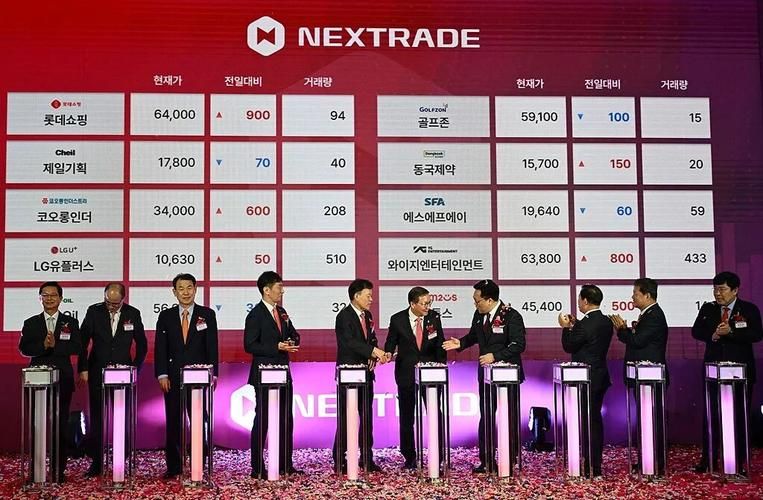
This new landing means that investors who used to judge the volatility of st,* st stocks by 5 per cent rise and fall need to be readjusted for 10 per cent volatility. This adjustment affects more than 150 risk warning units in the deep plate, the total market value of which was previously limited by a 5 per cent increase or drop totalling approximately $650 billion。
At the same time, the exchange retains the investor's risk exposure and buys a single day only at the bottom of the wind, such as 500,000 shares, to ensure that the system adjustment does not lead to a risk out of control。
On the first day of the new rule, the entire st plate went up and down. Of these, 10 per cent of the shares of st sung farmers, st sea king, *st dongji, *st dragon da, *st intercontinental, *st remo and 10 per cent of the shares of st *shang, *st meizi, *st ban oil and *st goko。
Indeed, there has long been a speculative culture of “shells” in the a stock market, with some investors viewing st stock as a tool for “rending in, borrowing in”。
The current star stock of interest due to a 5 per cent rise and fall is st kyung blue。
Since 2026, the concept of “targeting” in stkingland has been funded, rising from approximately $1. 7 million at the beginning of the year to a peak of $6. 89 in mid-may, an increase of over 300 per cent. During this period, there were numerous roll-ups, extreme movements in the sky floor and the ground ceiling, with a cumulative record of more than 40 trading-off days and nearly 20 trading-break days as of early july。
Extreme trends such as dense boards and “84-second sky floors” are to some extent the catalyst of the narrow 5 per cent rise and fall limit of the old rule。
Bank of sioux special contracting fellows paid a husband to explain to china news weekly that the price discovery function of st stock was severely constrained by a narrow 5 per cent limit. No matter how good the company was or how good it was, stock prices could not reflect real value in one day. As a result, the market can only digest information with a continuous one-board。
The extreme chain movement of st shares is precisely the trap facing the diaspora。
In the case of *st-king south, where the company is on the verge of retreating because of negative net assets, unsatisfied financial returns and the occupation of funds, travel capital took advantage of the 5 per cent rise in the cost of the board, which rose from the “six-panel” in early june 2026, cumulatively to over $430 million in exchange for nearly 24 per cent。
This means that many small and medium-sized investors miscalculated the “failure reverse” to the higher end. This represents a deficit of more than 25 per cent in only two weeks and a maximum withdrawal of nearly 30 per cent for some of these investors。
However, the boards were then terminated, followed by a series of drops, at which time 5 per cent of the drops formed a “sold lake”, leaving the windmill without any possibility of stopping the damage, and the stock price continued to be glued to a dollar。
The new rules would, in turn, address such issues to some extent effectively. The easing of the rise and fall meant that the small funds were largely ineffective when the “boom-up” threshold was raised。
On the one hand, a “spam stock” that is not supported by performance and is based solely on hard-core financing is unlikely to rise and fall back; on the other hand, a st stock that does not have a substantial profit will be abandoned, and market heat will be significantly cooled and rationality will return。
What are the long-term effects of doubling flexibility
In terms of impact, it appears to many of the experts interviewed that the new formal fall a formula is intended to increase market pricing efficiency, and that expanding the margin of rise and fall could improve market price discovery and pricing more efficiently and further market-oriented capital markets。
He noted that the restructuring was by no means a deregulation exercise. The central objective of harmonizing the risk-based risk warning bands for equities and ordinary equities is to reduce institutional differences, increase pricing efficiency and discourage excessive speculation, rather than encourage speculation on st shares。
However, in the case of changes in rules, investors should at the same time focus on the risks involved。
China-thai securities indicated that the risk warning limit of 5 per cent to 10 per cent for the stock increase would result in a significant increase in the price elasticity of the target day, which could be followed by an increase in trade activity; however, the increase in volatile space would mean that the potential gains and losses would be magnified in parallel and the risks and gains doubled。
The former chief economist of the open source fund, yang delong, also pointed out to china newsweek that, in the new rules for a stock trading, the rise and fall in the main board st and st stock was relaxed from 5 per cent to 10 per cent. While increasing market activity and pricing efficiency, the volatility and investment risks of the st board were significantly magnified. Investors, especially the diaspora, should carefully assess their own risk tolerance and not engage blindly in speculation。
After all, behind the local carnival, the total division of the st plate remains severe。
Of the 211 st units, 52 have completed the removal of hats since 2026, but during the same period 61 have been newly implemented as risk alerts for de-marketing, and the overall stock pool of the st plate is still being expanded。
Since the beginning of the year, there have been as many as 21 sts whose prices have been sorely cut. * st dong joo fell by 75. 58 per cent during the year, and 9 st shares, such as st long da, st quanda and st hailong, fell by between 60 and 70 per cent。
In the face of a fiercely funded game, many of the st stocks are in danger, and parts of them are even close to the red line. In the case of king st. West, *st quantified sources, stingling and st. Kim hong-soon, these companies have received notification of the opening of an investigation by the cvm, and the seriousness of their violations and the final outcome of the sanctions remain outstanding。
The new rules mean that the market is accelerating, and the price of the stock is falling by a dollar. – under the 5 per cent limit, a st stock of about $2 falls below $1 would take about 14 trading days; under the 10 per cent limit, the period would be reduced to about 7 trading days。
Over time, the new rules have helped to optimize the ecology of the market and to promote its long-term stability。
According to phu, this adjustment is a microcosm of the move from the “policy market” to the “system-based market” in a broader perspective. This reform is deeply rooted in the liberalization of growth and decline, which is a means of accelerating market opening and directing resources towards high-quality enterprises。
“the new formula for a shares, which is intended to facilitate institutional silos and reduce the amount of space available, is accelerating in the past with stories, hard money, the reckless play-off of money, and, in the future, will evolve into a mature market of venture capital, pensions, etf ransoms, etc., with equity prices driven more by fundamentals and long-term funding than by emotional speculation.” yang delong added。
(no investment proposals are made here)