Alkaline metal diagnosis
It's a bottleneck that constrains biomass gasification
Biomass gasification is the conversion of hydrocarbons, oxidation and reduction from biomass to flammable gas, with primary components of carbon monoxide, hydrogen gas and methane, using high-temperature thermal chemistry to produce by-products such as carbon black, tar and ash. At the core of the gasification process is the break-up of the large molecular structure of biomass through incomplete oxidation, from solid biomass to gaseous fuels, chemical materials, as distinct from the reaction path of total combustion to generate carbon dioxide and water。
Our biomass gas-fired stove technology started early in 2000 and was scaled up around 2000 with more fixed beds, fluidized beds and gas-flowed stoves, mainly in the areas of heating。
Owing to the small size of the fixed-bed industry, the high tar content and limited use, in recent years fluidized and gaseous bed-based gas furnace types have begun to be used for large-scale synthetic green methanol and coal-fired coupling power generation projects, but there are fewer cases of mid-test and large-scale industrial applications with short operating time periods and are in the technical and commercial demonstration stages, and technological maturity still needs to be validated。
Fluid-bed gas furnaces use biomass pressure blocks or formed particles, are fully mixed in material flow, gaseous reaction rates are high, the temperature of the furnace is even (7000°c - 900°c), heat transfer efficiency is high, and alkaline metal gas gas is high; wind power is high, gas fine ash content is high; the furnace is complex, with high initial investment and operation costs and energy consumption。
The gaseous furnaces of the flue bed are fully gasged, but the gaseous temperature (1,000°c-1500°c) is extremely high and the gas can be obtained with low tar and high carbon conversion rates. However, the pre-treatment requirements for raw materials are stringent and the cost of pre-treatment is high, <10 per cent for raw materials to be too thin, dry to water-bearing. There is a need for an alkali metal removal process with high overall construction and operating costs。
Owing to the above-mentioned high aerobic temperatures (floating bed gasification furnaces at 700°c - 900°c, flue bed gasification furnaces at 1000°c - 1500°c), tar is decomposition in most cases at high temperatures (the minor amount of tar in synthetic gas needs to be filtered out), and alkaline metals are bound to decipher, in particular the existing wind-photographic gas synthesis green methanol projects in the north-east and interior of mongolia, gasification material with high base metal levels, and how to reduce alkaline metals from “sources” is an inescapable challenge。
At present, our country's large-scale synthesis of green methanol and coal-electrically incinerated biomass places new and higher demands on biomass gasification technologies. In particular, the green methanol synthesis process requires much more raw materials than biomass generation, otherwise the quality of the raw materials, water content and impurities affect the green methanol synthesis process。
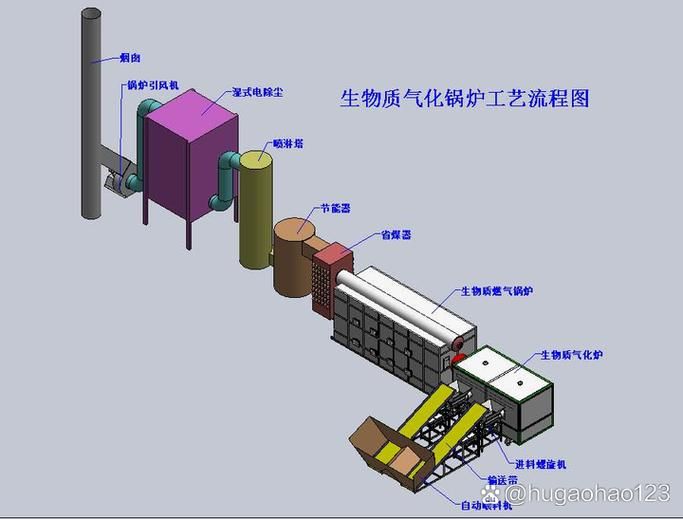
Existing biomass gas furnaces are designed according to gasification mechanisms and technical routes. Flowing and gas streaming beds, in order to obtain flammable gases with high conversion rates, require the construction of extremely complex “chemical plants” (gasification furnaces, purification systems) to treat alkaline metals, with more process solidification + end-of-pipe purification systems and increased investment of about 10-15 per cent in “complex” technological pathways. There are interactions between tar, alkaline metals and slags, such as the catalyzing of alkaline metals, which condensate with alkaline metals and increase the difficulty of processing, leading to the complexity of process systems, increased investment, high operating costs and risks. Added to the complexity of feedstock end-use processing and high operating energy consumption and maintenance costs, the cost of production of green methanol cannot compete with traditional fossil fuels and completely stifles its marketability。
Under technical conditions, gas furnaces are over 500 tonnes/day, with poor adaptation to fuel, uneven material flow, and significantly increased residues hazards。
Unreasonable temperature setting for gasification process
It causes the alkaline metal to be removed
The scale of normal production of green methanol, with the exception of hy, depends on a low-cost, high-transformation rate and a sustained and stable supply of flammable gas, which, if raw material quality is unstable and the temperature fields of biomass gas furnaces are not properly set up, will inevitably result in a large alkaline metal disassembly, affecting the operation of gas furnaces and the flammable quality。
Alkaline metal elements (predominantly potassium, sodium) in biomass are susceptible to volatilisation in high temperature gasification and chlorine is the strongest contributor to alkaline metal. Alkali metals in biomass (mainly potassium and sodium, mainly potassium) are at a temperature that is not constant but are released gradually as the temperature rises, and their presence in biomass is illustrated by the alkali metal-dependent form, type and thermal atmosphere, as well as by other accompanying elements (e. G. Chlorine, silicon, sulphur). Alkaline metals are mainly dissected at temperatures of 400 °c - 1000 °c, which are inevitably dissected in large quantities by a pyrotechnic pyrotechnics made of biomass into granules, with higher aromatic temperatures above 1000 °c。
Alkal metals are analysed in roughly three stages。
Releases of water soluble alkali metal salt began in the cryogenic phase (approximately 400°c-600°c). In the early stages of pyrolysis, the volatilization of kcl above 400 °c began significantly when some volatile alkaline metal salt (e. G. Kcl, nacl) was either directly elevated or released with the decomposition of organic matter, especially when biomass (e. G. Straw) was high。
In the medium-temperature phase (approximately 600°c-800°c), alkali metallic salt - carbonate (k2co3) and hydroxide (koh) are beginning to decompose or abate, and some alkali metals start to react with silicon in biomass to produce silicates, and when temperatures exceed 750°c (local temperatures are more than 1,400°c when pure oxygenation occurs), the aromatic rate increases dramatically and enters the “no-go” temperature zone where alkali metals are volatile in large quantities。
An otherwise stable silicate at a high temperature stage (approximately 800°c - more than 1,000°c) may also be partially decomposition, releasing gaseous koh or kcl. Under gasification or oxygen deficiency conditions, alkali metals are more likely to be reduced to single potassium (k) and even silicates formed at higher temperatures can be reduced to release alkaline metal vapour。
Alkaline metal cause
Slag threatens the safety of the furnace
Alkaline metal dissects the sludge as a complex physico-chemical phenomenon, which is essentially the result of variations, transport, sedimentation and sintering of inorganic minerals such as alkali metal in fuel at high temperatures. Al-alkali metal compounds (especially chlorinated and sulphate) react chemically with thermally exposed metals, causing surface erosion of metals, affecting heat transfer efficiency in gas furnaces, reducing the life of gas furnaces, increasing maintenance costs and even causing safety incidents. Biomass boilers are poorly designed and selected, leading to alkaline metal corrosion and flow reins leading to frequent shutdowns。
When the temperature of the furnace is lower than 450°c, and the temperature exceeds 550°c, the rate of corrosion rises significantly and there is serious corrosion above 600°c。
Gaseous alkaline metals (kcl, koh) and k2so4 follow the flow of flue gases, when temperatures fall (e. G. A boiler at 500 °c-600 °c for hot surfaces), adsorption of fly ash condensed and deposited on the metal surface like “glue”, and formation of low-melting co-cline compounds with other components of the flue gas, which have significant and irreversiblely damaging effects on the corrosion of the structure of high-temperature areas of the gasification furnace。
The alkalin metal chloride in the slag layer reacts with o2 and h2o in the flue gas, creating continuous strong corrosive gases such as hcl and cl2, which cannot be spread in time and are concentrated within the gap between the slags, on the one hand directly responding to the metal to produce defecated metal chloride (e. G. Fecl2, fecl3), and, on the other hand, the oxidation of the metal chloride results in the re-release of cl2 and the formation of a “corrosion-emission-recomposition” cycle, significantly accelerating the process of corrosion. The focus would result in reduced effective capacity and gasification efficiency in the furnace, the blocking of slag passages in serious cases and mechanical clean-up of the furnace, thereby reducing the operational cycle and leading to higher maintenance costs. Even if high-cr alloys (e. G. Hr3c, super304h) that are more resistant to corrosive performance than conventional carbon steel can reduce the rate of corrosion, their long-term operation cannot fully avoid local corrosive failure caused by sludge。
In addition, the impact of alkaline metal slags on aerobic furnaces varies at different speeds and appears to operate continuously after delivery, but over time, the effects become apparent and there are risks. In particular, the original design of boilers and materials by the coal power unit did not take into account the effects of alkaline metal blending with the biomass, which could not underestimate the slag and corrosion of the boiler。
According to the principle of first sex
Build temperatures suitable for biomass gasification field
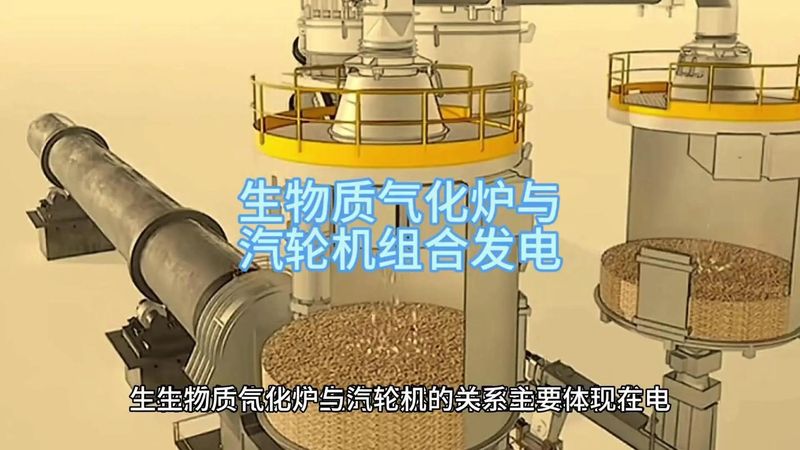
From the first point of view, biomass gasification is considered to be a thermochemical process in which biomass (composed of elements such as carbon, hydrogen, oxygen, etc.) decomposition of large molecular organic matter into flammable gases of small molecules such as carbon monoxide, hydrogen gas and methane, under high-temperature and oxygen-depletion conditions, through atom-level reorganization. At the core of this process is adherence to the constant laws of mass and energy, energy input driving the break-up and formation of chemical keys leading to the upgrading of low-grade solid fuels to high-grade gas fuels。
Although both biomass and coal are solid fuels, biomass is distinct from coal composition, volatilization, ash melting point. Low biomass carbon content, volatile and high hydrogen content, loose structure, low aromatic temperature and low ash melting point. Coal, on the other hand, is high carbon content, low hydrogen content, low volatilization, dense structure, high ash melting point and high temperature to achieve efficient carbon gasification。
Biogasated tar is relatively easy to treat, with a focus on alkaline metal extraction and slag. Existing biomass gas furnaces are basically designed using gas stoves, which make it difficult to balance improved gasification conversion efficiency with gas-basket gas furnaces and lower alkaline metal dialysis. Circulation fluidized bed boilers are difficult to operate at less than 750°c and, in order to improve gasification efficiency, the temperature of the furnace must remain above 700°c - 850°c; and the air flow boilers chamber temperatures above 1000°c, such as “breading with steel furnaces”, not only are energy-intensive, but also push biomass into the temperature “trap” of heavy alkaline metal volatilization (>800°c) and heavy ash melt slags, and “smoke” gas stoves designed for biomass furnaces will be “devious”。
Following the process approach of gasification furnaces, forced application of gasification paradigms designed for coal, human-induced “fragmentation” of biomass gasification processes into several segments and repeated forced “winding”, biomass gasification in high temperatures inevitably leads to “water and soil dissipation”, resulting in a series of problems such as alkali metal disassembling, slaging, increasing system complexity and back-end processing difficulties, and significantly increasing investment and costs。
Natural problems arise from the burning of “grass” with “coal” stoves, which continue to be adapted to biomass within the technological framework of gasification, with only “high-priced green alcohol” that is costly, unstable and the green premium swallowed up by the technology shortboard。
Relying on traditional gasification pathways to solve a problem, “create” more and more complex new problems, do we have our imagination locked away by “road dependence”? In response, active exploration of the “keys” to emerge from the dilemma may not lie in the construction of more complex systems, but rather in the return to the principle of firstness and the search for the simplest and most essential “solve”。
Biomass, which are solid fuels, are solid-combustible substances with heat or power, consisting of gaseous volatile (voc) substances, fixed carbon, etc., which vary in composition and require different temperature fields to achieve full carbonization and gasification. Following the principle of primaryity, innovative technological pathways for biomass gasification, limiting solid-state subcombustion of fuels to below 700°c, producing high conversion rates of flammable gas, leaving most of the alkali elements in combustion residuals (a significant reduction in the amount and cost of alkali metal purification at the end of the flammable gas) and producing an ecological cycle of potassium, sodium as an eco-fertilizer, removing the “technical bottlenecks” of biomass gasification and green methanol in a very simple structure at very low cost, not only as a technical route choice but also as a strategic choice for green methanol to win the market. Successful green methanol projects in the future must have a gasification technology that is “tailored for them”, the core of which must be an ingenuity gasification stove for biomass in order to lay a solid technological and economic foundation for scale and marketing applications。
Looking ahead to “155,” green methanol will play an irreplaceable role in the development of new types of storage energy, “decarbonization” in high carbon areas and the promotion of energy security. Coal-fired biomass is important for low-carbon transformation, and biomass gasification will play an “essential” role in these areas. With the continuous innovation of biomass gasification technologies, there is a greater future for diverse applications such as synthetic green methanol, coal-fired biomass and “zero carbon” parks。
(by former researcher of the jilin department of energy)