Thermal decomposition (fracking) is now a difficult place in the country at high temperatures, in the seals that move in the direction of different cores, like the seals that keep the gas under pressure. After more than a decade of research, hebei has used self-reimbursing soft, one-size seals to reach the gas. Address risks arising from gas leaks。
Pyrolysis, also known as dry distillation or carbonization, refers to the process of thermal and chemical decomposition of organic matter (e. G. Biomass, sludge, waste tyres, plastics, etc.) at a certain temperature by external heating in an oxygen-depleting or non-oxygen-free environment, leading to the generation of carbon (or coke), pyrolysis oil, and thermal gas. Pyrolysis kilns are the core equipment for this process。
Its core process principles can be summarized as the breakdown of large molecule organic matter into small molecules of flammable gas, liquid oil and solid carbon in an oxygen-depletion environment through “heating”。
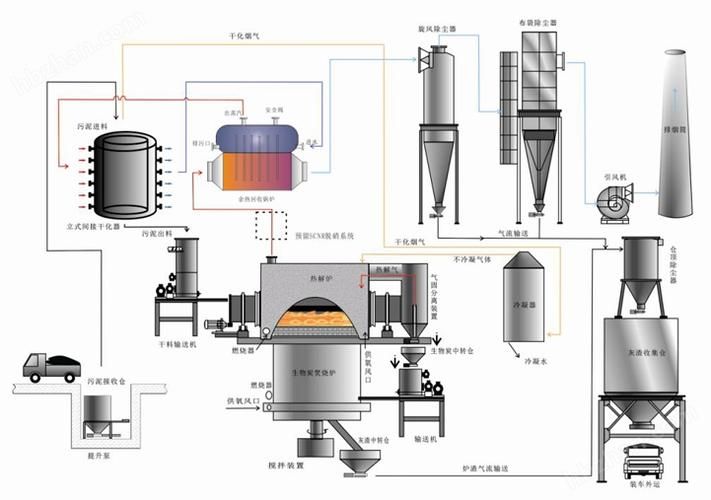
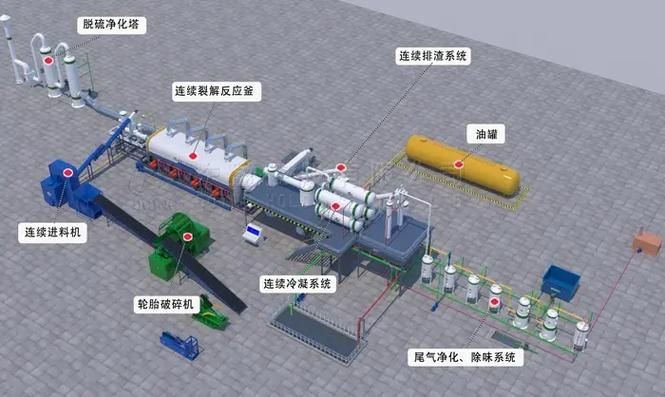
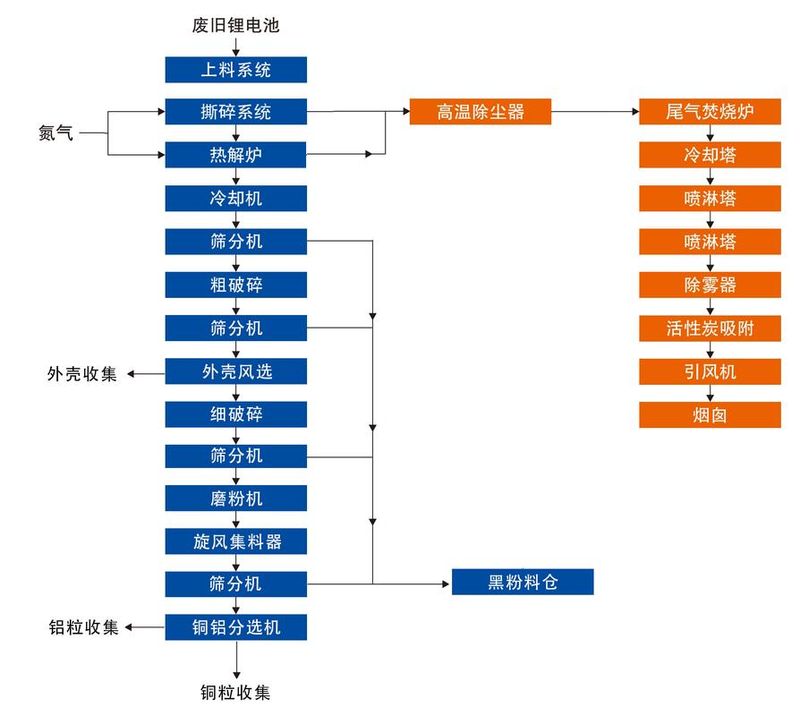
The following is an example of a typical, continuous biomass pyrolysis kiln that decomposes its processes。
I. Flow chart of the pyrolysis kiln process (summary)
Pretreatment
Yeah, yeah
Pyrolysis
Separation and collection of products
End gas treatment and energy recovery
Ii. Detailed process
1. Pre-treatment of raw materials
Purpose: to ensure the homogeneity and stability of input materials in kilns, to improve pyrolysis efficiency and the quality of products produced。
:: steps:
• fragmentation/crushing: break-up of large raw materials (e. G., wood, garbage, etc.) to appropriate sizes (usually 10-50 mm) to increase the surface area and facilitate heat transfer。
Dry: reduce the water content of raw materials to a certain standard (usually less than 15%). Excessive moisture can consume large amounts of thermal energy for evaporation of water, reduce pyrolysis efficiency and affect the quality of pyrolysis oil。
:: screening: removal of impurities such as metals and stones from raw materials that cannot pyrolysis。
2. Feeding systems
Purpose: the pretreated material is delivered to thermal kiln main reactor in a continuous, even and sealed manner。
• equipment: usually using a spiral feed machine or a star feed valve. These devices can form material seals to prevent external air from entering the kiln, as well as pyrolysis gas leaks within the kiln, ensuring that the reaction takes place in an oxygen-deficit environment。
Pyrolysis response (core)
Response environment: in closed kilns, the raw material in the kiln is indirectly heated by heat from combustion of external fuels (e. G. Natural gas, fuel or thermal gas produced by itself). There is little oxygen in the kiln。
Temperature range: the pyrolysis temperature is usually between 400 °c and 800 °c depending on the target product。
• medium- and low-temperature pyrolysis (400-600°c): tends to produce more liquid products (biological oils)。
• high temperature pyrolysis (7000-800°c or higher): tends to produce more gaseous products (synthetic gas)。
• response process:
· dry segment (~150°c): residual moisture evaporated。
• prethermally decomposition (150-300°c): unstable components such as semi-cellulose begin to decompose。
• primary pyrolysis segment (300-600°c): volatile fractions (cellulose, woody, etc.) in raw materials are disassembled in large quantities, producing pyrolysis vapour and coke. This is the main generation stage of the product。
• cooling segment: reacting solid residues (carbons) are cooled at the end of the kiln for safe production。
4. Separation and collection of products
The products from the pyrolysis kiln are pyrolytic vapours (oil and gas mixtures) and solid carbon in a mixed state。
• solid products (carbons):
• solid residues (biocarbon, coke) released from the tail of the kiln after pyrolysis。
• the cooling and sealing of materials, usually through cold water or cold wind spiralers, for final storage。
• gas phase (thermal vapour):
• high-temperature pyrolysis vapour is imported into the condensation system (usually cyclone separators + condensers)。
• cyclone separators: first remove dust and tar particles from the steam belt。
• condensers: pyrolytic oils (or biological oils) collected from the liquidation of the condensable vapour partially by cooling water。
Incondensable gases: gases that cannot be liquefied after condensing, i. E. Pyrolysis gases, consisting mainly of flammable gases such as h2, co, ch4 and co2。
5. Fossil gas treatment and energy recovery
• the use of pyrolysis gas:
• a portion of the pyrolysis gas collected is drawn back to the combustion unit of the pyrolysis kiln as a heating fuel to achieve system self-heating and significantly reduce external energy consumption。
• excessy pyrolysis gas can enter the boiler for power generation or direct combustion for heating。
• end gas purification:
Thermal fumes for thermal kilns need to be treated by the flue gas purification system (e. G., bag cleaners, alkaline spray showers, etc.) prior to release to remove pollutants such as dust, so2 and nox from the chimney after meeting environmental emission standards。
Main types of pyrolysis kilns
Based on the kiln structure and mode of work, the following are common pyrolysis kilns:
Reversal kilns:
Characteristics: the kiln is a slow-rotation cylinder with raw materials constantly being rolled and pushed inside the cylinder, evenly heated and processed in large quantities。
• application: highly generic for particulate form, powder form and small pieces of material。
2. Fixed bed/stand kiln:
• characteristics: simple structure, largely static in the kiln and gravitational up and down。
• application: applies to traditional areas such as charcoal production, but is prone to heat imbalance。
Fluid bed kilns:
Characteristics: inert bed materials such as quartz sand are laid inside the kiln, which is fluidized through the heat wind, and the raw materials are “boiled” in the bed layer, with high heat transfer efficiency。
• application: response temperature control requirements are high and suitable for large-scale, continuous production, but systems are more complex。
Iv. Process characteristics and applications
• advantages:
• quantification and resourceization: transforming waste into higher value-added energy products (oil, gas, carbon) and achieving “waste as a treasure”。
• environmentally friendly: pyrolysis processes are carried out in closed environments compared to direct incineration, producing fewer pollutants (e. G. Dioxins) and less exhaust gas。
• energy self-sufficiency: the use of thermal heat from its own production can significantly reduce operational costs。
• main areas of application:
Biomass energy: conversion of wood chips, straws, rice shells, etc. Into biocarbons, biooils and synthetic gas。
• solid waste management: treatment of municipal sludge, household waste (rdf), waste tyres, waste plastics, sound management and resourceization。
• industrial sector: production of activated carbon, metallurgical coke, etc。
It is hoped that the detailed process explanation above will help you to understand the overall operation of the pyrolysis kiln. If you need to know how to seal it up, it's a beautiful, environmentally friendly place