"when doing experiments, you have to learn to walk north of the south." more than 30 years ago, prof. Yuan shiguang of china’s petroleum university’s refinery department taught or studied tanahara – the reverse thinking – that often opened new paths. Today, tahara, a professor at the chinese university of petroleum (china) chemical engineering college, once again recalled this when he was awarded the fourth national prize for innovation。
From oil to cross-border deep cultivation of coal and biomass, from laboratory to factory sites and fields, the results were transformed to look back at the times, and tanahara felt: “reverse thinking has always guided my research.”
From oil to coal, create a new molecular coal chemistry system
In 1990, tahara was admitted to the department of petroleum processing at the chinese university of petroleum (china). During his undergraduate studies, he showed a scientific sensitivity different from that of regulars and invented the u-gas generator, the btv butterfly-shaped pavilions, etc. After graduating in 1994, he worked at the national priority laboratory for heavy oil, which dealt with the chemistry and processing of heavy oil and developed a series of efficient separation towers。
During the course of his studies, his research led to a critical turn. The master's mentor suggested that he “go from oil to coal-chemicals”. As a result, in 2000, tahara was admitted to the university of taisei engineering for a ph. D. In coal chemicals. The teacher was a member of the chinese engineering college and the former president of taishu university. At that time, the concept of “moleculine coal chemistry” had just been introduced at the international level, but few people knew how to land. Tahara has taken the lead in molecular-level research on coal, drawing on the experience of heavy oil studies. “i tried to combine the composition of oil with coal, first to solve the soluble problems of coal, then to introduce the petroleum group theory into coal, so molecular coal chemistry was built.” with this in mind, he completed his doctoral thesis " preliminary study of the chemical composition of coal and its application in coal plasma pyrolysis acetylene " in less than two years。
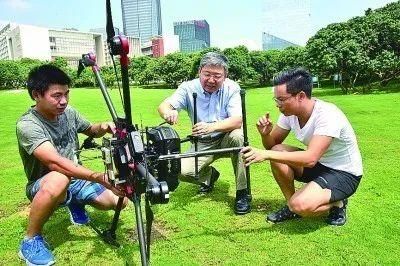
Since then, he has led the team in a continuous effort to establish a new system of research in molecular coal chemistry based on chemical composition, which for the first time revealed a free-base control mechanism for coal thermal, carbon-water vapour decomposition from the free-base gaseous reaction mechanism, raising the study of coal structure and reaction from macro to molecular levels and laying the theoretical foundation for the high-value green low-carbon use of carbon-based energy in the country。
Waste into treasure and create a new path to high-value biomass
Based on molecular coal chemistry, tanahara has attempted to combine the use of low-quality coals rich in decaying acids, extracting corrosive acids from poor-quality coals and developing a series of multifunctional degradable liquid membranes of decaying acids. This membrane spray, which can be fully degraded after two to three months, is a direct soil improvement agent. The technology received the second prize of the 2010 national prize for scientific and technological progress。
At the beginning of the twenty-first century, biomass pyrolysis technology was characterized by low yield of liquids, ash in oil and high water content. At that time, tanahara was very interested in the pyrolysis of coal, and he wondered, "can coal pyrolysis be used on biomass?" he looked at the literature, looked at the site and found that the difficulty could be solved through an integrated research path with technological equipment. As a result, he has developed the rapid pyrolysis of acidation techniques and equipment for biomass from the lower-mix cycle fluid bed, reaching the world's leading level. Currently, there are less than 10 international biomass pyrolysis-grade industrialization units, of which five are using the technology; the world's largest first biomass pyrolysis unit, 200,000 tons/year, has been built in yamadong guangya. In addition, in response to the needs and mechanisms for the rehabilitation of different types of degraded soils, and based on molecular design theory, he has been able to remove deficiencies in the accuracy and stability of existing conservative acids in soil restoration by creating a series of high-value target-to-crushing environmental materials through conjunction, which has been used for a long-term rehabilitation. The technology was awarded second prize in the 2020 national innovations prize。
Since 2020, he has developed a fully degraded liquid membrane technology based on biocorrosive acid, mainly soil restoration - • the cortex increases temperature protection, prevents soil wind erosion, and then eco-rehabilitates and improves the soil, thus overcoming the dilemma of crop straw burning directly to pollute the environment, directly returning to the field and causing pests and grass, and achieving a green and efficient return to the field。
During the olympic sail race in qingdao in 2008, there was a great deal of moss at sea and the competition was almost “savanna”. To address the issue of the harmless handling of moss, the field team innovatively introduced high-pressure water thermal oil technology to convert moss into biooil, resulting in a reduction of the biooil oxygen content to less than 5 per cent. In recent years, with the national ban on natural peat mining, 100 per cent of our peat dependence on imports has increased from 100 to 23,000 yuan. Based on the experience of handling mosses, tanahara has also developed “artificial peat and corrosive acid preparation techniques for animal faeces. In 2024, the 24 000 tonnes/year demonstration device built using the technology in shaanxi was fully integrated, opening the industrial path to alternative imports of peat while deconstructing the environmental challenges of the most painful animal excreta in farming。
In addition, in response to the problem of our external dependence on potassium fattening, which is close to 80 per cent of the “calculation neck”, the continuous high-pressure water thermal activation - co-opt acid conversion technology of tanahara has stabilized at more than 95 per cent, and new long-acting potassium fertilizer has increased from around 40 per cent to more than 95 per cent, providing a strong support for food security。
Breaking the "three-highs" and changing the gasification technology
If this is the achievement of tanahara in the field of pyrolysis, he has likewise gone the same way in the field of gasification。
Gasification is the head of modern coal-chemicals. In the past, the country's mainstream coal powder-basket gasification technology has suffered from a “three-high” problem. According to tahara, gasification technologies at the time, both domestic and foreign, treated coal as a single substance and lacked theoretical support for molecular coal chemistry and mobile chemical reaction regulation of gasification furnaces, resulting in low carbon conversion rates, low energy consumption of second-generation fluidized bed gasification furnaces, difficult gas-control oils and difficult use of high carbon ash; and third-generation gasification furnaces, which increased carbon conversion rates by changing their response conditions, but also high energy consumption, high water consumption, high pollution, coal distress and high carbon content deficiencies of ash。
Can the two advantages be complemented? The original concept of “division gasification” has been introduced by tanahara, and a composite upgrading of the zonal gas furnace technology has been developed. “simplicitly, it is the gasification of easily fertilized coal in an elevated pipe circulation bed, and the melting of difficult ash in a high-temperature flow bed.” the team integrated the original equipment, such as the inner-cycling steps streaming bed, the pulse upgrading tube flowing bed and the y-style flow flow bed, and developed the fourth-generation gasification furnace - the compound upgrading tube partition gasification furnace technology. In july 2023, the technology was “generally in the international lead”, according to an expert assessment organized by the chinese federation of petroleum and chemical industries. At present, 28 units have been used for this technology, with new profits and savings exceeding 6. 5 billion yuan over the last three years, with first prizes for the advancement of science and technology in shandong province and first prize for the advancement of science and technology in the chinese federation of petroleum and chemical industries。
Based on the properties of biomaterials, the field team further developed the catalytic gasification furnaces for biomass, organic solidification and hazardous complex upgrading tubes, deciphered worldwide common problems such as high tar and methane content in biomass gasification and the flow of potassium ion leading to the fibrosis of charbeds, and supported the production of green methanol and biocoal by high-efficiency gasification technologies, a ton-grade demonstration device for the industry of green methanol using this technology is currently under construction。
It's amazing
Looking back at the path of research, tanahara is grateful to every teacher who helped him. The teachings of prof. Yuan kuang, “north south road”, and prof. Tsai tao-soon, “before and over”, were purified... These ways of thinking are summed up by him as “critical systemic thinking” — not superstitious, not blind, grasping the whole, grasping the key, forming an overall and holistic view. As a teacher, he also passed this on to students。
Critic systemic thinking is also reflected in his judgement about the future direction of energy research and development. He pointed out that: “a proper energy source, with the right technology, with the right products, with the right places, and with the right role, can make the `no triangle' of clean, secure, economically viable energy.” in particular, coal should develop special coal-chemicals and green coal-electricity, which will continue to function as a bottom-dip power source for new energy systems when large-scale energy storage technologies are not fully developed to ensure stable power grid operations; the market space for oil in the fuel sector is already limited and should be directed primarily towards chemicals; biomass is rich in natural high-molecular materials such as cellulose, which should not be blindly adapted to the old routes of coal-chemicals or petrochemicals, but should be obtained directly through hydrogen-key re-engineering。
Turning to the next direction of research and development, tanahara indicated that the focus would be on green fuel. He led the team in addressing the key technical challenges of biomass gasification and developed an autonomous intellectual property rights (ipr)-based green methanol production technology system in conjunction with the current methanol synthesis process. In his view, china has a significant combined competitive advantage in this area, not only with abundant resources for straw, but also with low-cost living waste and even organic solid waste, which can be converted into synthetic gas before producing green alcohol, with social and economic benefits. Recently, the tahara team is building a ton of demonstration devices。