
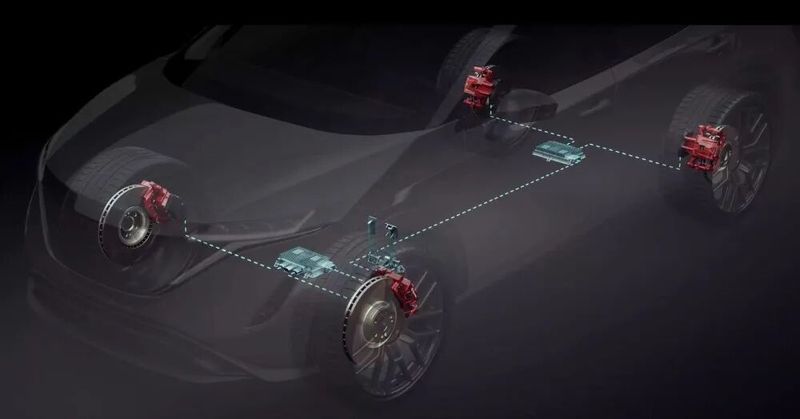
Is the line-control movement really high enough to be cut off and replace a hundred-year-tested mechanical connection
Perhaps in the near future, when you step on the brake pedal, an invisible paradigm change is taking place。
For the past 100 years, your feet have been the absolute dictator of the brake system — as much as you step on, as tight as you brake. But on smart electric cars, this power is being transferred quietly to a computer。
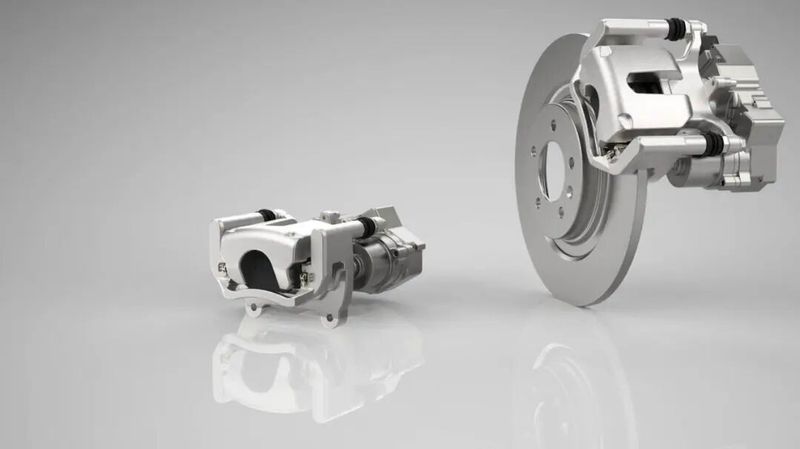
It's not the engineers' rush. When cars learn to recover their own energy, make their own emergency brakes, or even drive their own cars, using vacuum-assisted brakes becomes the most stubborn slab in the system。
So, the line's coming in. It downgraded the driver's foot from a “commander” to a “probator” and gave the computer the final interpretation of the brake system。
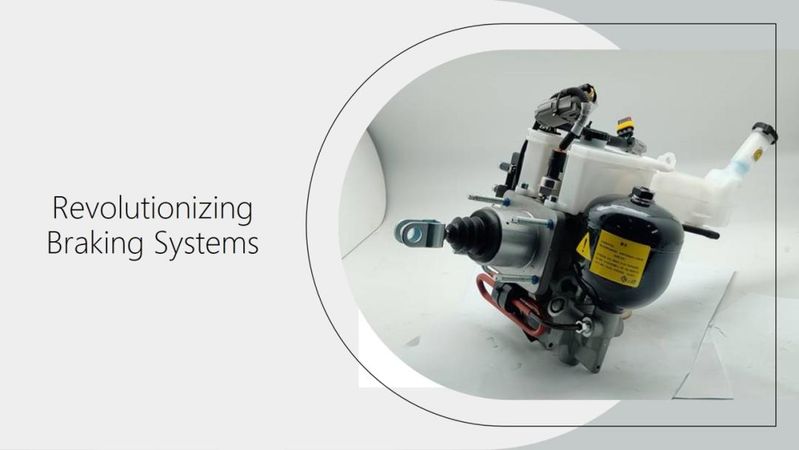
This is the core and most sensitive technological elevation of the entire smart chassis — because it runs the brakes and is the last safe line for the car。
From vacuum to electron: a revolution of decomposition
The work of the traditional brakes is not complicated: the vacuum created by the engine entering the gas tube, which amplifies your foot through a booster. The power of pedals, which push the brake fluid in the main tank, is passed through the pipe to the four wheels, where the brakes are tied to the brakes。
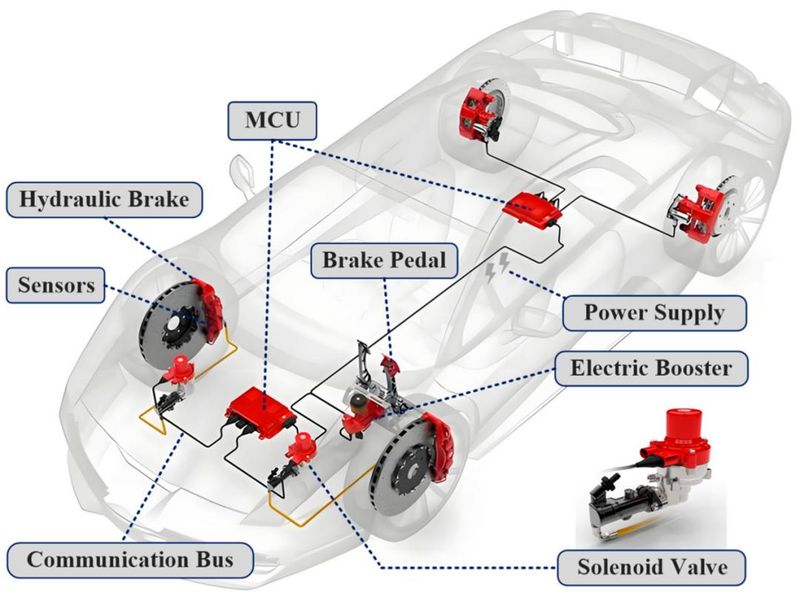
The system is highly reliable, but it has three congenital defects: it must have a stable vacuum, and the electric vehicle does not have a motor; it cannot build pressure on its own initiative, and it can only be stepped on by people in emergencies. Down pedals; brake pedals and actual power are rigidly bound, and pedals move forward when energy is recovered, and driving experience is extremely poor。
Line control is about these three problems. Its core logic is “decoupling” - brake pedals no longer directly drive the main tank, but instead become a sensor that translates the driver's intentions into telecommunications to the control unit。
The control unit integrated battery state, speed, active safety sensors calculates how much power each of the four wheels requires and then directs the implementing agency to complete it。
It doesn't sound complicated, but the devil hides in detail. Now that the pedals are “false”, the engineer has installed a simulator consisting of springs and rubber blocks behind the pedals, dedicated to providing the driver with a real “foot feeling”。
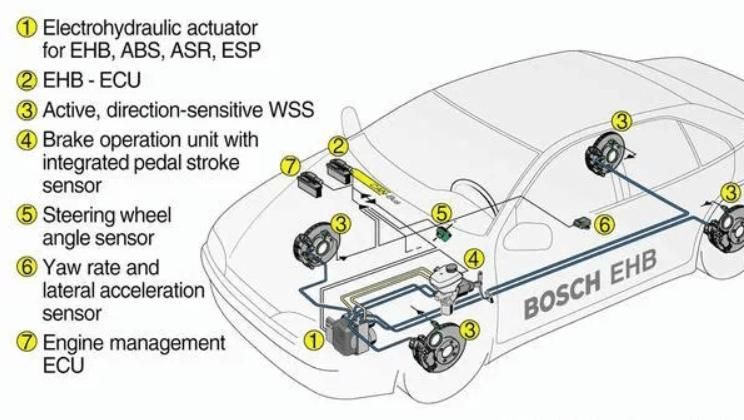
You stepped down and thought the brakes were linear, solid, actually "acting." but this performance is precisely the essence of technology — so that old drivers who are accustomed to traditional brakes do not have confidence in electronic systems。
Deeper challenges lie in failed security. Extreme circumstances must also be taken into account when the vehicle code electronics are more reliable. In the event of a sudden blackout, there must be a purely mechanical “life-saving passage” for wire control。
It is in this context that the foundations of the work of the traditional tier 1 giant are evident. The continental group's mk c1 programme is switching structures through an enchanted electromagnetic valve: normal-time electric presses push the pylons, break the post-voltage valve core and pedal to the main cylinder。
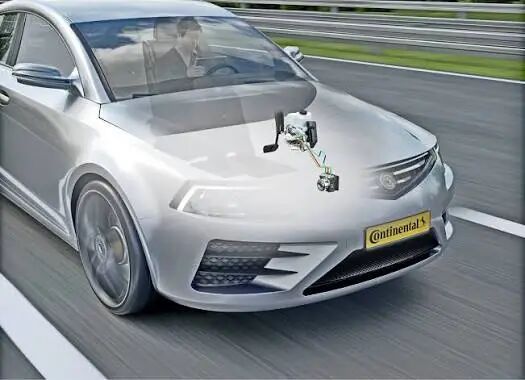
The mechanical backup is required by statute to provide a reduction of at least 6. 4 m/s2, sufficient to stop safely on the highway. This physical backup, completed in millimetres, is more difficult than any software redundancy。
As the honorary councillor of the chinese society of automotive engineering has long said in wu: “the cable chassis is a data and physical interface for smart cars, and brakes must be self-controlled as the most secure implementer.”
This phrase points to the strategic position of the brake system — not only as a technical issue, but also as an industrial security issue。
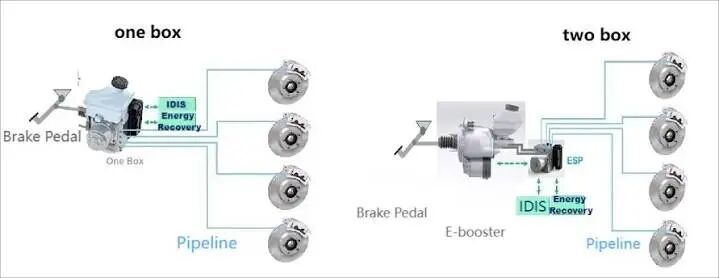
On the technical route, the industry has developed a clear cut-off. The current mainstream programme, known as ehb, is electronic liquid suppression, which preserves traditional hydraulic piping, with the benefits of good technological inheritance and mature industrial chains. It is divided into two different forms:
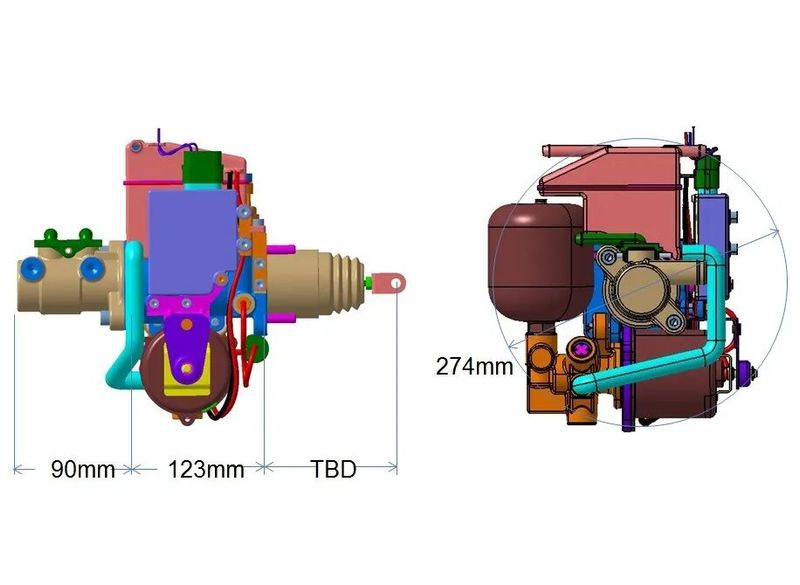
The first ibooster-esp combination, which is divided and naturally has the advantage of being backed up by each other, has a large size, large parts and high cost; and the integrated one-box programme, which is then performed, integrates all of the enablers, the main tank, the esc into an aluminium block, reducing the weight by about one quarter, and the spare parts by almost one third, into the current mainstream of a well-deserved industry。
Looking further forward, the more far-reaching end scenario is called emb, which is electromechanical brakes, which cut all the hydraulic pipes directly, and four wheels each with an independent electric booster. This is a real dry brake, with a millisecond response rate, and supports the upgrading of the ota, but there are three major mountains ahead of industrialization。
The dawn of one-box's siege and emb
How can the one-box program become the current "rolling king"? The answer is simple: lighter, cheaper, more efficient energy recovery。
From 2021, when the first volume project landed, to 2025, when the package was over 100, the national production supplier had forced bo and the mainland-owned precision implementers worth more than $2,000 to more competitive price zones。
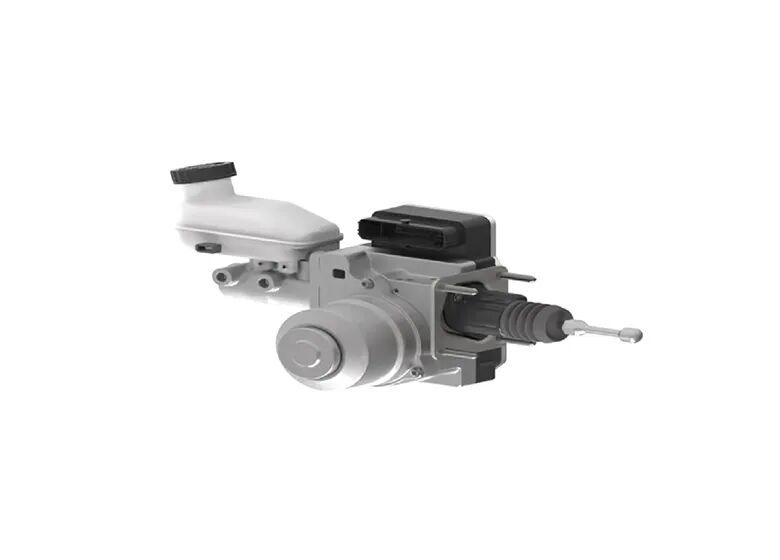
But one-box's competition is far from over. With the ibooster taking orders for almost all the early electric vehicles, when the trend became clear, bo began a decisive self-revolution of the more integrated ipb programme。
The continental group is betting on mechanical reliability, and mk c1 is selected by the luxury brands of bmw, volvo and others, which impose the most stringent security redundancy requirements, and the subsequent mk c2 is driving directly above standard l3。
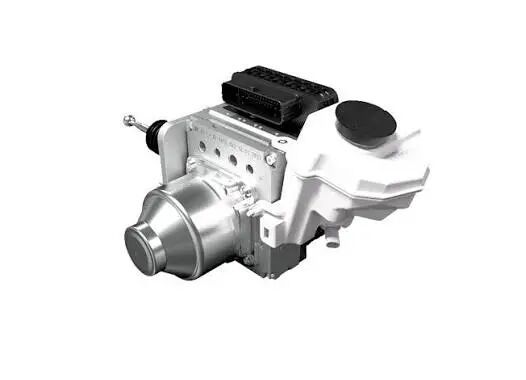
The dichotomy strategy of Čefu is reflected in the mixing of redundancy, with its ibc system incorporating back-wheel electronic brakes into the emergency brake redundancy chain for the first time。
In response, zhang hong cai, director general of the biadi technological development centre, drew a fine conclusion: “there is no efficient implementation of the cable-controlled chassis, and the planning and control of smart driving is the skyscrapers. Brake and turn is the last safety floor.”
This phrase speaks to the bottom-up demand of the entire plant for wire control — whoever supplies it, the security badge must be in its own hands。
And the emb is the sword of damocles that hangs over everyone. Its advantages are subversive: very rapid response, extremely simplified structure, support for distributed chassis and ota upgrades, and true realization of “software definition brakes”. But one of the three mountains facing industrialization is harder to turn than the other。
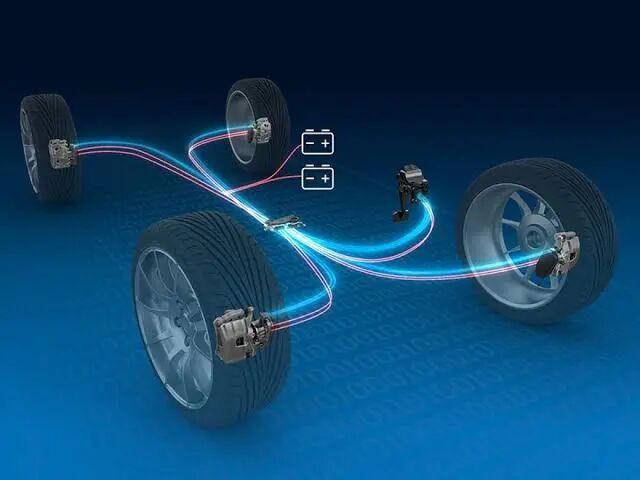
First, it is safe to fail - emb must ensure that, even when power falls off, it is not held dead or under pressure, and that it is reliable and unlocked in the harsh conditions of high temperatures, vibrations and mud on the side of the wheel。
Second, critical components — which require more than 5 tons of tight power — are the extreme test of electrical power density and the challenge of high-temperature demagnetic withdrawal is equally difficult。
Third, regulations and costs – wang weilong, president of the board of directors of the china district of bosei smart travel group, pointed out that bosei’s emb will take the lead in china in 2026, and will need to work with industry partners to advance legislation. Large-scale production is considered by domestic producers to be beyond 2028。
The ultimate form of wire control must be emb, but before that, whoever can make one-box more reliable and cheaper will win tickets for the next five years。
Safe shadow costs versus supply chains
If one-box's competition is in the first half, there's only one theme in the second half: security。
More precisely, after a single malfunction of the fail-operational system, the capability to implement the minimum risk strategy independently remains. In the case of self-driving above l3, this is no longer an add-on, but rather a mandatory indicator。
This means that isomer redundancy is required for power supply, communication, sensory, and implementation of four dimensions: the power supply must be independent of two routes and meet the highest functional security level, asil d; communication lines require a double can or flexray structure; pedal transfer sensors need to adopt two separate principles; and the implementation end must have at least two independent pressure channels。
The best industry option at present is the hybrid structure of ibc plus the rear axle emb: four wheels will be run by an integrated brake unit during normal working hours, with the back axle emb standing by; and the back axle emb will perform emergency braking independently once the main system has failed。
The senior director of chassis works, shoba hon, stated that the full application of self-research line control from the nt3. 0 platform, using the former ibc post-emb structure, would achieve more than 0. 6g back-up reduction. It's a prerequisite for intellectual safety, not for showmanship。
The subtext of this sentence is interesting: the power to define the brake system and the data interface, and the mainframe will no longer be easily handed over to the family barrel of tier 1。
In response to the call for “all-in-house control” from biadiang, two new energy companies in the head went into self-study, revealing an industry trend: when the brake system changes from mechanical to electronic, it is no longer a simple implementer, but a part of the whole vehicle's intelligence。
A lot of people think cable chassis is a hardware business, but it's a software business. Every millisecond of a brake response, aeb's brake distance can be reduced by several dozen centimetres, that's life. It's no longer whose power is greater, but whose control algorithm is more precise and whose failure pattern is more comprehensive。
In this game, the supply chain is being redefined. The traditional tier 1 buyout model is giving way to the joint development and sharing of intellectual property rights between the supplier and the whole plant at tier 0. 5。
The entry of chinese cross-border players has brought communication and electrical control technologies into this traditional domain. A wake-up call from the industrial safety perspective — “no one can hold the safety building blocks of smart cars in their hands” — takes on a more specific meaning in this context:
From one-box to emb, from mechanical backup to electronic redundancy, the biggest challenge for chinese enterprises is not to level the current product parameters, but rather to be able to gain sufficient voice in emb standard-setting。
But when technology is sophisticated, it is ultimately cost-effective. The cost of the current one-box-line control kinetic system is still more than double the cost of the traditional brake plus esc programme, plus the redundancy backup required for l3。
The question of how this “shadow cost” is digested at the end of a market for chinese electric cars, where price battles have reached under $150,000, is a problem for the whole industry。
Some hosts are already trying to modularize redundancy structures so that the low-altitude vehicle type supports the later-activated hardware set-up of the ota, while the high-altitude vehicle type carries the complete backup directly. This approach draws on tesla's hardware pre-burial strategy and may be a key driver of universal line control。
The nature of braking is always safe. From mechanical to hydraulic pressure, from hydraulics to electrons, from electronics to total electricity, each technological leap is pushing the speed and accuracy of the response to the new steps, but each one also brings new patterns of failure and more complex security arguments。
In this area, speed has never been the most important. As schoberon suggested, “not for showmanship” — when all players are fighting against parameters, the real decision is over those invisible patterns of reliability accumulation and failure. Those who can find the best player between reliability and cost can eventually win the alternation of brake power。