In a booming wave of vocational education, professional education in automobiles is undergoing unprecedented changes. The mission-oriented teaching model, with its advantages of a deeper integration of practice and theory, serves as a key path for the development of highly qualified auto professionals in vocational colleges. However, as a frontier area in the automobile industry, new energy vehicles are rapidly updated and complex in terms of their technology, and vocational colleges often face difficulties in introducing mission-based teaching, such as lack of hands-on resources and difficulty in keeping pace with technological developments. How to break these bottlenecks and create an efficient, safe and cutting-edge learning experience for students is an issue that needs to be addressed in vocational institutions。
With the insight of a keen industry and the depth of its technological potential, the company has carefully captured the pains of vocational schools, and has carefully developed a popular new energy vehicle architecture (vr) teaching software, which has injected a new dynamism into auto-vocational teaching and has become a powerful engine for innovation in vocational education。
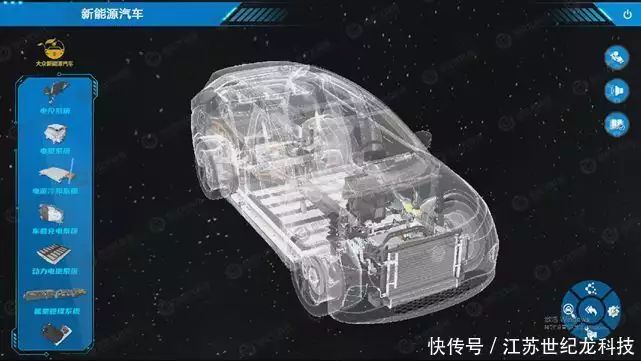
This teaching software, based on advanced virtual reality technologies, presents the core mystery of the popular new energy car in a three-dimensional, multi-dimensional manner. It is like a mobile “new energy vehicle knowledge bank” that creates a learning world for students。
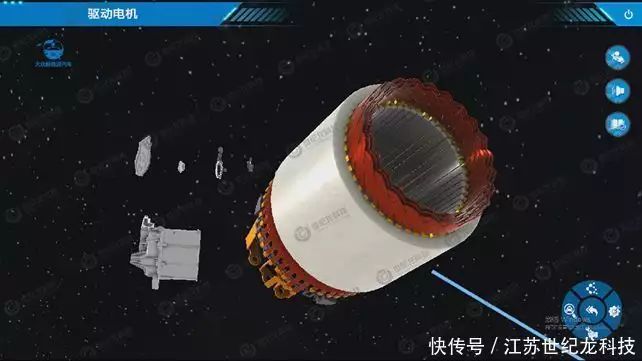
Insinuation, insight into the core
With the great charm of vr technology, students seem to have a “time and space key” that can easily “traverse” to the inner world of popular new energy cars. Here, the precision of the battery structure, the operating secret of the electric power, and the coordinated work of the control system are clear. Students are no longer passive recipients of books, but explorers of the world of automobiles. In the insinuation experience, they visualize every detail of new energy cars, making abstract knowledge easy to understand and greatly enhancing the taste and effectiveness of learning。
It's mission-driven
The software carefully designed several task modules closely related to the structure of new energy vehicles, such as battery management system failure screening, electrical performance testing, etc. These tasks closely fit the actual work landscape, allowing students to act as “car maintenance engineers” in a virtual environment and to use the knowledge gained to solve practical problems. Each of these tasks is a replica of the practical abilities of the students and a genuine achievement of “doing in school and doing in secondary school” to enable them to adapt quickly to the needs of the job。
Smart interaction, precision improvement
The software has a strong intellectual interactive function, and students can interact in real time with car parts in a virtual environment by simple gestures. This intuitive approach is not only compatible with students ' cognitive habits, but also enables them to gain a more realistic experience in their operations. At the same time, the software provides real-time feedback on the results of students ' operations, accurately identifying problems and shortcomings, helping students to adapt their learning strategies in a timely manner, improving learning efficiency and targeting each learning。
Pooling of resources to meet multiple needs
The software has a rich library of teaching resources, covering a variety of forms, such as three-dimensional models, animated demonstrations and failure cases. These resources are like a “knowledge puzzle” in which teachers can tailor their individualized learning programmes to students according to different teaching needs and student levels, with flexibility to combine and expand their teaching content. Both basic learning lectures and advanced skills training, the software provides all-round support to meet the learning needs of different students。
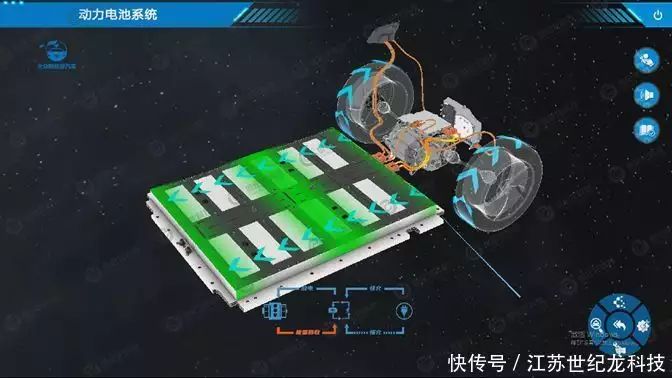
The new mass energy vehicle structure (vr) teaching software of century science has brought new life and dynamism to the teaching of the automobile profession in vocational colleges. It not only effectively addresses the problems of insufficient resources for hands-on training and the lag in the content of teaching, but also enhances the effectiveness of teaching by stimulating learning interest and initiative through a highly imitated practical training environment and a rich mission design. At the same time, the interactive and real-time feedback function of software provides teachers with a precise basis for teaching guidance, helps to achieve individualized teaching and provides a solid foundation for the development of highly qualified personnel adapted to the development of the new energy automobile industry. This is the new future of vocational education