In recent days, the ministry of industry and information technology has published the model application practice for 5g plants in 2025. From the 1260 5g factories directory projects in the country, 100 typical applications have been selected for advanced technology and piloting, the raw materials industry, equipment industry, consumer goods industry, electronic information, energy transport, etc. The current focus consumer industry, the domestic electricity sector, offers you the experience of unlocking the project “the 5g plant for the smart manufacturing of air conditioning in the east china-light refrigeration” to see how the 5g+ industrial internet has broken down production pains and led to triple efficiency, cost and quality gains。
At the same time, the industrial internet industry coalition launched the "5g factory" online
Anticipatory 5g plant for the manufacture of cvac
Construction unit: guangzhou hua ling refrigeration equipment ltd
Region: guangzhou, guangdong province
Project overview
The guangzhou refrigeration refrigeration refrigeration equipment ltd.'s 5g project, which aims to build an intelligent manufacturing and operational decision-making platform for domestic ac “end-to-end value chains”, optimizes plant operations and t+3 processes using 5g high-speed communications, digital twinning and artificial intelligence, and promotes multi-system integration interaction to achieve business-wide integration of 10 large 5g+ industrial internet applications. Through edge computing platforms and advanced process control techniques for large data, with a lean manufacturing management system at its core, integration of production management domains, and information-based control of elements such as “people, machines, materials, methods, rings”. Create an agile, flexible, fluid, intelligent, green, efficient “5g full value chain lighthouse plant”。
Ii. Construction needs
In the process of digitalization, networking, intellectual transformation and the promotion of new industrialization, the valuing plant faces problems such as isolation of information, inadequate connectivity and limited intellectualization. Building 5g plants is a key initiative to address these issues and is critical to improving the core competitiveness of factories, achieving efficiency, transparency, intelligence and green production。
Iii. Construction programme
(i) 5g network coverage
The premises of the guangzhou park no. 1, factory no. 2, plant no. 3, unit no. 4 and the main outdoors of the internal roads of the park are covered by separate rooms. Building 3 is covered by a 5g signal, with a total of 1 bbu, 88 pru and 8 rub。
(ii) 5g web platform building
In accordance with the technical standards for group networking in the united states, the industrial internet 5g-based platform uses a standard sa (standalone independent group network) network structure and a dedicated mec (multi-accessedgecombating multiple access edge) platform programme. In guangzhou, some of the production equipment in the factory area has been re-engineered with a 5g network for the production of various types of equipment, enabling the 5g network to provide high information security and operational efficiency in the production process。
(iii) 5g terminal procurement installation debugging
The plant uses a scenario 5g terminal deployment programme: light quantitative equipment (agv, mes, scada, etc.) has access in the form of wifi to sid launched by 5gcpe and then to the intranet system via 5g; key control equipment (marine handlers, video monitoring, etc.) has access to the 5g network by 5gdtu outside; mobile terminals (e. G., scanned pda equipment) have supported the insertion of 4gsim cards, which are connected directly to the network in a 4/5g integrated manner and then to the logistics system。
Iv. Application
Type of scene 1: soft production
Wireless connectivity of production equipment and systems through the high bandwidth and low time delay features of the 5g network to increase the flexibility and responsiveness of production lines. Using ai and big data advanced process control techniques, and at the core of these systems, such as mes, erp, aps and other niche manufacturing systems, the elements of “humans, machines, materials, techniques, rings” are computerizedly controlled, data generated by operations are collected, stored and analysed, production equipment is softened, production control is smart, production management is refined, production is more efficient and agile, and resource use is more efficient。
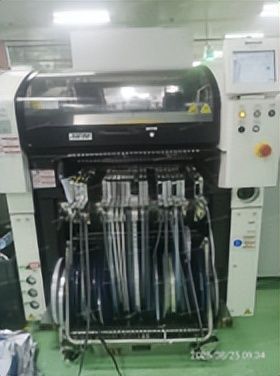
Type of scene 2: equipment working together
Based on a 5g network and edge computing platform, with the mes system at its core, and through interaction with erp, aps, qms, ems, scada, people management, equipment management, material management, process management, and so forth, information management, production planning, high-level synergy of equipment, and increasing customization and small order demand。
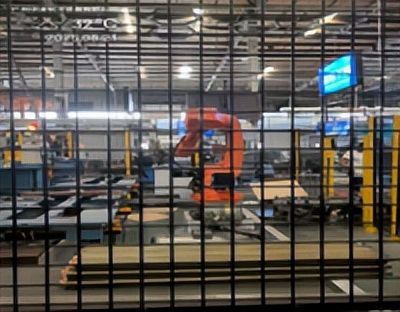
Scene type 3: machine visual inspection
Based on big data + 5g, combined with the technical capabilities of the ai image mass examination machine to visualize and learn from machines, an ai image test of the panel of the pcb electromechanical device in the industry, the appearance defects of the abbreviated plastics, and the mass of the ink spray in the total box. Through ccd-coated light, access to image information such as pcb plates, apostilles, cardboards, etc., 2d and 3d imaging models for image quality testing, using visual detection smart algorithms to analyze imaging models. Targeted solutions to the practical problems of plant quality testing, from spare parts to complete process quality testing of total production。
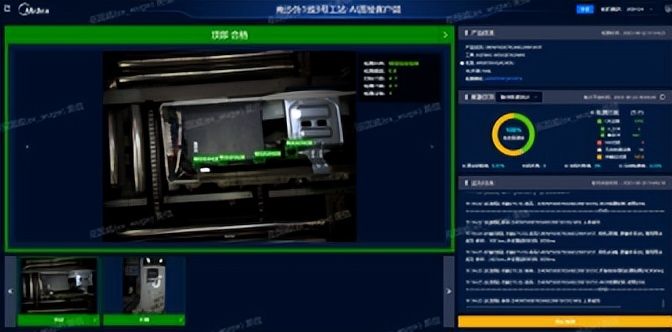
Type of scene 4: industrial compliance verification
Based on the 5g network, the china-landing plant built an industrial ai brain platform for industrial compliance testing. The industrial cloud provided equipment failure prediction, process parameter recommendations, image ai quality checks, human face recognition, etc., and safely managed a range of services for internal and external enterprise users, ranging from capacity (paas) to applications (saas), based on the basic technical framework provided by the industrial brain platform, using artificial intelligence techniques such as image quality screening, failure prediction, parameter recommendations, human face recognition, identification of vehicle plates, etc., resulting in improvements in quality, efficiency and management。
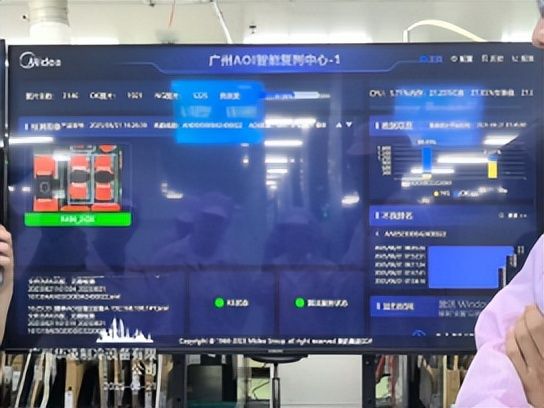
Type of scene 5: equipment failure diagnosis
Based on manufacturing systems such as mes, scada and pqc, equipment plc integrated interfaces, scada, etc., are used to collect enhanced bottom-level data, transmit online parameters to scada through a 5g network for monitoring up to mes, big data, obtain unopened alarms and temperature abnormality alerts for equipment, allow on-line output monitoring of equipment to obtain crop rates, drive rates, performance monitoring, etc., and perform active equipment failure diagnosis。
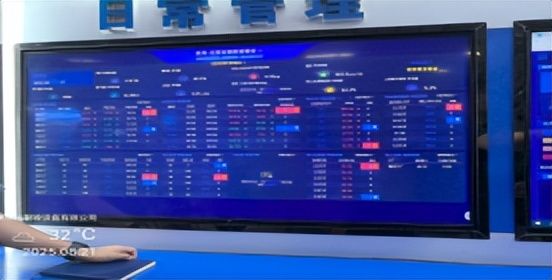
Type of scene 6: on-site monitoring of production
With risk management and capacity enhancement as the main focus, hua ling has developed a safe production risk perception assessment, monitoring early warning and response disposal platform at production sites. Production on-site monitoring systems allow high-precision identification and self-defined alerts of production activities, control of specific areas and real-time alerts of anomalies。
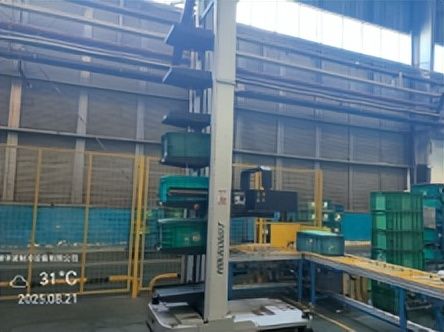
Scene type 7: plant smart goods
An integrated logistics operations movement control system was established in hua ling to enable operations, movement control, transport, access depots, multiple online digitization on site and seamless interface with the financial system through a 5g signal. The goods are stored through the procurement management subsystem and are operated through the in- and in- and out-of-stock management subsystems to manage the access warehouse for large quantities of goods. Standardized management of receipt of goods, inventory inspection, warehousing of goods, management of storage, exit of goods and distribution of goods has been required, resulting in a clear division of labour between warehousing operations. Integrated inter-firm logistics management around demand for production orders。
Scenario type 8: production process traceability
The digitizing plant introduced industrial internet platforms linking production equipment, logistics devices and sales products through 5g networks and technology. Systems such as scada and mes are used to create efficient, synergetic, retroactive, objective and accurate quality management models for equipment interconnectivity, full-element transparency and paperless, enabling simulation of synergetic design, intelligent quality, flexible manufacturing, and information traceability。
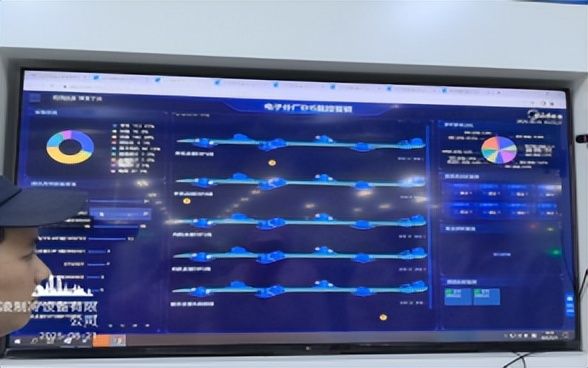
Type 9 of scene: control of production energy efficiency
The digitizing plant introduced industrial internet platforms linking production equipment, logistics devices and sales products through 5g networks and technology. Systems such as scada and mes are used to create efficient, synergetic, retroactive, objective and accurate quality management models for equipment interconnectivity, full-element transparency and paperless, enabling simulation of synergetic design, intelligent quality, flexible manufacturing, and information traceability。
V. Construction value
Economic value
The project began in 2014 and entered into its pilot phase in 2021, with sales revenues of $38,229 million and taxes of $709 million between 2021 and 2023. It is expected that after further application of the 5g industrial internet platform and model of the plant, 1 million new smart air conditioners will be achieved, amounting to 2,119 million yuan/year of additional operating income for the post-natal year。
Social values
(1) replicating results
Upon completion of the project, its air-conditioning production poles can be replicated in more than 90 per cent of the group's internal air-conditioning production base and 70 per cent of the promotion in other product production sites; the construction results can be largely extended to all group production bases and outside enterprises。
2) progress in the sector
The project has led to industry progress and helped upstream suppliers and downstream channelers to upgrade their stock and order management levels, leading to higher turnover efficiency across the value chain; in terms of sustainable industrial development, the project has been more economically circular, green economy and resource-efficient, resulting in a significant increase in the efficiency gains from product consumption。