In the smart greenhouses of the life light vegetables industry group, workers use automatic pickers to maim tomatoes. Chen ye xiaojun
Agricultural informatization is an important sign of modern agriculture and a high point for modern agriculture, which has an important pull and drive to accelerate the transformation of agricultural development and to build modern agriculture. In recent years, agricultural informatization in some places has served both modern agriculture and has gradually been upgraded as local economies transform, industrial upgrading and even become “new engines” for local economies. Look at the story from shandong, "the village of chinese vegetables" -
Chen ye-chuen is a journalist in hong guangming
On 18 april, at more than 10 a. M., at the web video diagnosis room of the su xin city agriculture department of shandong province, a technician, zhang xian, was talking to a farmer in the zhuang district of the city. He told journalists that vegetable production was nearing the “end” of the shed, with an average of 10 connections per day and 60 to 70 during the season. According to sun zhigang, director of the agricultural information services centre of the department of agriculture, this service is now relatively quiet. “when it was launched in 2006, two video rooms and 10 specialists were busy.”
This reflects the decline in the demand for traditional agricultural information services, such as production technologies, market information and, in particular, the dissemination of internet information technologies, as the vegetable industry upgrades, opening up new spaces for the informationization of lifelight agriculture。
Information needs: planting is less expensive and selling is “quality price”
Lifeless vegetables cover more than 800,000 acres and 140,000 households. Over the years, the lifelight agriculture sector has established a system of agricultural information services that combines web publishing, video interaction and on-site mentoring, based on the integrated lifelight agricultural information service platform; the rural information service has become a “village-wide” based on over 300 rural business sites spread throughout the town. More than 300,000 production-technology challenges have been addressed for farmers and 800 new agricultural technologies have been promoted。
Today, life-lighted vegetables are at the forefront of production techniques and market performance in the country, and “sustained farmers are home-grown” and “sun-lighted vegetables” become widely known in industry. In recent years, lifelight has introduced a strategy of “agriculture re-departure” to build industrial systems for seed seedlings, home-grown environments, safety regulation, standardized production, market traceability and surface pollution management. There is a new “beginning point” for industrial upgrading and agricultural informatization。
“the precision of labour is higher in greenhouse vegetable production, with an average of 2 to 3 sheds (around 3 acres planted) per farmer in the light of life, and couples spend more than 10 hours a day in management sheds.” sun zhi just analysed that the use of automated control equipment could significantly improve labour efficiency, and that agricultural goods networking offered solutions。
Indeed, farmers are interested in information technologies that can reduce labour intensity and increase labour efficiency. On 20 april, zhang zhengqiang, a sales representative of the netfim (gangzhou) agricultural technology company, who displayed integrated fertilisers for water, told journalists that, despite the high price, an equipment managed thousands of acres at the same time, saving labour and water. In the morning alone, more than 10 farmers came to the demonstration and asked for price. And the application of network technology for strawberry robots, plant-based seedlings, etc., has been a “fresh” that farmers have not seen enough in recent years。
In addition to the focus on production efficiency, how to achieve “good quality prices” for luminous vegetables is an issue of interest to farmers and agribusinesses, and e-commerce for agricultural products is given high priority. According to xu wentao, president of the lifelight electronic commerce association, there are many advantages for agricultural electricians: “the demand for commodities by agricultural electric producers is high, while the agricultural products of lifelight, especially seed seedlings, are well known throughout the country, and some specially cultivated varieties also have patent certificates, which can easily be sold at a good price through the power supplier channels”
“internet + agriculture” practice: gathering from scattered to parks
Combining the application of information technology with the construction of parks, taking advantage of the size of parks, their intensive advantages, demonstration and even “incubation” of new projects, is an attempt to advance “internet+agriculture” with lifelight。
In recent years, birthday light has been promoted in modern agricultural demonstration parks, new high-standard vegetable gardens in town streets, agricultural quality security monitoring systems, soil fertilizer gis gis, etc., and some greenhouses have been equipped with a network system。
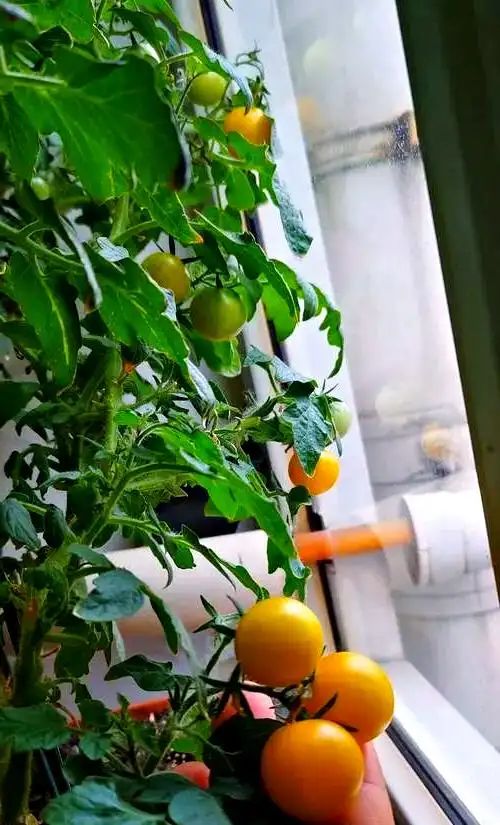
In the smart greenhouse of the modern agro-industrial complex of the sun-hine vegetables industries group, journalists have seen a large variety of tomatoes growing on the basis of a base size. Automatic monitoring of changes in the greenhouse environment through sensors and the intelligent completion of water cycle, drip irrigation, carbon dioxide supplementation, light recharge, ventilation and cooling, depending on crop growth, can be managed by only 3 workers for 10 acres and 17,000 tomatoes。
“the hardware input of the network system is high and farmers cannot afford it. Moreover, a platform can often control thousands of greenhouses, so that they can be effective.” din shwe, project manager for the agricultural networking of life-rain vegetables industries group, said that the original group's project was limited to two smart greenhouses and that, at the end of 2013, the installation of network monitoring equipment for more than 160 general sheds managed by farmers in the park had begun, although conditions were limited, and that they had reserved smart control ports。
Not only is there a demonstration of parks on the internet, but e-commerce for agricultural products also gathers at parks. The ced e-commerce cluster was built in order to create an incubator for entrepreneurs to gather to communicate and grow themselves. In april this year, the ali baba “rural treasures” project landed here。
According to xiaoming, the head of the rural scavenger services centre, 20 rural service stations have been built in just one week, each with a computer and television free of charge, since the trial on april 10th. As information and logistics become available, work will be done later on on `agricultural products into the city'.”
In order to attract farmers to start up their businesses through the “rural treasures” platform, the city of suu kyi has set up the “ced e-commerce incubator” on the third floor of the “rural treasures” service centre, which provides free office space free of charge for water, electricity and internet access. Independent workspaces are provided free of charge to businesses with annual sales of $2 million. “ari baba has now built rural treasure hunting centres in more than 30 districts throughout the country, and life-lights are the best match.” bjorn ming said so。
Information technology applications: “corporate + cooperatives + farmers”
In lifelight, the industrial model of “companies + cooperatives + farmers” is showing life in agricultural information technology promotion。
In order to achieve quality management of agricultural products and to promote “quality and good prices” for agricultural products, in 2014 the agricultural science and technology company of china, in collaboration with the suu xuan vegetables cooperative, implemented a 2-dimensional food safety tracking system in over 270 vegetable sheds. Integrated supply of agricultural resources by china, china, china, china, china, china, china, china, china, china, china and china, china, china, china, china, china and china, china, china, china, china, china, china, china, china, china, china, china, china, china, and china。
In the san's vegetable cooperative plantation, each of the sheds seen by journalists had a two-dimensional sign on the front door of the “countain of china, china, `cooperative'”. Details of the plot appeared when journalists used their mobile phones to scan the two-dimensional code of shed 16。
"we go to the shed every day and we have to clean up our cell phones, which is like reporting." the owner of the shed, sánchemé, said that, in 2014, as the first signatory, “cinnon lihua” had sent a mobile phone, which had been “bred-up” on the cell phone, and had been cleaned, so that the information in the shed could be uploaded into the cinnon lihua system。
Once in the shed, a choice can be made from the mobile menu as to which crops to engage in agricultural activities, such as fertilization of eggplants, watering, medicine, etc. All agricultural activities involving the use of agricultural inputs are subject to scanning of the two-dimensional code on the packaging of inputs; those without the two-dimensional code are subject to photo uploading。
“how can you be sure that you can do what you want and only use inputs from china? A journalist asks。
"the company has a reward." sancemell says that each year the company gives the grower a return incentive based on the variety and quantity of farm resources that are uploaded on the sweep. Last year, she got $3,400。
As a result, all production information is produced through the two-dimensional code of products produced by the china agricultural development system and, when vegetables are marketed, the two-dimensional code corresponding to the shed is placed on the packaging. After the purchase, a mobile phone scan will make it possible to get all the information on the box。
The head of the cooperative, sallybin, described the cooperative's ability to produce more than 30 million pounds of vegetables per year and over 80 per cent to market in supermarkets. This spring, with the support of the city council and the bank of construction, they began to test the “friendly business” website and, although the results of the sale are not yet clear, the dealers of shandong county have called to negotiate。