


The greenhouses became a "poaching pot" for xinjiang farmers
Adequate light and heat resources are changing traditional agriculture in the southern part of xinjiang, and the impact of extreme natural weather on local crops has been reduced by the input of large-scale smart greenhouses, which are now being produced on a scale in the greenhouses shed in the village of kutji, the village of charbagh, xinjiang sakhag district, from individual farmers trying to grow the whole area。
It is now critical for tomatoes to grow, and the villagers abdushemiti mamiti and his family are busy adjusting the nutrient growth and balance of the plant to increase tomato production. There has been a qualitative leap in the sense of family life and well-being from learning how to grow and manage the sheds in 2020 to contracting 10 sheds alone。
Villager of kutji village, char bag commune, xinjiang sacar district, abdushemati mamiti
I run it with my wife. The village has technicians to teach us science management, and last year we received 150,000 dollars, and this year we continued to plant tomatoes, which are now particularly good-looking, and i believe that income will be better。
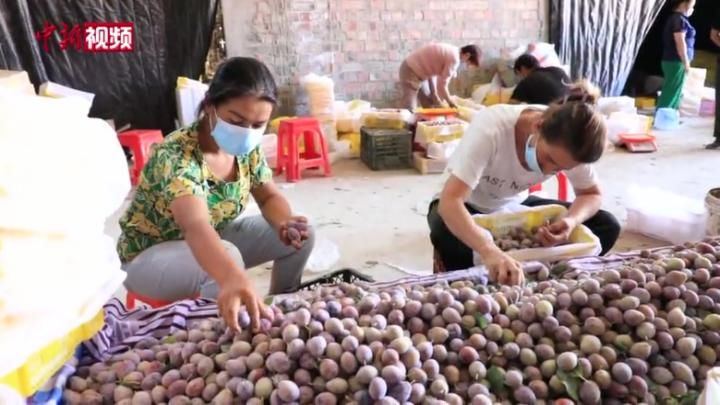
The opportunity for clean greenhouse sheds to grow the environment and science and technology has become the preferred option for increasing numbers of villagers. The villagers of tolsuniyaz aghouti are happy to say that the day is good and full when the sheds are near their homes, without the sun, without fear of the wind and with their sisters。
"in the same period, a professional farmer's cooperative in the village of kutji, char bage county, tullanyaz agouti."
I have been working in cooperatives for two years, mainly in the selection of vegetables and fruit, with a monthly wage of $1,800, and now my income is stable and my life is getting better。
The greenhouses grow fruit and vegetables that enrich the food tables of the south and are the main industries that locals seek for a better life. At the edge of the desert, the village of kutji, sácar county, has built 210 greenhouses and 1,000 arches. According to the first secretary of the party headquarters of the autonomous region, li yong, based in the village of kutji, priority was given to the development of the vegetable industry, with large-scale plantations serving as boosters for villagers to grow wealth。
First secretary, kutji village, qatar uighur autonomous region
Our village has entered a phase of rapid development. It has been largely established that the whole chain of vegetable cultivation, from seeding to harvest to processing, storage and marketing, has formed a truly dominant industry. Per capita income is expected to increase by more than 20 per cent this year, with village collective income projected at $800,000 this year and per capita income projected to exceed $20,000。
Today, a harvest view is painted on the ground in the southern part of xinjiang. Agricultural skills training, the extension of new agricultural technologies, the growth of specialty guacamole cultivation and the flourishing of vegetables in facilities, increased employment options for farmers in the south, a growing “money bag” and a better “bottom” for rural renewal, with people on the border living in sunlight。
Yang, wang fong, mil adiri, xinjiang shacar county



