In automated production and machine visualization systems, industrial cameras act as “eyes”, whose performance directly determines the quality of subsequent image processing and analysis. However, when you open the supplier's catalogue of products, do you feel perplexed when you see specialized terms such as “20 million pixel global fast-gate ccos camera”, “8k line ccd camera”, and “gige/usb3 vision interface”
The choice of a suitable industrial camera is far from simple comparison of pixels and prices. Wrong selections can lead to poor imaging quality, inadequate frame rates, unstable data transmission and even failure of the entire visual project。
I. How many of the chosen common pits have you stepped on
Before starting our selection tour, let's look at a few common selection faults, see if you've encountered them:
“the higher the pixels, the better”: blind pursuit of super-high resolution not only increases costs, but may also result in processing delays due to excessive data volume or the inability to take advantage of high pixels due to insufficient lens resolution. “colour is always better than black and white: colour cameras are thought to provide more information, but in many scenes where only shapes, sizes, greyscales are tested, black and white cameras tend to have a higher sensitivity and frame rate, with higher value. "the type of fast doors doesn't matter": when shooting high-speed motion objects, the wrong selection of the curtains fast door camera results in the image having a jell-o effect affecting the accuracy of the detection. “adopt-out interface, available”: failure to select the appropriate interface according to actual transmission distance, speed requirements, resulting in data being lost or additionally high wiring costs. “ignoring the target and the lens match”: the camera target size does not match the camera scene, leading to waste of dark angles on the edge of the image or of an effective field of view。
The key to avoiding these pits is to establish a system-based selection method。
Core heart approach: industrial camera selection six-step method
After extensive practical validation, we refined the industrial camera selection into the following “six-step gold code”. Remember this and develop an in-depth understanding of what each step means
Punctuation: set structure, set colour, set moment, set chip, set vision, set vision. Interface
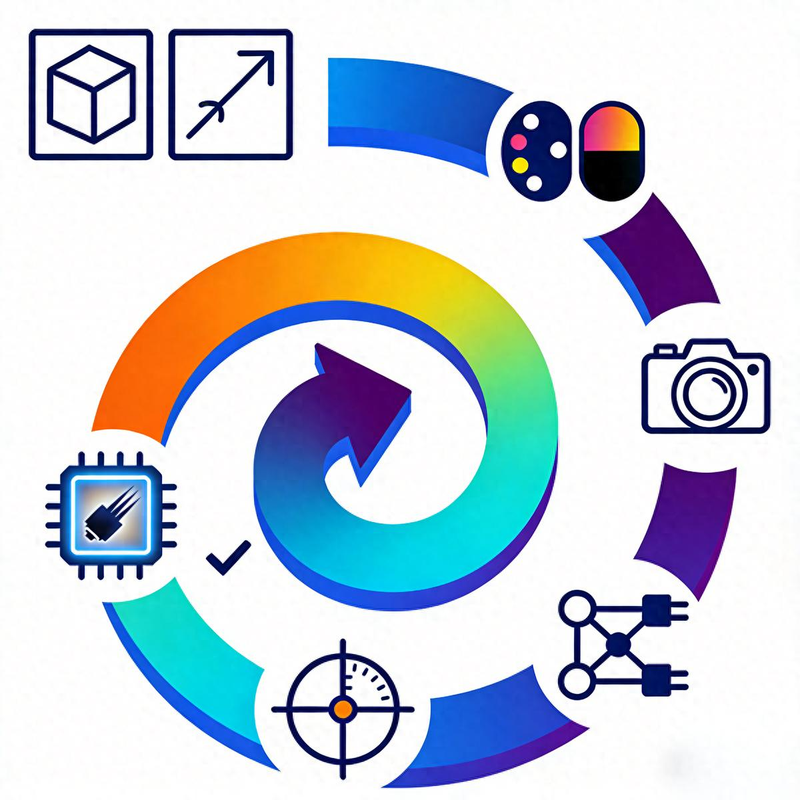
We will briefly describe these six steps:
1 fixed structure: static lines
2. Declared colour: colourless and colourful
3. Fixed time: high speed global, static rolls of curtains
4. Selected chips: cimos is the preferred option
V. Foving: calculate resolution, match target noodles
6. Interfaces: by distance, speed, budget selection
Iii. Map of the six-step approach to decision-making
In order to show the selection process more intuitively, we can link this six-step sequence into a decision path:
Guided and forecasted articles
This series will be elaborated around this “six-step approach”, and the next article will go into the core knowledge and decision points of each step:
Look forward to it
Concluding remarks:
The industrial camera selection is a systematic engineering exercise that requires a clear understanding of application needs and a comprehensive diagnosis of the camera's core technical characteristics. Remember the "six-step" excuse, which will provide you with a clear framework for thinking. In the next article, we will conduct an in-depth analysis of each step, which will help you to truly “select without stepping”. And the next one says, "we're going to go into the structure, and we're going to look into the nature of the face and line cameras and their application options in different settings."。