— a notaristic reading of the opinions on enhancing intellectual property protection
Since the first trademark act of 1982, the country's intellectual property regime has been developing for more than 30 years. From a period of incompatibilities with state institutions to the effective implementation of a number of innovative initiatives today, our intellectual property protection has shifted from passive transplantation to proactive arrangements. On 24 november 2019, the opinions on strengthening protection of intellectual property rights (hereinafter referred to as the opinions) were published throughout the internet, giving greater autonomy to intellectual property protection measures. The opinion presents a number of innovations that take into account our national context and will be read in detail by the zhang jiang notary office in shanghai. In contrast, from the perspective of notary protection of intellectual property rights, the opinion gives clear instructions to notary legal services. Five of the articles refer directly to “notarial” and indirectly to “notarial” more, encompassing aspects of the four broad patterns of “strict protection, greater protection, fast protection, and protection”. Judicial practice has shown that notary legal services have a preponderant advantage in the formation of intellectual property rights, in the prevention of intellectual property disputes, and that notarial effects cover the entire process of intellectual property protection. New demands are therefore new directions and opportunities。
Strictly protected. Institutional constraints ahead
We have been on our way to stepping up penalties for violations. The new trademark act, which came into force on 1 november this year, increased the amount of compensation for malicious infringement of trademark rights to less than five times, and the draft amendment to the patent act established a punitive compensation regime. Of course, the opinion shows us not only a summary of the last round of amendments, but also of the requirements for the future, but the underlying spirit is “a substantial increase in the cost of intellectual property tort”, such as “an increase in the ceiling on legal compensation for torts”, “a study to lower the threshold of incriminating offences against intellectual property” and “modification of statements of guilt”。
Intellectual property protection in the area of new technologies, such as big data, artificial intelligence, block chains and so forth, is faced with increasing complexity of intellectual property rights violations and increasing difficulty in defending rights. The opinion provides a specific and detailed response to the new requirements for building new institutions in new areas and business situations, such as “enhanced scientific and technological research and development, enhanced intellectual property protection through technological means such as source traceability, real-time monitoring and online identification”, “researching rules for the protection of intellectual property rights of cross-border electricians, and standards for the management of the protection of electrical platforms”。
In addition, the views are specifically concerned with the issue of “probability” of rights-holders and, for the first time, in the “strictly regulated standard of evidence”, they refer to “exploring the establishment of a system of notarized rewards for violations of rights and reducing the burden of proof on rights-holders”. As an important element in the process of obtaining evidence for intellectual property protection, the office of the notary public has accelerated the development of operational norms applicable to the collection of evidence for notarized rewards。
Social co-governance is a practical necessity
The search for alternatives to dispute resolution is a major trend, as intellectual property litigation tends to have a longer life cycle, ranging from the filing of a case to the production of evidence to the trial, which is costly for rights holders. The opinion states that mechanisms for arbitration, conciliation and notarial work should be improved, and arbitration institutions, mediation organizations and notaries should be nurtured and developed. As early as june 2016, the supreme people's court, in its opinion on the further deepening of the reform of the pluralized dispute resolution mechanism by the people's court, explicitly stated that it “supports notarization of claims contracts entered into by notaries to parties and settlement agreements with payment content, mediation agreements for the processing of claims documents, supports notarization of legal services provided by notaries at service, evidence, preservation, enforcement, notarial activities at home, commercial, etc. Or mediation services”. Legal enforcement of notarized claims.” conciliating agreements help to resolve the “long-term” dilemma of intellectual property disputes, with notary legal services that will effectively safeguard the future implementation of conciliation agreements。
Notarized legal services, as services, are by their very nature in need of talent support, and the opinion states that a sound system of selection, management and incentives for intellectual property arbitration, mediation, notarization, social supervision, etc. Should be established. As a result, the establishment of a professional notary legal service on intellectual property is a matter of urgency。
Of course, intellectual property protection should not be the sole responsibility of the judiciary, nor should it rely solely on legal practitioners, in an era of knowledge-paying. The opinion states that “the establishment of a sound volunteer system and the mobilization of social forces to participate actively in the governance of intellectual property protection” is an addition to the practice of recent years. In the case of alibaba, for example, it publishes annual intellectual property protection reports and has volunteered to recruit hundreds of thousands of volunteers to make information on intellectual property violations available to relevant law enforcement authorities. The “great protection” of intellectual property rights that our country is building is playing a positive role。
Quick, protect
The opinion proposes to rationalize the “fast protection” chain of work and to establish efficient and fast-tracking mechanisms between administrative powers, dispute processing, arbitration mediation, administrative law enforcement and judicial proceedings. The opinion represents an addition to the design of the system: institutions such as procedural interface, sectoral cooperation and the establishment of intellectual property protection centres appear to be adding value, but allowing information to flow and advantages to complement each other in order to achieve rapid review, quick determination, rapid defence of rights, and a reduction in time. Overall, the institutional innovations identified in the document are operational and can effectively accelerate the resolution of intellectual property-related disputes。
“fast protection” is also “fast” for intellectual property rights. The opinion emphasizes the need to strengthen the promotion of the use of notary electronic storage techniques. Judicial practice has proved that the full use of notary technology to establish solid evidence has helped the courts to establish the truth in disputes and to improve the efficiency of the proceedings, thereby safeguarding the legitimate rights and interests of the rights holders. In the case of the zhang jiang notary office, the “feasible” electronic data storage platform, which we have developed autonomously, is not only based on powerful internet information technologies, but also permeates professional legal thinking, evidence-gathering experience and can effectively document and take evidence of electronic data, which can be described as a very relevant way of preserving intellectual property evidence. [specific accessible platform: http://yicun. Zjnotary. Com]
With protection, foreign communication is a big deal. Trends
The protection of foreign intellectual property rights has always been seen as a hard bone because of poor information, complex foreign laws and regulations, inadequate level of business with specific intellectual property rights, etc., and rights-holders often unwittingly violate existing intellectual property rights abroad, or hard-earned patents and trademarks have been stolen by others. In the context of the “across the road”, the link between intellectual property rights and international trade is becoming stronger, and more and more people are moving out of the country to bring chinese technology and chinese culture to the global level. At the same time, intellectual property disputes are becoming increasingly central to international trade disputes. The measures proposed in the present opinion are just as painful as the weak protection of foreign intellectual property rights. The establishment of a mechanism to monitor changes in foreign intellectual property law and to monitor the evolution of developments in foreign intellectual property law, the establishment of a mechanism to coordinate the resolution of overseas disputes, the establishment of an advisory mechanism for overseas defence experts, the establishment of an overseas intellectual property observatory and social organizations, the establishment of an information communication mechanism, etc., are all aimed at improving companies' understanding of the foreign state's intellectual property regime, the development of channels of communication with domestic and foreign rights holders, and the ability of rights holders to defend themselves and protect themselves in the face of disputes, thus enhancing the international competitiveness of chinese enterprises。
It is worth noting that the opinion refers twice to “social organizations”: “support to various social organizations in the construction of systems for the prevention and control of foreign-related risks of intellectual property rights” and “choice to set up overseas intellectual property observation enterprises and social organizations and to establish information communication mechanisms”. Retrospect the decision of the central committee of the communist republic of china on a number of major issues in the construction of a socialist harmonious society, adopted at the sixth session of the chinese congress, which clearly defines the nature of the notary as “social organization”. Thus, the opinion places higher demands on notaries to protect intellectual property rights. In practice, notary legal services for overseas intellectual property rights have been a top priority in the development of the business of notaries. On the basis of the experience of others, the zhang gang notaries ' office is preparing a remote video notary service overseas, which is expected to serve more intellectual property rights holders and businesses。
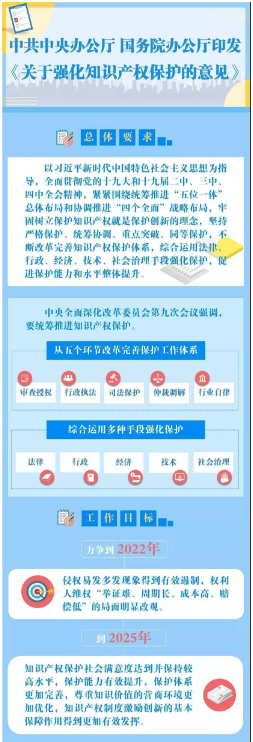
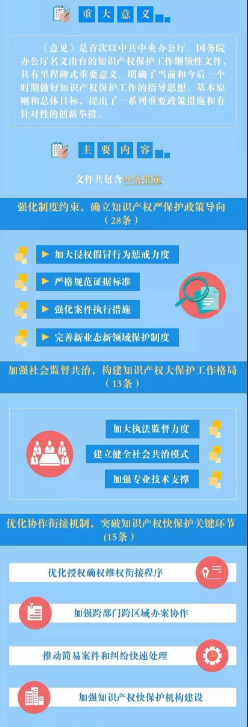
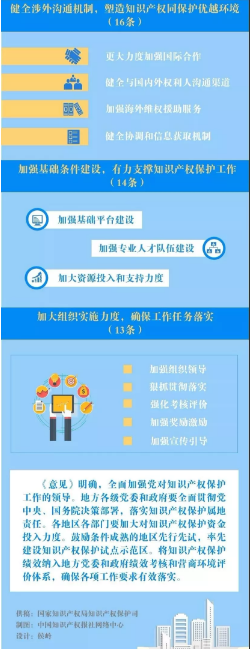
A total of 79 innovations in 7 parts of the opinion, with many highlights, cannot be cited in this paper, and the full text is illustrated below for readers to learn:
Zhang jiang notary office, shanghai city: 7th floor, 690 bebo road, zhang jiang science city
Shanghai free trade zone notary legal service centre: unit ab, 500th floor, south-east lukaba road, free trade zone
Reception: monday to friday
9-11. 30 a. M
13:30 to 17:00 p. M
Tel. 021-50586277
Website: www. Zjnotary. Com