Market structure and monopolies
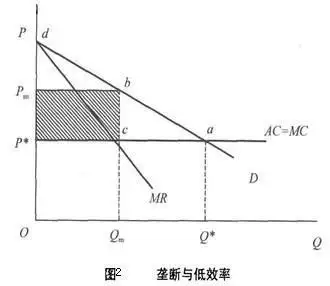
When looking at market structures, we often refer to the two types of acceptance and solicitation. Price-based assumptions are stringent and not feasible in practice; the monopoly adjusts prices to demand and transactions are efficient. Prices cannot be adjusted flexibly under the adhesive model, while price-seeking gives the monopoly the ability to adjust prices to market demand. In contrast to the price received, the monopolists appear to have higher sales prices and lower yields, which seem to be contrary to efficiency. However, that is not the case。

Even if monopoly markets appear to be inefficient, they are efficient under certain conditions; monopolies have to adapt constantly to market changes. First, acceptance does not exist in reality. The assumptions include a large number of buyers and sellers, no differences in products, zero market entry and exit costs and complete transparency of information, which together result in zero transaction costs, making markets impossible. It follows that the “perfect” market is a theoretical idea and that it does not exist in reality. Second, efficiency is not simply a comparison, but a process of maximizing benefits under specific constraints. Both producers and consumers base their transactions on the principle of voluntarism, i. E. The voluntary production of producers, the voluntary consumption of consumers, and the pursuit of the best interests of both parties under conditions of restraint, so that such transactions are themselves efficient. We cannot judge the efficiency of producers and consumers from the perspective of third parties, since the efficiency is judged only by the parties themselves. Since they have made their choices without regret, they are efficient. In addition, efficiency is closely linked to conditionality. If the price-receiving market does exist, its efficiency is efficiency under price-receiving conditions, whereas the efficiency of monopolies is efficiency under monopoly-restraint conditions. Advantage markets, while seemingly efficient and “perfect”, are illusory. Monopolies, by contrast, are also a perfect state of real existence and real efficiency achieved under certain conditions。
72. Monopolies and innovation
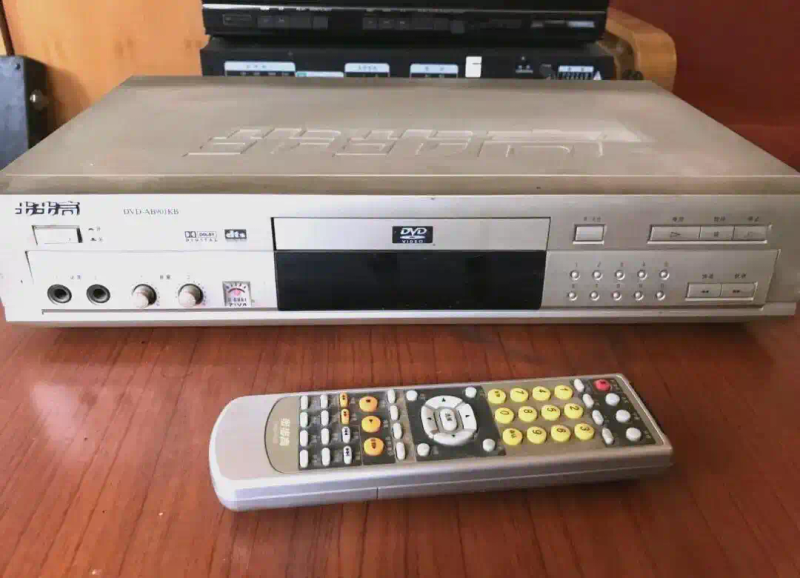
Monopolies face new competition that continues to innovate, and markets cannot be monopolized forever; the case of the japanese enterprise vcr market is an example of monopolies that drive renewal. Monopolies are not always efficient. It may be argued that producers have pre-emptive advantages once they have a monopoly position, making it difficult for other competitors to catch up. This does not mean, however, that the monopolists will thereby stop innovation and hinder social progress. In fact, the highly monopolistic market environment tends to create new directions of competition and the emergence of alternative markets, thus breaking the old market pattern. Those so-called monopolies actually face daily challenges from new competitors and are unable to stay where they are. Because no market can remain monopolistic for all time, only constantly innovative enterprises can be market-based。
Monopolies drive innovation
In the case of japanese enterprises, after the monopoly of the vcr market, they faced competitive pressure from laterers who did not opt for direct confrontation but instead turned to the development of more advanced alternatives such as vcds and dvds. These innovations have led to a gradual decline in the vcr market, and monopolies must adapt to market changes in order to survive. Similarly, in the late last century, domestic telephones were a luxury that was monopolized by the telecommunications authority. However, with the development of communication technologies, mobile phones have now become an integral part of people's lives and former home phones have lost their original status。

Analysis of market examples
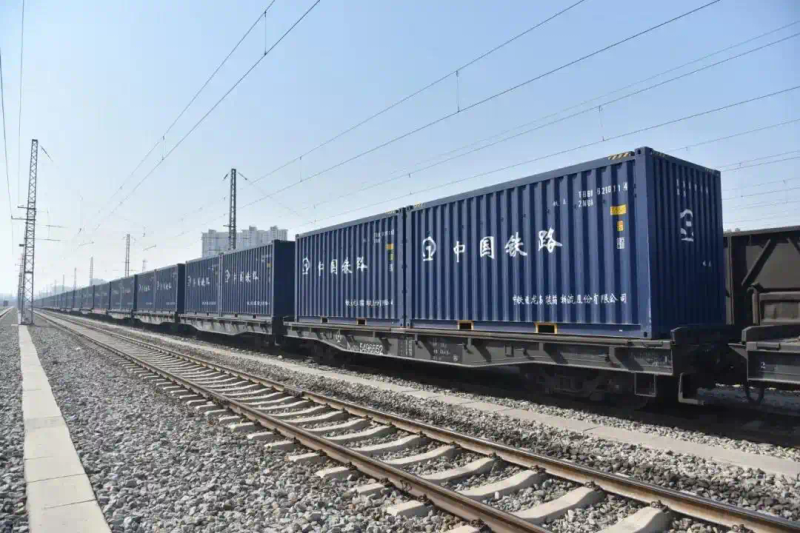
Railway monopolies reduce transport costs; ict development promotes the transformation of monopolies. Monopolies contribute to the renewal of products and thus to the increasing innovation of technology in competition. The economic efficiency of society as a whole has continued to grow as new monopolies emerge and old ones decline. Prior to the emergence of rail transport, people could travel and transport goods only on their shoulders and at high cost. However, the monopolization of railways has significantly reduced the transport costs of society, which is undoubtedly an increase in efficiency. If monopolies actually lead to a decrease in efficiency, it is natural that people choose to return to the original era where there was no monopoly. But the reality is that people are more willing to choose the current monopoly than to return to the past。
Moreover, the higher the market concentration, the lower rather than the higher the price. Monopolies must work to reduce prices and improve product quality in order to escape competition and prevent potential competitors from entering. While each monopolyr pursues the best interests, their total control over prices is impossible. Without the provision of products with high value for money, a monopolyr may eventually be replaced by someone with a heart。
03 administrative monopolies impact

Administrative monopoly inefficiency
Government intervention leads to inefficient markets and fosters corruption; poor management of public maintenance money affects the use of funds. Only administrative monopolies are at the root of inefficiencies. Administrative monopolies stem from government interference in the market by abuse of executive power, which creates artificial barriers to entry. In such cases, monopolies have denied other enterprises the opportunity to compete in the market through government-issued licences. Administrative monopolies not only lead to inefficiencies and lack of dynamism of enterprises, but also contribute to corruption, where officials may exploit their power for personal gain, while enterprises may pay bribes to secure the protection of administrative monopolies。

Management of public funds
In addition, the issue of the regulation of public maintenance money is of concern. Public maintenance payments are made by all owners and are jointly owned by all owners, according to the management fund for maintenance of common facilities and equipment, jointly issued by the ministry of construction and the ministry of finance in 1998. Normally, the funds are held in the hands of the real estate administration. However, upon the establishment of the proprietors ' committee, the public maintenance fund is transferred to the board, which exercises its authority. However, maintenance funds in many areas remain under the control of the government. In shanghai, for example, the use of the residential maintenance fund must be approved by the shanghai city housing maintenance fund management centre and the maintenance fund can only be kept in two designated banks. This means that the owner's own funds cannot be used by the owner, thereby affecting their efficiency。
Currently, pension schemes worldwide are essentially administrative monopolies. Since pension administration agencies are not profitable, they are difficult to build upon in market competition and rely on compulsory government purchases to sustain operations. Pensions paid by active staff are paid primarily to retirees. However, as the number of retirees continues to increase, exceeding the number of active staff will result in a shortfall in pension income, thus affecting the efficiency of pensions。
04 monopolies and fair competition

Types of market monopolies
Monopolies are divided into monopolies and administrative monopolies resulting from competition in the market, which disrupt the market order; income needs to match market contributions. Finally, with the exception of administrative monopolies, other types of monopolies are the product of competition in the market. Monopolies do not necessarily mean windfall gains, nor do they mean that businesses can flourish. In the market, contributions are closely linked to remuneration, which is the cornerstone of fair competition. Monopolies ' income must match their contribution to the market. For example, if you open a small shop around a village, it can be regarded as a kind of monopoly, but you cannot mark the price of $2 for milk to $200. If the milk is of poor quality, it may even need to be sold at reduced prices. Your earnings are entirely determined by the market. In the same vein, dun lijun once had a monopoly on the taiwan singing platform and received a very strong return, which was entirely a recognition by the market of her talents. Wouldn't it be fair for her concert tickets to be sold on a voluntary basis by fans
Thus, while monopolies may be beneficial in certain circumstances, administrative monopolies are regarded as spoilers of market order。