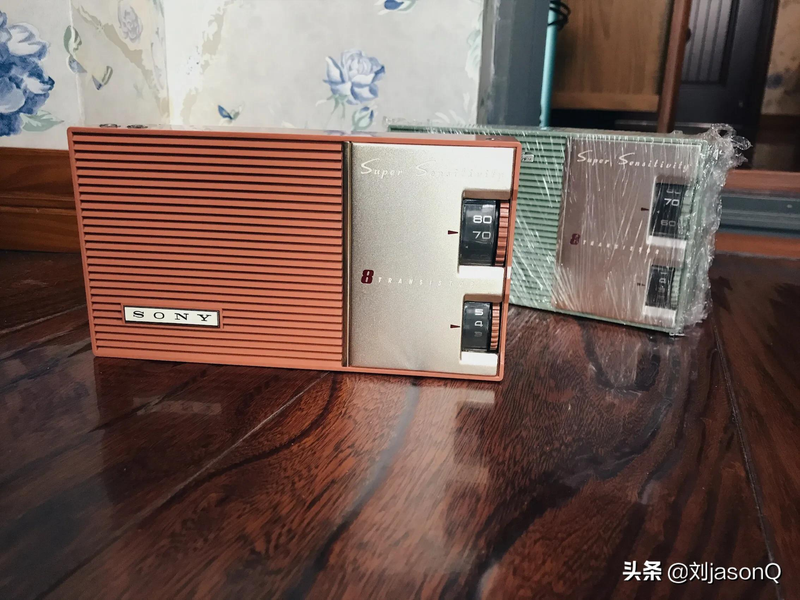
Sony tr-84 is the medium waver of the eight transistor sensitivity series released in the early 1960s. The machine is designed to be simple and large-scale, co-ordinated, with a wide variety of cylindrical lumbers, powered by three large batteries, with excellent sensitivity and a sensitivity of up to 1 μv/m and 3. 5 inches of loud sound. Since it is one of the representative types of the high sensitivity series, the circuit design of tr-84 must have been unusual. This paper combines the electrical features of the machine with my understanding of the medium-wave circuits in the exterior of separate components。
General transistor superviable circuit structure
Radios are divided into two main categories, namely, the straight-and-out type and the outer-range type, according to the pyrotechnic processing mode. Outlay machines are more widely available because of their high sensitivity and selectivity, and the analogue machines in production up to the present time are always external regardless of their fm。
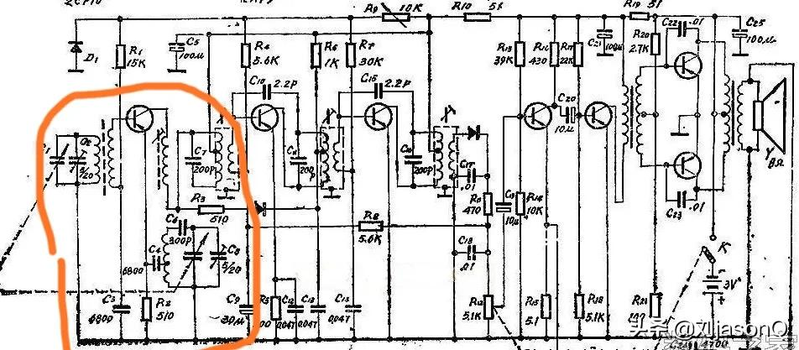
Red light 753 circuit map
In the case of a 7-barrel red light, for example 753, the conventional outliers include a variable frequency class, two middle grade, and several major parts of a low grade and manual grade. The function of the variant stage is to convert the radio signal to a fixed medium frequency signal, so that the variable frequency stage resonant has two main parts of both the infibulation generator and the mixer. The majority of the variable frequency stages of the external medium waver are performed by a transistor for the purposes of this oscillation and mixed frequency, as in figure 753, which is therefore a cheap, simple and efficient form of circuit. The mixed frequency class is a three-end network, with radio signals from the magnetic rod antenna injected into the base pole of the transformer tube, with the current oscillation signal injecting the radio pole, and the medium frequency signal exporting from the collector. The medium frequency signal of the variant-level output, which is weak and mixed with other non-necessary waves, requires further frequency selection and magnification to complete the detection. This task is performed by the medium frequency circuit, which has two cascades to meet the gain requirements, and the reverse control of the agc to prevent the overloading of the large signal. It was also designed to have a diode interconnection before and after the first middle stage, to act as a secondary agc. Medium frequency circuits should be accompanied by a certain bandwidth to meet sound and selective requirements. The detection wave level is a load placed in the second stage and is responsible for removing the broadcast moded signal package from the medium-frequency wave signal, which is filtered to the next stage for audio magnification. At the same time, the straight-flow fractions after detection also served the agc purpose as a control signal feedback to the first middle-run to control its straight-flow work point。
Technical characteristics of sony tr-84
Sony tr-84 is a low-noise, high-sensitivity medium wave machine, which is completely different from the red light 753 frequency class on the road. Its main technical features are the introduction of independent high-altitude, independent subterranean levels, and the use of diode-mix frequency, which is used for three-link coordination. Two-stage, reverse agc-controlled high and first-line discharges, while the first-line discharges are directly to the second-controlled work point. 4 tube low level, including input output transformer and negative feedback. Further details are provided below。
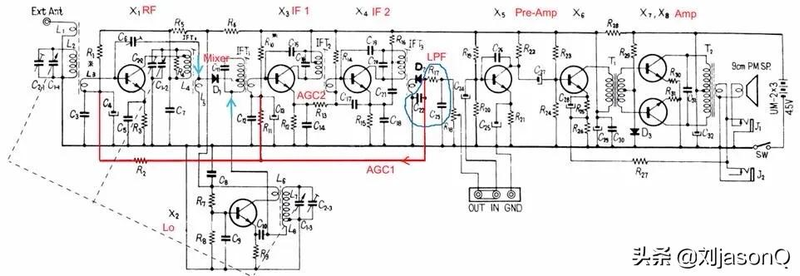
Tr-84 circuit chart comment
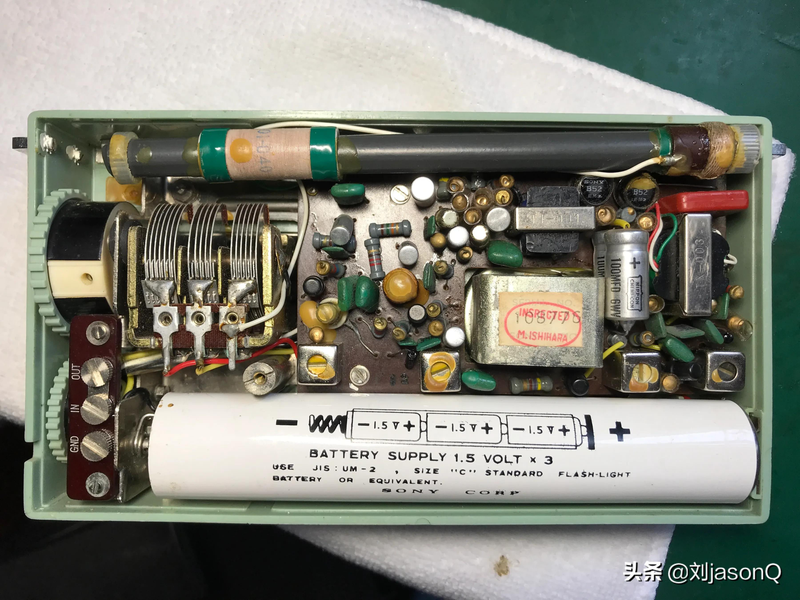
Triode type
T-84 uses 8 small power tubes of 锗npn, which differ significantly from subsequent silicon tubes in both materials and processes. In general, the performance of the tube is not as good as that of a silicon tube, such as a piping tube that penetrates the electric current, an interpolar feedback of a large electrical capacity, a low frequency, a high temperature drift, a low input resistance, etc. However, the depressure of the tube is significantly lower than that of the silicon tube, which means that when the power is used more efficiently and the voltage is severely reduced, it may not be able to work due to the excessive deviation of the work point, but it can still work. So, in order to avoid short cuts, there was a mixed circuit of silicium. In particular, the operation of the small handheld is advantageous, and the small machine is often of the ab type, but the power of the small machine tends to be much less than 6v, so the saturation and pressure of the upper tube should be kept as low as possible in order to take full advantage of the power supply and obtain the best range of dynamics, so the upper power discharge tube is a good option. In a way, it's probably one of the reasons why lovers love the sound of the tube. Of course, if the power voltage is high enough, it doesn't really make a big difference。
The bigger the stick, the thicker
The magnetic rod antenna, which appears to be simple, greatly influences important indicators of the whole machine, such as sensibilities and resistance to interference, so it makes sense for the lovers to embrace the masonette. In fact, the earliest medium-wave antenna is in the form of a large ring, like a spider web, which is very large and not easily carried. It was not until after the appearance of materials such as iron oxygen that people invented magnetic rod antennas that significantly reduced their size. When combined with the coil, magnetic rods can significantly increase magnetic fluxes, which greatly increase antenna sensitivity, and the size of antenna capture capacity is considered by a number of technical parameters, one of which is the q-quality factor. It's a complex concept, and it's common to understand that the higher the value of q, the more efficient it is, the smaller the loss. For magnetic antennas, the material of magnetic rods, the length and transect, the cross-section shape, the circuitry of the coil, the thickness of the coil, the single multiple, the position on the magnetic bar, the dispersive capacity, etc., ultimately affect q values. Antenna input is subject to complex calculations and multiple experiments because there are too many variables. It is worth mentioning that the magnetic rod itself is suffering from magnetic losses, not as long as it is long, but lowers the q or overvalues, which affect the frequency band. We can see tr-84 as a pure medium-wave machine, and its magnetic rod antenna is still very sophisticated, and by the way, some of the german magnets used to reduce wear and tear, as well as beehives, which were very advanced decades ago。
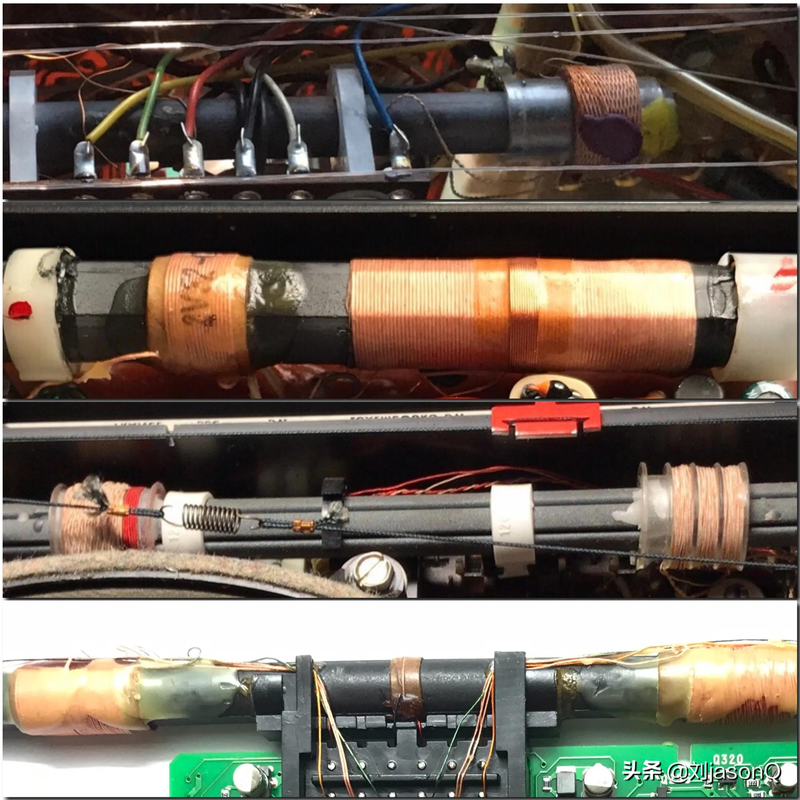
Some typical medium-wave magnet antennas
Is there any need for a high-level middle-wave
In general, the upper stages are mostly on fm and shortwaves, and the medium wave machine is relatively rare. In addition to sony's high sensitivity series, the nabs actually have a similar high-altitude type of 941. 941 is a high-coordinated and independent power, except that mixed-frequency or used triodes are not diodes. Then why aren't most planes designed to be high? I think the main points are the following: first, the membrane bar antenna is mature enough to meet design requirements, even if it does not need to be high-level, sensitivity-selective; the introduction of a higher level would add to the complexity and instability of the circuits, and the gain would introduce noise or even interact, and the gain would be less stable, but it would lose its significance; and the need for a dedicated high-altitude and tri-aligned electrical capacity would allow for high sensitivity and selectivity to be accompanied by low noise, such as the sony tr-84 high-altitude tube, which is the newly designed 2t734 low-noise tube. So it is most cost-effective to consider the combination of working on a passive device such as a magnetic bar antenna, which can be done with high q values and can be achieved with a sensibilities selective belt of interference suppression, which is also essential for the cell noise ratio of the whole machine, so the old transistor is extremely quiet, which is why。
Why mix it with diodes
The pn knot of the diodes is also a non-linear device, with two different frequencies that can be mounted on the diodes, which can be used as a mixer as well as a triode. The diode is an passive device, with a small range of noise dynamics that require a large intensity signal to drive, for example, the normal intensity p-p value is 80 mv, which is probably more than three times the level required for a diode hybrid frequency, and is low, with a high sensitivity to influence, which can cause radiation disturbance or other instability. Ttr-84, which is used here as the simplest diode-mixer, has a very different performance than a professional ring-mixer like sbl-1, but despite this, it has a level of noise control that is superior to that of a triode-mixer, with no mixed-frequency gain。
Why need independence
The traditional variable frequency class completes the induction and mixer with a triode. The requirement is that the range be as uniform and stable as possible throughout the band. The circuit structure is simple, and it basically meets the design requirements. But after all, it is a single-barrel circuit, where broadcast signals are injected from the base poles, where the vibration is injected, and where there is frequency in the output of the aggregate poles, there will inevitably be interlinkage and interference, especially where the interaction between the signal and the vibration directly affects the listening. The independent power oscillator can be very good at sequestering signal interference, and this amplitude and stability can be more evenly and more stable, almost unaffected by signals, and therefore superior. On the other hand, tr-84 uses a diode mix, which requires a larger value of the intensity signal, so that an independent intensity can easily be designed to adjust the output range without considering the interaction between the signal and the medium frequency。
What's the middle grade
The medium frequency of tr-84 is 455 khz, usually with a radio signal bandwidth of 20 khz, so that the medium-level is capable of neutralizing the adjacent frequency or unused signal outside 445-465 khz, while at the same time magnifying the signal evenly inside the belt, so an ideal medium-frequency frequency curve should be rectangle or close to rectangle. There is also a requirement that the medium-range signal should not be distorted because the medium-frequency signal is too strong, so its gains should be self-regulating, namely agc. As shown above, tr-84's agc signal is derived from the straight-flow fraction after detection and is fed back to the base poles of high release and first middle discharge, which, in turn, reduces the high discharge tube and one medium placement point at the time of the strong signal, thus reducing the gain and avoiding overloading of amplifiers. The difference is that the base extreme in the middle is the straight-link one medium-radiation pole, so that the drop in the radial level at the lower of the medium-place would result in an appropriate increase in the middle-point and the overall gain would not be too low. Tr-84 uses a single-modern medium frequency amplifier, which, although not as wide-banded as would be desirable, is simple and low-cost and is the main form of portable aircraft。
What do you mean
The detection wave level is responsible for the reduction of the cylindrical signature signal to the cylindrical voice cylindrical. The cylindrical action of the cylindrical is essential. Tr-84 continues to use the usual diode control wave, which is plugged in but less expensive, and is therefore widely used to achieve agc. The detection tube is required to be down to the pressure, and the national production of 2ap9 is suitable for detection. It is common practice for tr-84 to conduct detection circuits, which are followed by a barrier-free filtration filter used to filter residual mid-frequency and high-frequency (hf) frequency jamming. At the same time, straight-flow components are added as agc signals to control the front stage. The resistance at the back of the detection tube and the resistance at the lower level are interconnected, and lower-level input resistance should be higher so that the detection efficiency can be improved to reduce the distortion, so it is better to zoom in with the silicon tube at the lower level。
Low
Tr84's low-drain operation has nothing special, with four tubes, with input output transformers, negative feedback to improve the distortion and frequency, but it is better to replace the white electrical makeup of the performance level, because it is more or less decomposition, as it has been encountered, and when it has been replaced, the sound is more luminous, the sound is sweeter and more detailed。