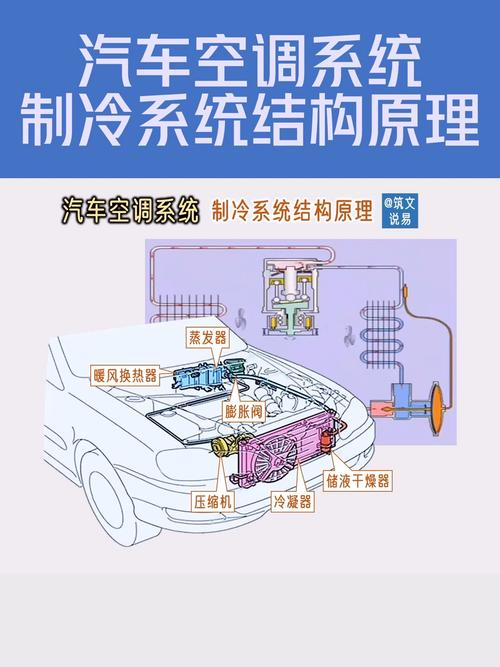
Chapter iii of the structure and rationale for the ac/v refrigeration system presents the structure and operation of the main components of the ac/v refrigeration system. Refrigerator systems 2016-11-28 are composed of 1, temperature pack 2, windbox 3, evaporation, 4, expansion valve 5, liquid dryers 6, cooling fans 7, condensers 8, compressors 2016-11-282016-11-28, compressors 2016-11-11-28 air conditioners are required to deploy refrigeration compressors in vehicles and therefore perform functions differently from general-use compressors, with four main special requirements: (1) high efficiency and high refrigeration capacity when performed at low or low speed; low power required for input at high speed. (2) small size, light weight (3) high temperature tolerance and good vibrancy (4) work smooth 2016-11-28 compressor development? First generation: the oldest and longest-used first generation product? Second generation: the advantage is that there are no poles, that there is less inertia on the main axis, that the structure is compact, and that is the current mainstream? Third generation: common features are high volume coefficients and complex lubrication systems? Fourth generation: the most promising type of 2016-11-282016-11-28 compressor classification, 2016-11-28-axis cortex compressor (a) working method b) exhaust process 1; exhaust valve 2; valve 3; inhaler valve 4; piston 5; cylinder 6; curve pole 2016-11-28 working process? Compression process? Excretion process? Excretion process?