Today, there is sand and dust in many parts of the north, and according to china weather, weather analyst tang xiao jing has said that this time sand and dust will be the largest in intensity and range since this year, due to multiple factors。
First, over the past seven days, the sand-producing surfaces of western inner mongolia, west of the gansu river and north of ningxia have lacked snow cover, while temperatures were 2-4°c higher than during the same period of the year, with a maximum temperature of 19 days exceeding 15°c, exacerbating the water loss in the soil surface, which is extremely low and very favourable to the sand
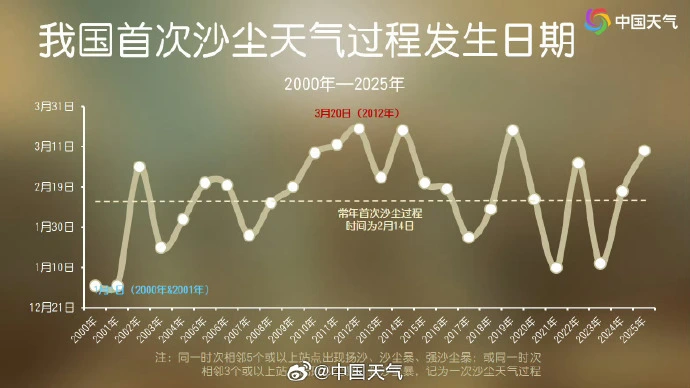
Second, in the light of the weather situation, a typical cold high-pressure combination of the front mongol cyclone led to air pressure of 995 pppa at the centre of the mongol cyclone, which is relatively rare during the current season, resulting in a huge pressure gradient between the cold high-pressure and the cyclone, resulting in extreme wind weather intensity of 9-10 and a high degree of convergence between the strong wind areas and the sand source
In addition, the effect of strong winds lasts longer than 30 hours during the night of the 20th afternoon to 21st, with large upswings and strong sand and dust storms in the field, also due to strong western and north-west winds, which lead to a rapid downstream spread of dust。
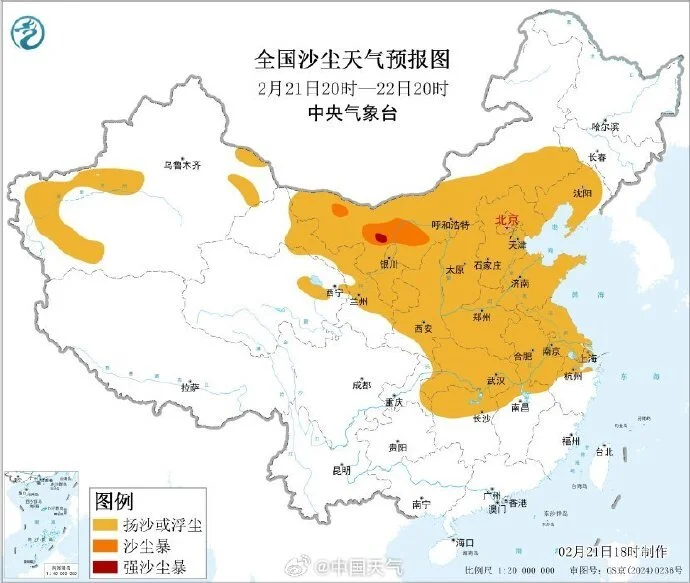
Between 2000 and 2000 hours on 21 february, the eastern and southern xinjiang border, the central western part of inner mongolia, the north-eastern part of the qinghai sea, the central part of gansu, ningxia, shaanxi, shanxi, liaoning, beijing, tianjin, hebei, henan, shandong, anhui, jiangsu, shanghai, hubei, the northern part of hunan and the northern part of the zhejiang river are expected to be covered by sandstorms and sandstorms。
Dust and sandy weather suggests a reduction in the number of trips, care to protect the respiratory tracts and slow down low-visibility weather driving。
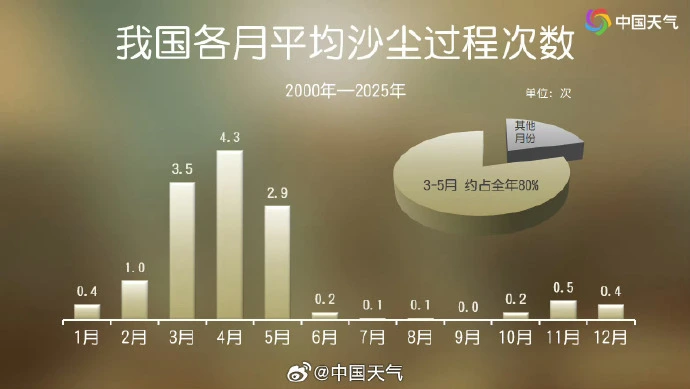
According to statistics from china's weather network, there has been sand in the country for 12 months of the year, with the highest hair in spring (march-may) and relatively rare, but not entirely non-existent, sand and dust in autumn and winter。