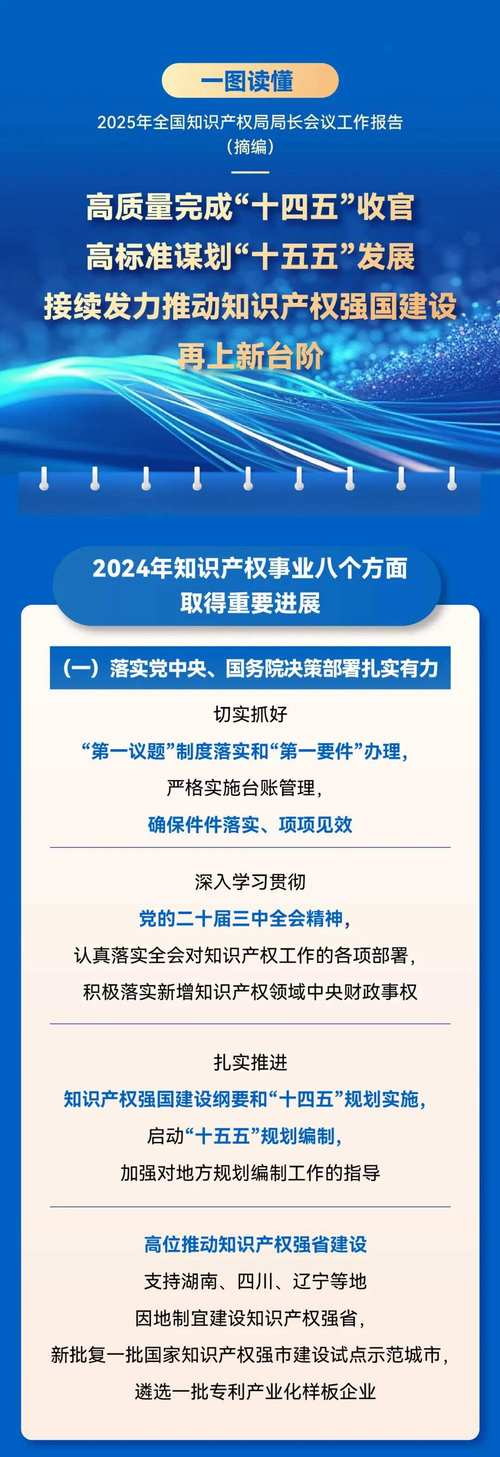
The data show that we have more than 1 million intellectual property personnel, more than 40,000 patent agents in practice, more than 20,000 intellectual property owners at the intermediate level and above — up to the end of the “145” — and that the three core talent targets of the “145” programme for intellectual property personnel have been exceeded in advance。
Over the past five years, led by the “14-5” intellectual property talent programme, the national intellectual property authority has developed a large pool of highly qualified intellectual property talent with a more active talent policy, a clearer job assignment and stronger safeguards initiatives, which have allowed the innovative dynamism of a wide range of intellectual property talent to compete。
Service-wide, cover the chain
In the corridor of the office of the chemical innovation review department (hereinafter referred to as the chemical department) of the state intellectual property office, a “patent wall” is displayed showing a series of high-value patents, high-quality reports and high-level cases examined by the department. One of the high-value patents reviewed and authorized by the ministry of chemistry is the award-winning patent for the twenty-second china patent gold prize, “a biodrilling fluid and its preparation”. It has built a self-adapted system of intelligent drilling fluids to protect reservoirs and has helped domestic firms to move away from dependence on high-end imported products, fundamentally enhancing the autonomy and resilience of the upstream and downstream industrial chain. Yang li, deputy director, applied chemistry division, ministry of chemistry, was the examiner of the award-winning patent. “the high-quality mandate of this key core patent has benefited from our bureau's sustained professional technical training of reviewers over the years, the continuous enhancement of our knowledge reserves and industry insights into frontier areas and the enhancement of our ability to identify and understand key core technologies in the relevant industries, thus enabling us to conduct high-quality reviews of such complex innovations that integrate multidisciplinary knowledge. This provides a sound legal basis for the stability of their rights and the transformation of their markets.” lee yang said。
High-quality reviews are essential to the development of a patent industry, and the creation of a high-level patent review team is the basis for high-quality reviews. In the “1455” period, in the area of patent examination talent development, the national intellectual property authority established a pool of 761 staff at the level of the review of operational training bureau, a multi-level training system covering 629 courses, and a cumulative total of over 1,000 training sessions for examiners, covering over 212,000 persons。

Intellectual property talent is the first resource for the development of intellectual property. During the “1455” period, the national intellectual property agency focused on promoting intellectual property protection, utilization, public services, internationalization of the four priority workforce and vetting of the registration of a basic workforce, with a focus on making intellectual property the “brain chain” cover the entire chain of intellectual property work。
By the end of the “1455”, the intellectual property protection workforce had increased in quality, with the national intellectual property protection centre and the rapid defence centre numbering more than 3,500 and the staff of the national intellectual property defence assistance agency reaching more than 5,100 and collaborating experts numbering more than 16,000; the professional level of intellectual property use had jumped as a whole, bringing in operational professionals in key provinces and municipalities, building a pool of experts, modeling the intellectual property commissioners of higher education and passing a cumulative pool of 87,000 patent agents; the development of intellectual property public services had been accelerated and the number of service staff had exceeded 1. 86 million; the pool of intellectual property internationalized personnel had steadily expanded, with nearly 500 expatriates selected and foreign teachers cumulatively providing training to nearly 700 intellectual property officers in developing countries; and the support role of intellectual property fundamentalists had been steadily increased, with the pool of public lawyers being expanded to 344, the cumulative number of patent examiners ranging from one to four, identifying 1824 trademark examiners and the initial formation of an “expert” examination team of 100。
By the end of the 14th, there were more than 110 undergraduate institutions of intellectual property throughout the country, and more than 70 undergraduate institutes of intellectual property had been set up。
Focus right now, to get to the point
“in recent years, i and my team have observed a gradual shift from `passive response' to `active advocacy' in international intellectual property disputes. However, some enterprises continue to seek judicial action to resolve disputes, and the costs of defending their rights may be over and over again as a result of `sawing'.” chinese intellectual property lawyers can truly provide a strong support for the globalization of enterprises only if they continue to expand their international horizons, understand international rules and engage in international practice。
At this moment of focus, intellectual property rights have become a central element of international competition and a focus on disputes, and strengthening the capacity of foreign intellectual property lawyers is important to strengthen the protection of foreign intellectual property rights and to effectively safeguard national interests and legitimate interests of enterprises. In 2025, the national intellectual property authority, together with the ministry of justice, developed and published a special programme for foreign intellectual property lawyers, which provides a series of four training courses to enhance the capacity of foreign intellectual property lawyers. During the same period, the chinese centre for training in intellectual property rights (citip) conducted a series of grass-roots training in the services of foreign intellectual property lawyers in seven locations. The training system, entitled “national integration + local landfall + downline synchronization”, was put together to train more than 800 foreign lawyers in order to achieve a high level of appreciation. “the detailed presentation by the lecturers of the international intellectual property hotspots has provided us with great inspiration and practical operational guidance, which has helped us to raise professional literacy for the coordinated resolution of international intellectual property disputes on a multi-track basis.” chiang said。
During the “145” period, intellectual property talent work was demand-driven, enhanced talent supply capacity, self-development, and focused on key issues in the development and use of intellectual property talent。
On the subject of high-profile administrative decisions, standard patents, etc., china's system of remote intellectual property education platforms has developed 148 intellectual property quality courses, with a total of over 1,000 courses and an average of 240,000 training sessions per year, effectively supporting the upgrading of intellectual property talent at all levels. Focusing on the evaluation of intellectual property talent, the national intellectual property agency has explored the development of basic criteria for the evaluation of professional titles of intellectual property throughout the country, guiding 15 provinces (districts, municipalities) in the development of policies for the evaluation of special titles, and 28 provinces (districts, municipalities) in the conduct of advanced intellectual property titles evaluations. The national intellectual property authority has directed the development of a policy paper on building intellectual property talent in beijing, shanghai and the bay of australia, to promote regional intellectual property workforce development。
Look to the future
“the case-based, practice-based curriculum, and the discussion of intellectual property at the forefront among students, have given me a rich academic atmosphere. What i'm looking forward to is a practical course at the industry level.” zhang yi, the first master's degree in intellectual property at the chinese university of science and technology, which was enrolled in september 2025, is looking forward to a major demonstration in the field of intellectual property after graduation. This was the first time that a master's degree in intellectual property had been established, and more than 400 students had started their journey to a master's degree in intellectual property in 25 higher schools throughout the country。
During the “14th and 5th” period, there were many milestones in the construction of professional degrees in intellectual property. In september 2022, the state council degree committee and the ministry of education formally approved the establishment of a master's degree in intellectual property. In july 2023, the national steering committee for the teaching of postgraduate degrees in intellectual property was established. Work has progressed, with the granting of professional degree authorizations to 27 higher education institutions, opening new avenues for future training of high-level, complex, applied and internationalized intellectual property personnel through postgraduate professional degree education。
The master's degree in intellectual property is the foundation for the selection and development of future intellectual property careers. The intellectual property think tank is built to provide intellectual support for future intellectual property development。
In march 2024, the fifth national advisory council of experts on intellectual property, composed of 48 eminent experts, was established, including 10 members of both chambers. These experts come from all areas of intellectual property rights, while a new pool of experts from new business practices in such new areas as big data, artificial intelligence, new materials, new energy sources, etc。
Since the fourteenth five-year review, experts have participated in more than 900 or 1,500 intellectual property work of various kinds. They have been extensively involved in intellectual property research, theoretical research, advisory reviews, etc., to provide strategic-level advice on cross-cutting, critical and forward-looking aspects of intellectual property development. Almost 200 intellectual property research institutes were built nationwide, forming a research team of about 6,000 people。
At the critical juncture of the successful conclusion of the “1455” and the opening of the new “155” journey, the development of human resources is given the highest priority, and intellectual property talent as the most basic, central and critical element of building a strong intellectual property power remains the fundamental principle that should be maintained. Over the next five years, we look forward to a more optimized environment of talent and talent, and to a more solid human resource base for intellectual property rights to provide strong support for the building of a strong intellectual property power。