At the moment, all kinds of fresh fruit are concentrated in “smuggles”. Watermelon, peaches, tomatoes, melons... .. Sipple, sweet, sweet. How did these sweet fruits grow? What technology does it contain? How are these fruits preserved in the heat of summer? In recent days, agricultural research units in jiangsu province have learned that the use of advanced agricultural production and management techniques has greatly reduced the burden on farmers and made the quality of fruit more secure。
Equivalent resources ensure that new fruit varieties are “sweetly”
“it's a sweet tomato!” in recent days, at the 2023 new varieties of vegetables at the vegetables institute of jiangsu province, a fruit tomato, called the pink creaming spirit, held the taste bud. Chen lung, deputy director of vegetables institute, described the "pixil" as an infinity type of growth, with pink fruit, strong sit-in capacity, around 18g single fruit weight, high hardness, fissure resistance, and resistance to major diseases in the field, such as dysentery and silt。
It's sweet. What's the sugar level of the pink crystal? Chen lung is opening up this answer: soluble solids are at 11. 0%, and generally soluble solids are directly associated with sugar, and the higher the soluble solids, the higher the sugar。
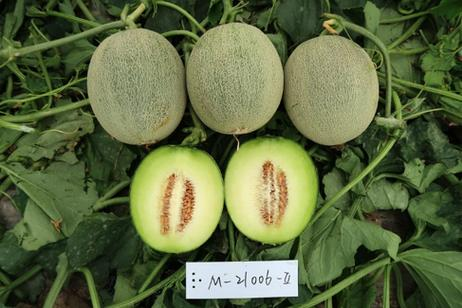
Say sweet fruit, it's a melon. Jiangsu is located in the river basin and is one of the secondary origins of melons. It is known that the “sugar – 2106” melon varieties produced by the provincial agricultural institutes weigh about 1. 7 kg of individual melons, are yellow and green, 4. 6 cm thick, central sugar. 0-19. 0 per cent, border sugar 15. 0 per cent-17. 0 per cent, fine and sweet. A presentation by yao yao, vice-researcher of the innovation team of the vegetables institute of the provincial agricultural institute, inc., described the melon as not only a very good fruit shape, near circle, gray and green skin, fine threads, medium density, strong growth, reversible, easy to sit, but also as a “showing out”。
At the provincial agricultural institute's sixth joint plant, there is a gold piping melon called “golden piper”. See only the gold, bright colour, and chen long's presentation of the watermelon core sugar, 12-13 per cent, soft meat, watered feet, and taste. “for the time being, production tests have been completed and can be produced in quantities suitable for widespread cultivation in jiangsu, zhejiang, shandong, anhui and shanghai.”
Why are these fruits sweet in the heart? Yao ho-fung indicated that the secret of high fruit and sugar levels came from high quality seed resources. A good new species requires the convergence of many good traits, many of which come from a combination of seed resources。
The “old varieties” of fruit can also produce “new sweets”, and i have taken a difficult path of conservation and innovation in the form of thin melons. Yao yao ho-fung recalled the scene of the third national survey of agricultural quality resources and collections, when a survey of breeding specialists found that my province's specialty melons had the effects of juicy, nutritionally abundant, hot and hot, and that the eastern melons were rich in sweet and rich genetic resources of good quality and style. However, in comparison with commercial species, sugar is low, there is a large gap between shelf life, resilience and abundance, and plant varieties, and farmers have more mixed and degraded species, with many areas facing extinction。
As one of the secondary origins of the melons, can the melons be “re-emergenced”? The members of the investigation, by examining the information, visiting the crowd, looking for clues and reaching out to the fields, collected and identified 56 melon species, including black-skin melons and white-skin melons, from 22 counties (cities and districts), including dong tai, xinjiang, xinyong, xianyang and kunshan, and obtained a good collection of melon “native genes”。
The breeders have these melons, the “native genes”, just like prometheus got the fire. The innovative team of melons at the agricultural institute of the province of jiangsu, using multiple hybrids of the quasi's high-quality melon resources, has produced a high-quality variety of “suzumelon 1,” with an average yield of 8. 27 per cent higher than that of watermelon species, strong field resistance, anti-plainism in seed resistance, anti-cancer disease in seed resistance identification, quansanba town, pasangua, with a strong sit-in, pear-shaped fruit, ripening, juicy-coloured fruit, corroded fruit, corsets with a strong orgory fragrance, with a strong orgible ore, which is preserved and used as a high-quality melon resource。
“the emergence of new varieties has enhanced the characteristics of appearance, sugar taste, yield, resistance, etc. Use in protection and innovation in use. Through improved innovation, the smell of homeland has been passed on, and new varieties that are both delicious and productive and resilient have been produced, giving new glory to old varieties。
Innovative farming techniques make the lives of farmers more and more sweet
In addition to the support of scientific and technological innovation, there is a need to have the advantage of growing more widely in the region if sweet fruit is to reach more people's tables。
On the morning of 13 june, 25,000 boxes of sunflower peaches began their journey from mount ziyang to various parts of the country, opening up this year's peach season. The town of yangshan is the famous “land of peaches”, the soil produced by the acidy volcanic debris and the sunlight of more than 3,000 hours of the year, which breeds a variety of characteristics, such as the sweetness of the sunhill peach, the tenderness, the thinness of skin, the abundance of juice and the abundance of vitamins。
Wang ling yun, the head of a professional peach cooperative in yangshan town, is a native-born yangshan, a famous local “peach expert” for over 70 years. In her view, the long-term recognition of the market for yin peaches was based on the advantage of a “hardware” environment, while continuous scientific and technological innovation was a “software”。
In order to ensure the timely and widespread application of new varieties, technologies and models for the cultivation of peaches, yangshan town, in close cooperation with the agricultural institute of jiangsu province, has been promoting scientific and technological innovations and the transformation of the fruits of the majestic peaches through the establishment of the siyang peaches institute of the jiangsu province agricultural institute. In recent days, construction of a demonstration base in yangshan, the non-synthetic branch of the agricultural institute of jiangsu province, and of a seedling garden has also begun。
“at least 15 of the 33 peach species in yangshan are selected by the provincial agricultural college.” the director and researcher of the nanjing integrated test station of the national peach industrial technology system, song hong feng, introduced the selected varieties from the national peach quality garden. “the national peaches reserve has preserved more than 1,000 peaches worldwide.” the director of the fruit tree research institute of the agricultural college of jiangsu province, chief assistant to the peach innovation team, and a researcher, shen zhijun, told reporters that it would take at least 13 years to choose a new species of peach, and that teams would grow over 60 hybrids per year and over 6,000 breeders. The team produces two or three new varieties each year, depending on the diversity of fresh peaches and the resources of the seedlings of the national technical system of peach industries. The team now selects 40 kinds of peaches, which can be stored at constant temperatures for 7-10 days, with high-intensity "purple breath", with red white, succulent "charcas 10" and with early maturity, fuzzy hair, and a good taste of "golda-charcas"。
“`sweet beauties' have been sold far to russia because of their virtues of taste and durability.” chen lung explained that, in order to allow new varieties of fruit to move more quickly to the market, the team adopted the strategy of “i. E., push, push, push” to create innovative alliances with enterprises, to promote integrated growth and development, and to obtain direct production tests after breeding good seeds, “on the one hand, accelerating the application of scientific results in the field and, on the other hand, making them more relevant to market needs”
The availability of varieties also depends on the expansion of large areas. Among them, the new varieties of tomatoes developed by the provincial agricultural institute are strong, the fruit is very hard, the mature fruit is pink and resistant to disease. As the main vegetable promotion in jiangsu province in 2022-2023, and as a result of the project to create major new varieties of agriculture in jiangsu province, a production experiment has been completed that allows for the production of quantities suitable for protected land cultivation in the central and lower part of the yangtze river and in the huaiang region. Chen lung introduced, for example, “sumee 518” which, because of its high quality, sold at a price of $0. 6-1/kg higher than other similar varieties, received an additional $1500-$2,000 per acre. “we hope to be able to share and work with more enterprises to promote the transformation of research into new varieties and to make the lives of farmers more comfortable.”
Cold chain technology for fresh fruit
Inflammation summers, fruit conservation also requires innovation. A 100-box storage of yang mei in a freezer in nanjing's construction district, with lock-in control and dehumidifiers, among others, guarding yang mei's “soft” escort。
“summer temperatures of up to 40°c, most of which are short-conservation periods with high loss rates, need to be preserved at low temperatures in order to ensure freshness and reduce waste. The deputy director of the institute of agricultural facilities and equipment of the agricultural institute of jiangsu province, expert of the expert committee of the cold chain institute of jiangsu province on agricultural conservation, and director of the think tank, li pengxia, described the cold chain as the sum of the special supply chain systems that keep agricultural products such as fruit in the specific low-temperature environments necessary for pre-colding, classification, packaging, storage, processing, transport and marketing. Today, the diversification and eutrophication of the population's diet is largely achieved through the gradual upgrading of cold chains.”
Li pengxia takes the example of the yin-san peaches that have recently been listed: “peaches are kept at temperatures ranging from 3°c to 7°c, which require precise temperature control, and if it is as low as 2°c, it can cause freezing.” she explained that a scientific temperature control programme could only be made in peach meat, in addition to sugar, and solids, to determine the temperature suitable for the growth of peaches, depending on the sugarity of peaches, their variety, their cold tolerance, etc., “this is similar to the saline ice point of less than 0°c, for example, to judge one of the indicators of sugarity, which, in the case of less sugary peaches, is prone to freezing in low-temperature conditions, but is not easy to freeze in low-temper sugar conditions”
Innovative equipment to preserve long-lasting fruits. Lee pengxia described the use of a full range of scientific equipment, such as refrigeration equipment, vacuum application equipment, precision storage equipment, to allow equipment to be used in cold chain circulation as a cold-storage, fungi, self-cleaning, etc. To keep the fruits as fresh as they could be at the moment when they reached the mouth。
Outside the freezer, a green channel is opened by cedar-yun hill peaches technology ltd., which is distributed in two closed loops of cold-chained vehicles. Drivers are not able to travel to the driver's room at all times to transport peaches to distribution centres throughout the country, which are delivered directly by local distributors to customers, ensuring that distribution is fast and good。
It is worth noting that yangshan has also developed an intelligent high-end peach separation device for vulnerable fruit, which is graded according to its size, weight, sugar, etc., and is an important step on the way to its intellectualization。