I. Preparation
When you choose a four-and-a-half-a-year-old garlic species, you choose a large, neat, unharmed, non-stereogenic, white-coloured, and even-sized garlic。
Ii. Fertilizing the whole area
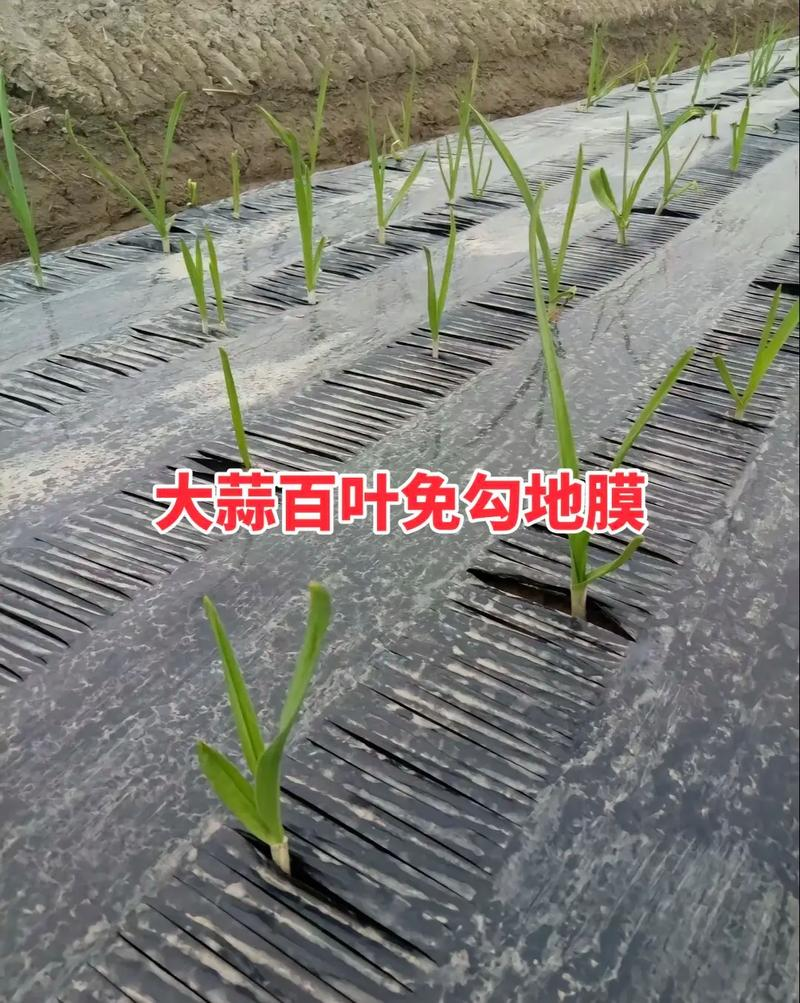
Stitching to the fields is promoted, which reduces the application of fertilizer and allows the soil to grow better than garlic. As garlic is covered by the membrane for life, it should be applied to the bottom at once. In particular, 50 to 70 kg of high-quality compound fertilizer per acre, 250 kg of high-efficiency organic fertilizer or 5 to 10 cubic metres of manure for decomposed farmers, mixed with 1 kg of high-quality boron, magnesium, zinc and iron, which are then distributed in daejeon after five to seven days of rotation。
Iii. Scrolling film
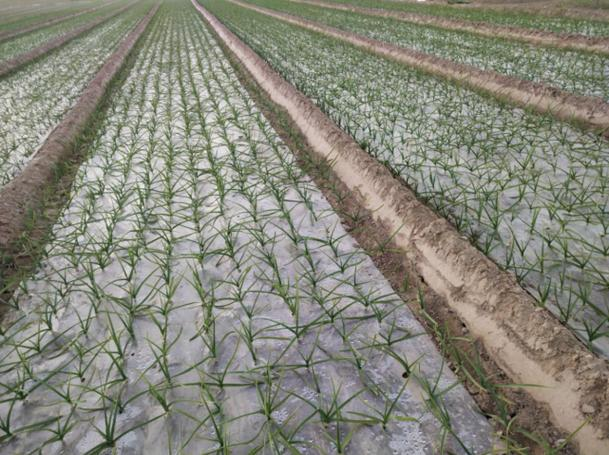
Garlic cultivation usually occurs in due course between late september and early october, when the fall is cold. Lateness can result in weak garlic being less conducive to safe winters and can easily lead to reduced yields during winters when garlic is unable to produce garlic because of stunting. The seeding is preceded by a 20-centimetre line and three-centimetre-drive ditches, with a length of about 6-8 centimetres in length, where the garlic petals are mounted at a distance of 7 centimetres and the earth is covered by 12 lines per gill, covering three membranes (90 centimetres in width and 0. 05 mm in thickness). When the garlic is planted, the garlic is flat. Spraying of herbicides for the exclusive use of garlic and covering of thin membranes after water is poured。
Iv. Garlic field management
Garlic tends to plaster five to eight days from the beginning, with an observation rate of 60% below the membrane. 70% of the time can be pushed forward with a self-made brush, helping the garlic bud to break the membrane in due course, and the artificial membrane in case of an individual who is not able to leave the membrane (the garlic bud is extracted under the membrane by means of a barbed-up device). After growing to 20-25 cm, 100 grams of gold taron per acre sprayed 15 kg of water, laying the foundation for a safe winter for garlic. Freezing water should be watered before winter break, and after four to five consecutive days of freezing, the choice should be made between 9 a. M. And 3 p. M. For the weather。
V. Covering the diaphragm
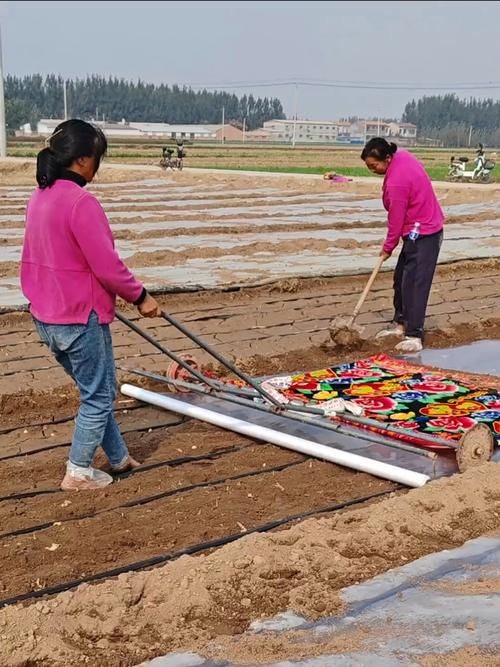
The width of the film (the width of the garlic film is specified at 4. 3 m, 4 m, 3, 5 m, 3 m, etc.) is reasonably selected on the basis of the width of the garlic plot, and the equipment for the film is prepared and can be sawed to approximately 0. 3 m length with a bamboo pole or tree branch, for approximately 1,000 sticks per acre. A further 1 to 1. 5 kg of plastic lined acres should be prepared, before the membrane is examined, the garlic field should be re-checked to pick it out with a barbed wire and then cover the second layer of thin film three to five days after it has been reduced to less than 0°c. The covering of the diaphragm shall be chosen after 9 a. M. When the weather is clear, the film shall be released on the edge of the ground and the soil shall be evenly applied to it, and then the pole shall be inserted into the ground with a plastic rope in two thirds of the pole, with a fixed membrane at a distance of one metre, and then the soil shall be taken from the ground. The width of the overlapping membrane and membrane components cannot be less than 0. 3 m, and below this value can be blown up by wind, affecting the safe passage of garlic over winter。
Vi. Spring management
In mid-march, after spring, fresh water was poured back and 10-15 kg of high-quality compound fertilizer per acre washed with water. Repeated thereafter every 12 days, 48 per cent of the acre was pumped in mid-april with 1 kg + 1. 8 per cent avm 100 ml to combat underground pests。
Vii. Enough access
The water was stopped five days before the garlic harvest. After harvesting, the garlic should be watered and 10 kg of potassium fertilizers pursued to boost the garlic and improve its quality. Some 12 days after the fertilization of the water, the garlic is harvested, which is followed by a dry collection of 8 to 10 days of storage. China agricultural network