As a federal state, the united states has a unique "dual dualist" character of its judicial system — federal courts operating in parallel with state court systems, each with an independent jurisdiction. An accurate understanding of the structure and division of labour of the system is essential for legal practitioners engaged in intellectual property. This paper will provide a systematic analysis of the basic framework of the united states court system, focusing on the boundaries of jurisdiction between state courts and federal courts, and, in particular, why intellectual property cases such as patents, trademarks and copyrights fall under the exclusive jurisdiction of federal courts。
Part 1
Dual structure of the united states court system: parallel and independent judicial system
The central feature of the united states judicial system is the existence of an independent court system at both federal and state levels. This structure stems from the division of federal and state powers in the united states constitution, which forms the "two-track" model of jurisdiction。
The system of federal courts is established under article iii of the united states constitution, with a three-tier pyramid structure:
The system of federal courts is established under article iii of the united states constitution, with a three-tier pyramid structure:
• basic courts: 94 federal district courts (u. S. District courts), which are courts of first instance in federal cases, each state has at least one and the larger can be divided into judicial districts。
:: court of appeal: thirteen federal circuit court of appeals, 11 of which are divided by geographical region (e. G. Ninth circuit court covering the states of the west coast), the twelfth is the dc circuit court and the thirteenth is the federal circuit court of appeals (cafc), which has exclusive national jurisdiction over intellectual property rights appeals such as patents, trademarks, etc。
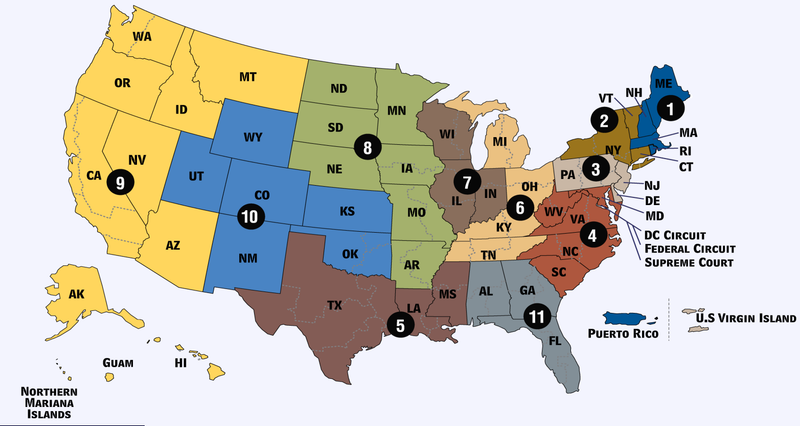
:: supreme court of justice: united states federal supreme court (supreme court), composed of nine judges serving for life, has final interpretation of federal constitutions and laws。
The jurisdiction of the federal court is strictly restricted to cases expressly authorized by the constitution, including disputes involving federal law, interstate citizens (multiple jurisdiction), cases where one of the parties is a federal government, and cases in special areas such as international trade and intellectual property rights. It is worth noting that federal judges are nominated by the president and approved by the senate and enjoy security of tenure to ensure the independence of the judiciary。
(ii) state court system: broad jurisdiction and diversified structure
The 50 states of the united states and the district of columbia have an independent court system, the structure of which varies from state to state, but is usually divided into three levels:
Court of first instance: various names (such as district courts, county courts, circuit courts, etc.) deal with various state law cases, including torts, contractual disputes, family law, etc。
• court of appeal: as an intermediate appellate body, reviews decisions of first instance courts。
State supreme court: the highest judicial body in each state, with final interpretation of state law issues。
Unlike federal courts, state courts have universal jurisdiction to hear almost all cases except federal exclusive jurisdiction. The judges of state courts are elected or appointed in a variety of ways, and their terms of office vary from state to state。
Paris 2
The jurisdictional boundary between federal and state courts: three core principles of distinction
The united states constitution harmonizes the jurisdictional conflicts between federal and state courts through the "principle of comity" and the "preliminary clause", the boundaries of which are defined mainly by the following principles:
(i) the principle of the legal nature of the law: federal law vs state law
:: federal courts: have jurisdiction over cases involving the federal constitution, federal laws (such as the patent act, the trademark act) and international treaties. For example, patent tort cases must be brought in federal courts, since patent protection is a matter for uniform federal law。
:: state courts: are primarily competent in cases involving state law, such as state contract law, tort law, property law, etc. For example, ordinary civil disputes (e. G., traffic accident compensation), commercial contract disputes within states are usually heard by state courts。
(ii) the principle of the identity of the parties: cross-state and external factors
The federal court has jurisdiction in two categories of cases involving special parties:
Plurality of jurisdiction (diversity jurisdiction): when the case is initiated without any plaintiff from the same state as any defendant and the dispute exceeds $75,000, the plaintiff has the option to sue in federal courts (even if the case involves state law). The purpose of this system is to avoid favouritism by state courts towards the residents of the state。
• the federal government as a party: this includes cases against or against the federal government and cases involving foreign governments。
In exceptional circumstances, however, the federal court may exercise supplementary jurisdiction over disputes within the jurisdiction of the regional courts, even if these conditions are not met。
(iii) additional jurisdiction
The condition is that the dispute is based on the same transactions or events as other disputes over which the federal court has jurisdiction。
Part 3
Federal jurisdiction in intellectual property cases: why are patents, trademarks and copyrights in federal courts
As an ipr lawyer, it must be made clear that patents, trademarks and copyright cases are in principle subject to federal jurisdiction, a rule derived from the special design of intellectual property protection under united states law. Under 28 u. S. C. § 1338, the federal district court has exclusive jurisdiction in civil cases relating to the protection of patents, copyrights, trademarks and plant varieties, and in anti-improper competition cases brought together in those cases, which are not available to any state court. This system ensures uniformity in the application of patent laws throughout the country。
Legal authority: 28 u. S. Code § 1338 - patents, plain variety protection, copyrights,sk works, designs, trademarks, and unfair companies shall have orifical jurisdiction of any civil action under any act of co coNo state court shall have jurisdiction over any claim for trusting under any act of coFor presents of this sub-section, the state of the united states, the district of colombia, the commoOf puerto rico, the united states virgin islands, american samoa, guatemala, and the northern mariana islands.
(b) the discriminatory courts shall have an original jurisdiction of any civil action assuring a claim of unfair compliance when joined with a substantial and retraced crime under the copyright.
(c) subsections (a) and (b) apply to exclusive rights insk works under chapter 9 of title 17, and to exclusive rights in categories under chapter 13 of title 17.
(i) patent cases: typical federal exclusive jurisdiction
The united states code clearly provides that the federal district court has exclusive jurisdiction over all patent disputes, which often include:
Patent tort actions
Patent recognition of non-violation claims
Patent title disputes
The central reason for this system is that patent protection involves national innovation policies and requires uniform legal standards and judicial measures. In practice, patent cases are highly dependent on technical experts, and the federal court, through the establishment of the special intellectual property procedure (ip special procedures), has designated judges with a technical background to deal exclusively with such cases and to enhance the professionalism of the proceedings。
The path of appeal in patent cases is also of a special nature: the decision of the district court or the decision of the united states international trade commission (i. E. The international trade commission) must be appealed to the federal circuit court of appeals (cafc) rather than to the general circuit court of appeal by geographical division. The establishment of the cafc (1982) aims to achieve national uniformity in the interpretation of patent laws and to avoid disagreements between different district courts over the validity and tort of patents。
(ii) copyright and trademarks cases: federal and state jurisdictions
Copyright cases: under 28 u. S. C. § 1338, federal courts have jurisdiction in cases involving federal copyright laws, but state courts may hear disputes involving state copyright laws (e. G. Certain unfixed performances). In addition, copyright disputes that are subject to litigation of less than $30,000 can be resolved voluntarily with the united states copyright disputes commission (the copyright claims board) (i. E., small copyright proceedings), not only at short speed, at low cost, but also by remote means. The vast majority of copyright cases, including tort litigation, copyright validity disputes, are heard by federal courts as they relate to federal law。
:: trademark cases: a more flexible model of jurisdiction. Disputes arising out of federal trademark registration (through uspto) are governed by federal courts, while disputes over unregistered trademarks protected by state trademark laws (i. E. Common law trademarks) and claims for fraudulent and unfair trade practices may be considered by state courts. However, since trademark torts are often accompanied by cross-state commercial activity, the parties prefer to sue in federal courts to take advantage of the broad jurisdiction of federal courts and the uniform application of law。
(iii) meaning of federal jurisdiction on intellectual property protection
For business and lawyers, the federal jurisdiction of intellectual property cases has three main advantages:
• legal harmonization: avoiding differences in the interpretation of intellectual property law by state courts, especially in patent cases where the exclusive appellate jurisdiction of the cafc ensures consistency of decisions across the country。
:: professional hearings: federal judges (especially appointed intellectual property judges) have more extensive technical and legal experience and are able to handle complex technical disputes efficiently。
• the scope of remedies: the federal court may increase the protection of intellectual property rights by granting interstate injunctions and triple damages (for intentional infractions)。
Part 4
Counsel's perspective: jurisdictional strategies and practice in intellectual property litigation points
Based on the above-mentioned system, the following substantive points need to be noted in united states intellectual property cases:
(i) selective skills of competent courts
:: patent cases: the federal district court, where the defendant's domicile or tort is the only choice. In practice, there are differences in the trial efficiency and decision-making preferences of different district courts (e. G. The eastern district court of texas is known for its speed and for its strong protection of patent holders) and the need to choose the best jurisdiction in relation to the characteristics of the case。
:: trademark/copyright cases: where both federal and state law requests are involved, all requests can be incorporated into federal courts by "supplementary jurisdiction", avoiding parallel litigation。
(ii) taking advantage of the procedural advantages of the federal court
The evidence disclosure procedure in the federal court (discovery) is more stringent and facilitates access to key evidence; at the same time, the federal court's use of a jury may affect the outcome of the case and requires tactical preparation。
(iii) special consideration of the path of appeal
After a patent case has been appealed to the cafc, particular attention needs to be paid to its strict scrutiny of the interpretation of claims, while the supreme court's filing review of intellectual property cases (certiorari) is extremely limited to cases involving significant legal principles (e. G. Alice corp. V. Cls bank's determination of patentability of software patents, corresponding to article 101)。
Part 5
Conclusion: understanding systems is a prerequisite for effective advocacy
The dual court system in the united states was designed to guarantee uniform application of federal law while preserving the flexibility of state justice. For intellectual property practitioners, precise control of the jurisdictional boundaries of federal and state courts, in particular federal exclusive jurisdiction rules in patent, trademark and copyright cases, is the basis for developing litigation strategies to maximize the interests of clients. In the context of globalization, a deeper understanding of the system would not only help to deal efficiently with cross-border intellectual property disputes, but would also provide firm legal guarantees for enterprises to travel to the sea。