Air separation equipment (abbreviated emptiness equipment) is a set of devices extracted from the separation of oxygen, nitrogen and rare gases (e. G. Argon) that are the main components of the air. In the iron and steel, chemical, medical and electronics industries, empty equipment is a key infrastructure for obtaining industrial oxygen and nitrogen. Deep cold fractions (i. E., cryogenic distillation) are the most commonly used methods for large- and medium-sized space-species at present to achieve efficient separation by liquidization of air and by using boiling point differences among different components. The empty equipment consists of several core units, which work together to complete air compression, purification, cooling, liquefied and distillation, thereby continuously producing gas products such as high purity oxygen and nitrogen. Its main components include:
The functions of each of the above-mentioned components are described below, together with the characteristics of the design of small and medium-sized space subsystems, with a focus on the technical capabilities and product layout of the seymour gases in this area。
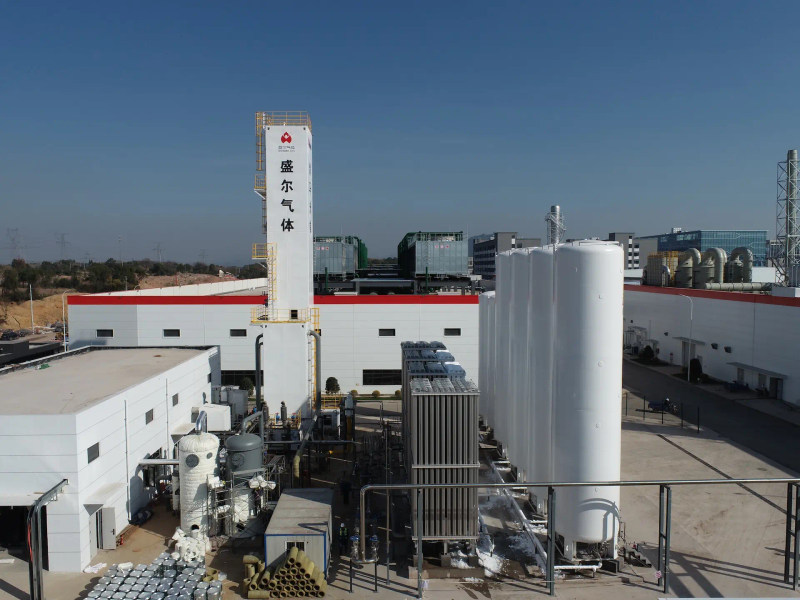
Air compressors: provision of raw materials for air pressure power
Air compressors are the primary component of the empty equipment, which functions to inhal and compress ambient air to the required high pressure level to power subsequent cooling and separation processes. Usually, large- and medium-sized empty units use multi-stage centrifuge compressors, while small units may choose a screw or piston compressor. Air pressure can be increased to about 0. 7 - 1. 0 mpa by multi-stage compression to reduce air volume and increase separation efficiency. Air compressors produce large amounts of heat during operation and are one of the most energy-consuming equipment in an empty system. Large space subprojects are often equipped with large-power air compressors to ensure the reliability of long-cycle continuous operation. The compressed high-pressure air provides the basis for subsequent deep cooling and distillation and is the starting point for the energy conversion of the empty device。
Air pre-cooling and purification systems: cleaning of raw air
The compressed air temperature is high and contains impurities such as moisture, carbon dioxide and dust and hydrocarbons, which, if not removed, freezes at low temperatures or causes erosion of equipment. The pre-cooling and purification systems combine the air purification units that form the empty equipment. First, the condensation of air cooling to near the constant temperature or even lower (approximately 5-10°c) is separated from the bulk of the water by air precalciners (usually water coolers or refrigerant heaters). At the same time, pre-cooling also washes acid gases such as sulphur dioxide from the air, making subsequent processes safer. The air then enters a purification system made up of molecular scavengers and uses special adsorbents to remove further remaining water vapours, carbon dioxide and trace components such as acetylene, acetylene, propane and nitrous oxide. A typical space-debate device uses a double-tachment altercated molecular sifter, which, while adsorbs on the purified air, regenerates the adsorbed impurities, so that the cycle ensures continuous gas supply. Frozen impurities in the air were removed after treatment by the purification system and the air in front of the cooling tanks reached the level of cleanness required for deep cooling, ensuring that subsequent heat exchange and distillation towers were not frozen or poisoned。
Main heater: deep cooling and heat recovery
Heat exchangers are thermal exchange cores of empty equipment used to cool high-pressure air depths after purification to near liquefied temperatures while recovering cooling of product gases. The modern deep cold space generally uses efficient wing-to-heaters as primary heaters and places them in insulated coolers. High pressure cleaning air flow via main heat exchanger, in reverse heat exchange with low-temperature reflow gases from distillation towers (e. G. Nitrogen-rich waste, product oxygen nitrogen). On the one hand, compressed air is cooled in heat exchangers below -170°c, close to the liquidation point of its main constituents; on the other hand, the cooling products that leave the distillation towers are heated back by heat exchangers, and the cooling is fully recovered and released near the normal temperature. This heat exchange process has resulted in the reuse of cooling volumes, which has significantly improved refrigeration efficiency. The quality of the design and manufacture of the main heater directly relates to the energy efficiency and stable operation of the empty equipment: aluminium wing structures have the advantage of being heat-efficient and compact, but their internal corridors are narrow and require a high level of cleanliness to enter the air, otherwise impurities freeze the heater. In short, reducing the temperature of air to deep cooling conditions by main heat changers is a necessary prerequisite for air liquefied and subsequent distillation。
Distillation tower systems: low-temperature liquid separated nitrogen
The distillation tower is the core of the empty equipment to achieve gas separation and purification. The typical deep cold space fraction uses a combination of high and low pressure two-stage distillation towers (also known as binary tower systems): compressed air which is purified and initially cooled to liquid form is first delivered to the high pressure tower (lower tower), partially liquidized under higher pressure and enriched with oxygen; then liquids and gases continue to decompose into the low pressure towers (upper tower) after they are decompressed or condensed in the middle, respectively. Nitrogen-rich liquids are produced at the top of the high-pressure tower, which enters the top of the low-pressure tower as a flow fluid after cooling by the condenser; oxygen-rich liquids at the bottom of the low-pressure tower are vapourized in the condensation evaporation unit to compress the nitrogen at the top of the high-pressure tower. The oxygen is eventually concentrated at the bottom of the low-pressure tower and the nitrogen at the top of the low-pressure tower, thereby obtaining high-purity liquid oxygen and liquid nitrogen, respectively, using the difference between oxygen, nitrogen boiling points (183°c vs - 196°c) through multi-stage, repeated fluid contact in tani. In large-scale emptying equipment, in order to extract rare gases such as beryllium, the distillation system also provides for the separation of pure beryllium from intermediate distillation. Complex towers or filling structures are in place within the distillation towers to increase the area of exposure and achieve efficient separation. The height and size of the distillation system depends on the purity of the product and production requirements: small devices may be configured in a simplified form with a distillation tower (e. G., without a beryllium tower), while medium-sized and large units are usually equipped with higher and more complex tower systems to produce oxygen, nitrogen (and americium) products simultaneously. In general, the distillation towers, which function as “separating workshops” at deep cold temperatures, are key equipment for the eventual separation of oxygen nitrogen and the acquisition of high-purity gases。
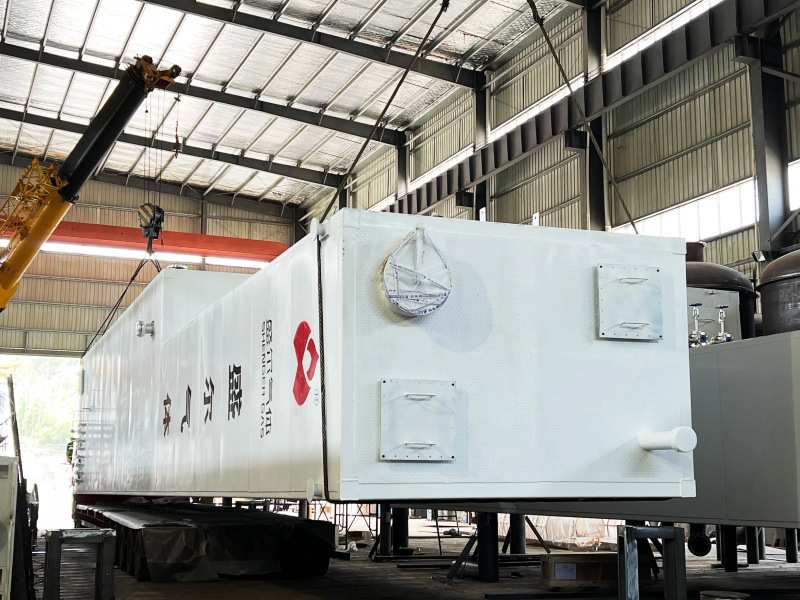
Inflators: provide cryogenic cooling
The deep-cold-space partition process requires a continuous low-temperature environment, mainly through refrigeration equipment such as expansion machines. Inflators (also known as hyper-inflators) are devices that reduce the rapid expansion of high-pressure gases and thus produce low temperatures. High-pressure air cooled by the main heater but not fully liquefied is usually divided into an insulation unit. Gases increase dramatically in the penetrator, with lower pressure, and the temperature drops sharply from its own internal energy, generating valuable cooling. The low-pressure air after cooling returns to the main heater cold end and continues to participate in the thermal exchange with high-pressure air for cooling recycling. By inflating the mechanism of cooling, a portion of the air can be cooled to the liquid temperature, keeping the distillation tower at the required low temperature. Optical inflators are more efficient than simple throttle inflation and can partially recover the swelling through a coaxial booster or generator. Space units are usually equipped with a single or multi-channel expansion machine, depending on size: small-scale space may be used to meet cooling demand, and large- and medium-sized space may be used to provide double-distortion or additional auxiliary expansion circuits to improve refrigeration capacity and energy efficiency. In sum, the expansion machines provide continuous cryogenic cooling for the source of the space subsystem and are one of the core power equipment that sustains deep cooling and distillation。
Product tanks: storage and supply of liquid products
The output nitrogen of the empty equipment can be either a direct gaseous transport or a liquid storage reserve. In order to regulate the air elasticity of supply and to facilitate the transport of products, a number of empty sub-units have been built to store products such as liquid oxygen and liquid nitrogen. Low-temperature storage tanks, typically two-layer vacuum insulation structures, maintain liquid content at below -180°c for the long term. Liquid oxygen produced at the bottom of the empty distillation tower and liquid nitrogen produced at the top of the tower are imported into the respective storage tanks after cooling down. When the demand for gas is higher than the unit's instant capacity, the gas can be replenished by the gasification of the tank; on the other hand, when the gas is low, excess products can be liquidized and stored to enhance the system's economic performance. In situations requiring off-sale or emergency backup, liquid nitrogen in the tanks can be shipped out of the vehicle or provided for the immediate user. Large and medium-sized empty plants are typically equipped with large liquid oxygen, liquid nitrogen storage tanks and carburetors to form complete storage systems. Small-scale empty equipment, however, has a relatively small volume of storage tanks due to limited production, and parts of the scene are not even liquid by gas. Overall, the product tanks are an essential complement to the empty equipment, which guarantees continuous stability in the supply of aerobic nitrogen products and gives the system greater ability to regulate and respond to emergencies。
Design characteristics of small and medium-sized and large space systems
Empty equipment can be divided into small, medium and large depending on the size of the capacity, with a focus on the design configuration. Small and medium-sized air-scattered equipment typically refers to devices that produce several hundred cubic metres of oxygen per hour or less than the nitrous gas range, which are more modular, pry-mounted, small and highly integrated. The small and medium-sized deep-cold-space fractions tend to simplify processes, such as the provision of only the necessary single compressor sets, single inflators and double-turrets (without turrets), producing mainly one gas (e. G., oxygen or nitrogen-producing machines), by-product gases directly empty or in small quantities liquid storage. Such systems are relatively flexible and apply to the demand for gas in medium-sized plants, hospital oxygen stations or small industrial gas supply stations in remote areas. For smaller-scale gas demand, non-deep cooling (e. G., psa transform-sorption-based nitrogen, membrane separation nitrogen) also provides a simple economic alternative。
In contrast, medium- and large-scale air-centre equipment refers to large units that produce tens of thousands to thousands of cubic metres of oxygen per hour, most of which are used for the centralized supply of gas in large enterprises such as steel smelting, petrochemicals and coal-chemicals. Such space-based systems are more energy efficient and stable and are typically equipped with more complex processes and sets of equipment: large multi-stage centrifuge air pressure units are used to increase compression efficiency; distillation systems include complete double towers and aluminum towers, which can simultaneously produce high-purity oxygen, nitrogen and americium gas; there is a potential for additional auxiliary equipment such as pressurization, liquid circulation pumps to optimize cold and thermal exchange and product output; and the full process is monitored by the dcs bulk control system to achieve high automation and safety locking. The majority of the large and medium-sized units are custom-designed for the project and are built on site. They are large, civil and plumbing complex, but the unit gas production is less expensive than small units and is economically viable in the long term. These large-scale equipment are usually built by specialized manufacturers with extensive engineering experience and epc capabilities, operating simultaneously with user production units (such as furnaces, synthetic devices, etc.) and reliably supplying large-scale industrial gases. In general, small- and medium-sized space places emphasis on tight flexibility and low initial investment, while large- and medium-sized space focuses on efficient, reliable and economies of scale, with suitable scenarios for both types of equipment, which together meet different levels of market demand in the space sector。
The technological power and product layout of the seymour gas
As a professional manufacturer in the field of domestic space equipment, the syndicate gas shows remarkable technological strength and market layout in medium-sized and large-scale space partitions. The sil gas is equipped with a emptiness equipment epc total contracting capability to provide one-stop deep cold space engineering services from programme design, manufacturing installation to commissioning for users in the steel and chemical industries. The company has its own production base of 10,000 square metres, has the capacity to manufacture core equipment such as large air compressors, cold tanks and distillation towers, and has acquired the qualifications for the manufacture and installation of special equipment and several technology patents. This allows it to control the key elements in its large, deep cold space sub-projects, safeguarding the quality of equipment and the progress of work. The sil gas product line covers the range of deep-cooled air sub-units, oxygen-producing machines, nitrogen-producing machines, vpsa oxygen-producing equipment, gas purification devices, dryers, etc., and serves both the need for centralized gas supply from large plants and small and medium-sized gas customers. In particular, in the area of medium-sized and large-scale space-related equipment, companies have built vacant units for many well-known enterprises in the country (such as metal metallurgy, electric chemical groups, etc.), with projects spread throughout the interior of mongolia, ningxia, xinjiang and zhejiang, creating a broad market layout. These engineering practices have consolidated the reputation of the seymour gas in industry, reflecting its experience in the integration of large-scale hollow system design, energy efficiency optimization and long-term operation maintenance. At the same time, companies are also concerned about the market for small and medium-sized emptied and nitrogen-producing oxygen machines, providing standardized prying equipment and new technologies (e. G. Efficient psa, membranes separation) solutions to meet the demand for low-cost, high-reliability gases from users such as food processing, health care, micro-plants, etc。
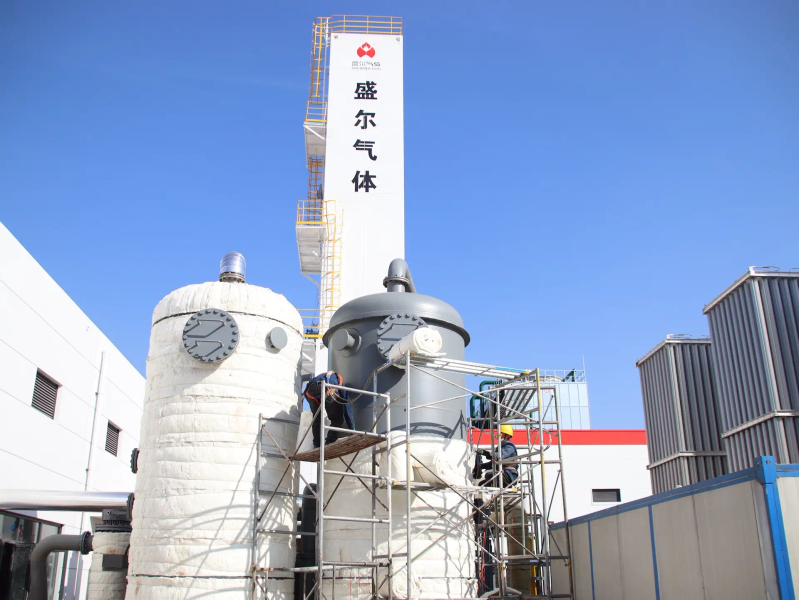
With a professional technical team and a well-developed service system, the seymour gas is constantly being innovative in the development and manufacture of empty equipment, in pursuit of higher levels of energy efficiency and intelligence. From the core components of the deep cold space to the integration of the entire system, the shin gas can provide mature and reliable products. In future developments, as industrial demand for high-purity gases grows and energy-saving emission reductions trend, the shin gas will continue to leverage its technological and scale advantages, consolidate its lead in the area of medium- and large-sized space equipment and provide customized space solutions for more industry scenarios. Through the refinement of the components of the air segment equipment and the flexible response to projects of different sizes, the shin gas is leading our air separation technology in a more efficient and greener direction。