Introduction to the empty device
The so-called emptied devices, in short, are those that separate the main gaseous components of the air. It is an industrial device that gradually separates oxygen, nitrogen and americium by cooling air depths to liquid state, because of the different groups of liquid air, which, of course, contain rare gases, such as helium, americium, argon, kryptonium, radon, etc., and impurities, such as moisture, carbon dioxide, dust, etc., that need to be treated separately. For the vast majority of the plants, what needs to be achieved is separation to produce clean oxygen, nitrogen, americium, etc。
In order to better understand the purpose, rationale, profile, process, etc. Of an empty device, we first understand the air component and its nature:
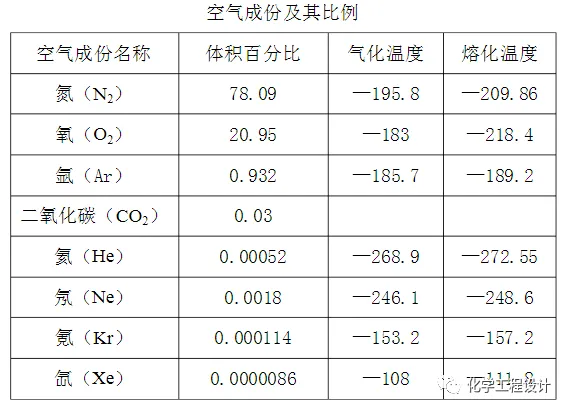
(note: temperature °c)
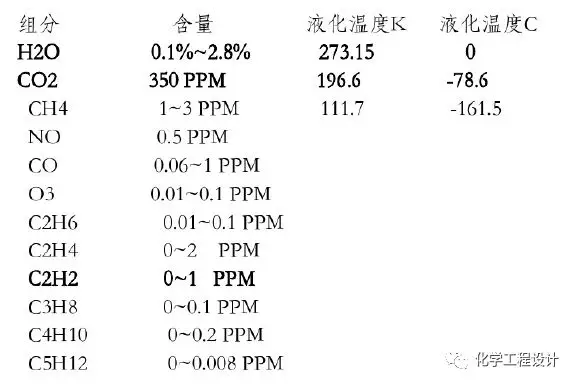
The separation of pure gases is not so simple because there are some impurities in the air that need to be removed and the main impurities in the air are as follows:
Main impurities in air
Introduction to the basics and processes of the space segment
After learning about the above, we will learn about the principles and processes of the separation of pure gases from the empty fractions。
Introduction to principles
1. The main components of the air are nitrogen, oxygen and americium, so that the main separation purpose is also to obtain the three pure gases。
2. The main impurities in air are moisture, carbon dioxide and hydrocarbons。
Air separation is the removal of harmful impurities from air and the separation of mixed gases into “purified” gases such as nitrogen, oxygen and argon。
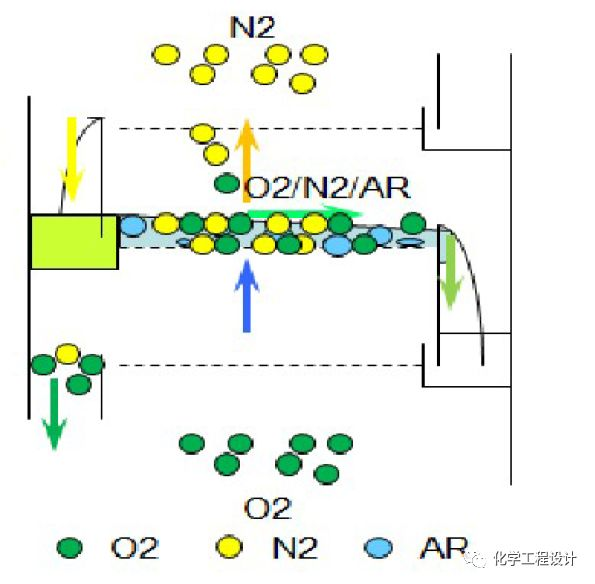
4. The rationale for emptying is separation by distillation due to differences in the temperature of nitrogen, oxygen and americium bubble points (show points, boiling points) in the air。
N2: -195. 8°c; o2: -183. 0°c; ar: -185. 7°c。
5. Distillation process: on distilled tower plates, full exposure to higher temperatures of saturated vapour and low temperatures of saturated liquids will release heat to saturated liquids, saturated vapour will be partially condensed, saturated liquids will be heated and partially evaporated. Oxygen is the mass of the high boiling point, so more condensed into the liquid phase; nitrogen is the mass of the low boiling point and more evaporation into the gas phase。
Introduction to process processes
After learning the basics of space, we learn further about the process of air separation devices. The current spatially separated process is broadly based on the following: the atmosphere is first pre-compressed by a compression system, then pre-cooled by a pre-cool system, then into a purification system to remove a portion of impurities, such as moisture, carbon dioxide, and then further cooled by a heat-replacement system, then into a distillation system (mainly an expansionor, cooler, etc.) and then into a distillation system (which consists of equipment such as the main tower, main cooler, liquid pump, etc., which is completed by the distillation process), and finally into a back-up system such as product gasification, compression, storage, etc。
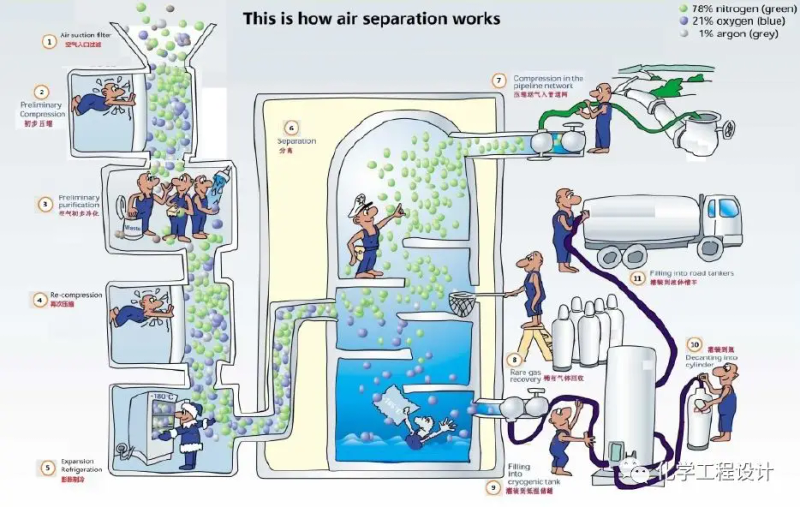
(summary of air separation process)
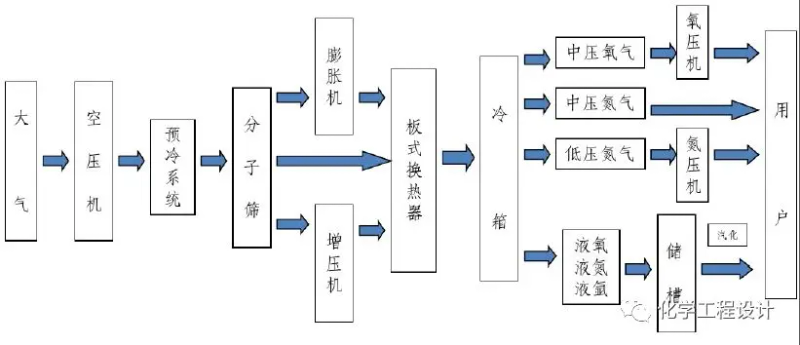
(a process summary of air separation)
Introduction to an empty device system (or equipment)
On the basis of the presentation of the process of the overlay sub-devices, we can simply divide the empty sub-devices into the following systems:
We present the system or equipment according to the empty system process:
Compression system
Air filters are available at the beginning of the air compression system, which filters mechanical impurities in the air, mainly self-cleaning air filters, while the compression aims at pre-compression of the air, consisting mainly of gas turbines, air presses, pressors, etc。
(1) self-cleaning filters are generally designed to increase the number of filters, the higher the number of layers, with a general double layer above 25,000 levels and three layers above 60,000 levels, and a general single compressor requires separate filters to be placed in the upper vent。
(2) the gas turbine is a high-voltage steam expansion and utilisation of coaxial wheels, leading to a pattern of performance of work. There are three forms commonly used by motors: total condensation, full back pressure and condensation, and more commonly, condensation。
(3) the investment in air presses is generally large-scale air-debate units, such as single-axis thermocentrifugal compressors, whose imports are about 2 per cent lower than national production and 80 per cent higher; and the use of air presses to export empty, with no flow-back routes, which typically require minimal inhalation flow resistance and traffic control using the porting leaves, with the production units in the importing country being a level 4 compressed level 3 cooling (the upper stage is not cooling). The main air press is equipped with a water washing system to wash the surface sediments of the leaves and snails at all levels. The system follows the mainframe set。
(4) the investment in a pressure booster, typically a large spaced device, is based on a temperature centrifuge, such as a single axle, and a gear centrifuge, in which the gear is more energy-intensive, particularly under pressure。
Pre-cold system
The function of the pre-cooling system is to initially cool the air so that the next step of purification is to remove water from the compressed air and impurities such as carbon dioxide and dust. The main equipment consists of cold towers, water cooling towers, cooling water and chilling water pumps。
There are two forms of air cold towers in the pre-cold system: closed cycles (the empty cold towers are divided into two sections, and the frozen water circulates between the empty cold towers and the water cooling towers) and open cycles (the recycled water system), which are mainly applied to chemical plants with poor water quality and require the replenishment of fresh water and medicinal agents; open cycles are more widely used, but the recycle system also needs regular fresh water replenishment, and the pre-colding system needs to take into account summer conditions。
Air cold towers are generally designed to be 1 metre-1 φ76 stainless steel bale ring (heat tolerance), 3 metre φ76 enhanced polypropylene bole ring (large flux) and 4 metre φ50 enhanced polypropylene bole ring。
There are also two types of water cooling towers: two-part (defunct nitrogen is recovered in sufficient quantities to ensure a pre-cold system, but resistance is twice as high (7 m + 7 m polypropylene boulders) and one-part (eight m ~50 polypropylene boulders when cold sources are added)。
In addition, all water intakes in the pre-cool system are generally provided with filters (general: six pumps, four water pumps, water from cold towers, and water from the side of evaporation by chillers) to prevent impurities from being brought into the system. The effectiveness of the pre-cold system is measured at 1°c lower than the water intake in the 4 m filling section in the following paragraph, and at 1°c higher than the water in the 8 m filling section in the preceding paragraph, which is typically measured in the middle of the empty cold tower (extension into the interior)。
Purification system
The role of purification systems is to remove impurities such as moisture, carbon monoxide, carbon dioxide, hydrogen and hydrocarbons from the air and to ensure the purity of nitrogen, oxygen and argon in air products。
The sorbents used in the purification system have a vertical axle flow, with three types of double bed and vertical runoff。
The vertical axle flow is mainly used for the support of empty equipment below 10,000 levels (up to 4. 6 m in diameter) with a bed thickness of 1550 ∽2300 mm, which can be arranged on a two-storey one-story basis, with the best air flow distribution of the vertical axle towards the sorbent。
Blank bed is used mainly for a combination of large- and medium-sized empty equipment with a bed thickness of 1150 mm (molecular screening) + 350 mm (aluminium glue)。
A stand-by-turn drifter can effectively use the inner space of the packaging, increasing the area of the sorbent with the diameter approximately 1. 5 times, which can effectively reduce the height of the tower while having a smaller surface area. The uneven distribution of air currents, unlike the uneven flow of bed-sorts, resulted in a 20 per cent reduction in molecular screening and a 20 per cent saving in renewable energy consumption。
However, the disadvantage of the vertical run-off is that the centre of the flow is concentrated (tangular area), making it faster than the penetrator (co2 < 0. 5 ppm required). The bed layer is 1,000 mm + 200 mm thick, and a vertical run-off can provide for the configuration of an empty equipment above the level of 20,000。
Change the heat system
The purpose of the heat-replacement system is to further cool the air for the next distillation operation, the source of which is the evaporation of a portion of the air through the hyperinflator. Thermal exchange structures between multiple streams: for multilayered wings, adjacent inter-channel logistics are well used through wings: compressed air which is sifted by molecules to remove water and co2 is cooled and each reflow gas (liquid) is heated to constant temperature。
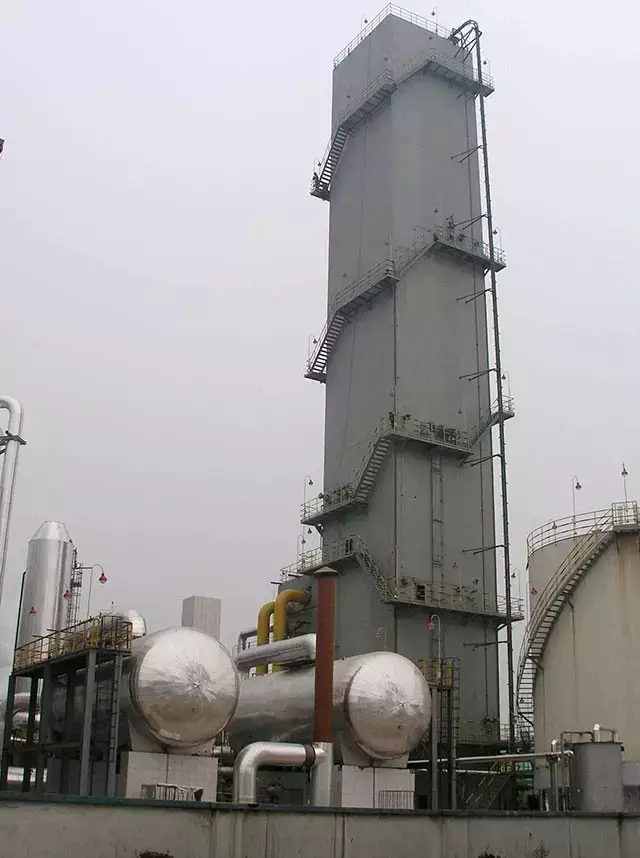
The heat-replacement system is strictly designed for multi-flow hybrid media in the same heat-replacement unit, so that the various media are automatically balanced and less energy-consuming, but this would result in an increase in the accumulation of investments by the internal compression process, which would result in all heat-replacers being high-pressure-replacers, so that the organization of compressors above level 20,000 would be separated by high-pressure, and more economically, by all heat-replacers below level 20,000。
Discrepancies
The purpose of the distillation system is to distill compressed air, which is purified and cooled at depths, with oxygen, nitrogen, americium, etc., in which the main equipment is a cooler (main tower, main cooler, cooler, corrosive tower, liquid oxygen pump, liquid pump, etc.)。
The freezer is a square or circular metal structure, typically the top-notification equipment of an empty workshop, where bead sand is filled to reduce cooling losses. The air is separated from the air by distillation on the panels and fillings。
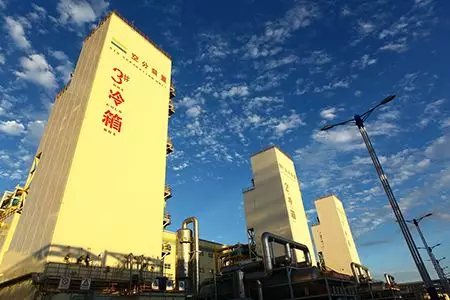
The distillation towers are of a cylinder type, with spills on multiple panels in the lower towers, with a spill shield, with small holes, and upper towers with integrated fillings and liquid dispensers: during the distillation of the tower, the liquid flows from top to bottom through each slab, the effect of the spill is to create a certain level of liquid surface on the pedal, and when the gas moves from bottom to top through the scavenger hole, it creates a drum, which increases the exposure area of the gas, makes the heat exchange process efficient, the low boiling point group evaporates, the high boiling point group is progressively liquidized, and the low boiling point unit gets pure nitrogen at the top of the tower, and the high boiling point is enriched with oxygen at the bottom。
During the distillation of the upper tower, the gas rises along the filling plate through the dispenser. The liquid is distributed evenly from top to bottom through the water unit on the filling plate, with an efficient heat exchange on the surface of the filling, full exposure of the fluid, rising low boiling point oxygen levels in the rising gas, high boiling point oxygen components being washed down, resulting in a flow fluid that eventually gets pure nitrogen at the top of the tower and high boiling point liquid oxygen at the bottom。
Storage gasification backup system
The liquid oxygen, liquid nitrogen, liquid aluminum, which is distilled, is stored, vapourized, and recharged. The main equipment is a cryogenic liquid tank, carburetor, bottle pump, filling table, etc。
Low-pressure nitrogen products, with product control valves and free flow routes, emptying of silencers (carbon steel in nitrogen and stainless steel in oxygen). Vacant nitrogen setting up to empty the water cooling towers (e. G., emptied, re-perturbated and adjusted for upper tower pressure), requiring water cooling tower tracks to meet discharge requirements, especially in cases where nitrogen is also available, not to hold up the upper tower pressure, 6kpa (eight-metre high filling), 4kpa for pipes and valves, 2kpa for air pressure, totalling 12kpa。
High-pressure oxygen products, with two-stage throttles, starting with high-pressure products, with gas voltage to 10 barg, through the eccentric anortic anorexus, with an intermediate setting of the monnar noise panel, extending the diameter of the tube through the eccentric anortic anoric anoric anorexus at a speed below 10 m/s, before being released into the acoustic tower, without stainless steel; high-pressure nitrogen products, with nitrogen gas products, with a first voltage to 10 bar, through the stainless steel bar, before being released into the acoustic acoustic tower and into the acoustic acoustic carbon steel; and oxygen valves requiring that no person be operated (regulating a closed handbar, hand valves placed inside the blast wall)。