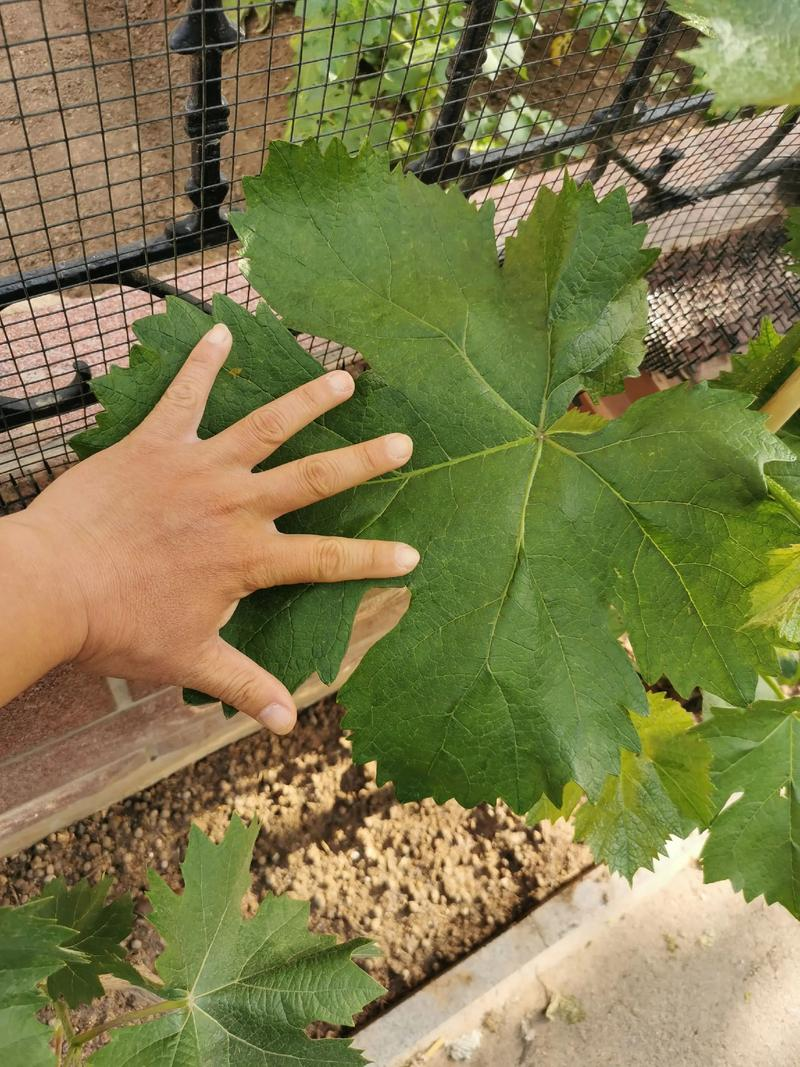
And how do you grow a giant grape when it's often seen on the market? Today, china's first-network author of pesticides is teaching you techniques for the cultivation of giant grapes。
I. Ground ground great ground trafficking technology
1. Timely embroidery, reasonable trim
When the spring grapes are sprouts, the twin buds and sprouts are removed and the sprouts are preserved. The two- to three-time break-in-the-shows must be taken in time to remove the by-products, so that the nutrients can be delivered more to the plant parts, with the proper removal of some of the bouquets, and with the one-fourth to one-fifth of the last three-and-five days before the flower starts, so that the nutrients can be concentrated on the grains left. In winter, mid-long cuttings are introduced, with around 10 to 15 new steps per square metre of surface, staggered upwards and downwards, ensuring 15 to 25 leaves per ear of grapes, and acre production is contained within 2,500 kg. This will allow the fruit to be soared, the grains to be purified and matured, and improve the taste of the berries and their colours。
Many fruit-farmers, in pursuit of high yields, do not rouble in the summer, and do not slit their ears, thus dispersing the nutrient supply and reducing the size of the grain. Small and long cuttings during winter seasons, with extra chickens, result in rapid upswing of the results, which binds the ears to the top of the shelf. Poor nutrition due to overload and uneven distribution makes it difficult to produce quality results。
In order to improve the luminous conditions, reduce the disease, and promote thawing and gravy enrichment, grape harvesting is followed by leaf trim. The removal of over-faced, over-strengthed and under-heavy branches, as well as inappropriately-positioned chickens, reduces nutritional consumption and nurtures healthy chickens, while also reducing air moisture under the shelf to avoid disease。

2. Strengthen management of fertilizers to prevent early tree decay
Grapes with large peaks are growing strongly and demand for fatty water is high. However, water must be filled in an appropriate quantity, especially 15 to 20 days before harvesting. Controlling the application of nitrogen fertilizer and increasing the application of potassium phosphate。
Gravity gardens, which have begun to produce a large number of results, need to be careful to increase fertilizer, keep the trees healthy, and extend the years of the fruits。
Organic fertilizers: 3 kg of high-quality school fertilization can be applied at a rate of 1 kg of fruit and 1 - 2 kg of calcium phosphate is mixed in 100 kg of organic fertilisers. Apply after harvest. The method is 30 to 40 centimetres deep, 40 to 60 centimetres wide, and a ditch of the same length as a row, once every two years. Fertilizers should be evenly mixed with soil, then refilled and watered。
(b) fertilizer recovery: the first fertilization was carried out during the soybeans of the fruit, which contributed to the expansion of the grains by 0. 3 kg of compound fertilizer per crop; the second was 0. 5-1 kg of calcium phosphate per fruit, and 1-2 kg of grass-wood as it started to colour in mid-july, increasing the sugar content of the fruit and promoting the colouring and maturity of the branches。
Leaf fertilizers: 0. 2% urea and 0. 2% potassium phosphate sprayed on the back of the new leaf once, before the flowering and before the new leaf starts to bloom. In mid-july and late, the fruit was coloured and the chickens were browsing, with a continuous spraying of 0. 3 per cent of potassium phosphate and 4 per cent of calcium phosphate or 3 per cent of grassy leachate. 0. 5% urea is sprayed two to three times after the harvest and before the leaves fall, delaying the fall in leaves and accumulating nutrients. A 3000-fold sticker or 0. 1% neutral laundry powder is required to be added to the foliage in order to increase fertility。
The requirements for fertilizers are more stringent with a total of 1. 5 kg of pure nitrogen for each 100 kg of berries, 1 kg of phosphorus and 1. 5 kg of potassium. At present, however, fruit farmers are applying less organic fertilizers, while the bulk of fertilizer is applied, often mainly by nitrogen, neglecting phosphorus and potassium fat, resulting in the growth of a fertilizer, a strong leaf, high depression, poor ventilation and insufficient light, which prevents the normal growth and maturity of the berries, and the precipitous and thinning of the fruit, as well as poor resistance to various bacteria。
Watering: a sprouts of spring grapes when they are soiled. If the soil is not dry before flowering, do not water it as much as possible. Following the bouquet, the fruits enter a period of rapid expansion, which is the most water-intensive period and can be poured every 10 days. To begin colouring the fruit particles, water is stopped to increase the soluble solid content of the fruit. Before the winter is buried, a large amount of water is poured to help the grapes to survive the winter。
3. Measures to increase the rate of corrosive fruit
Peaks of grapes are a widespread production problem. The main reasons for this are poor development of the flower organs, poor proper pollinating fertilization, poor weather conditions during the flowering period and nutritional disorders in the trees. The following technical measures should be taken at the production level in order to increase the sit-in rate of the raisins。
Ii. Attention to mega-peak grape cultivation
Starting with winter, when the leaves fall behind, the plants are trimmed, each of which has about three sprouts, and the weak, overstretched, proficient and insect branches are trimmed, resulting in the planting of multiple branches; early spring fertilizing by the grapes, which is dominated by the farmer's fattening, and, of course, other organic fattenings are good, fattening the soil and watering it up once, when the soil is dry. Grapes after sprouts must be sprayed in order to prevent infestation of pests and pests; when a few leaves grow, the weak bud must be wiped out and only sprouts retained, but the branches kept must be reasonable, cannot be easily removed, and there must be enough need。
When the head of the armpit division is required to carry a tape, he/she must be physically strangled to reduce unnecessary nutritional consumption. During the flowering of grapes, the timely application of foliage and gourmets, etc., ensures high yields and good quality, and the binding of branches during the period in order to avoid the fracturing of the branches and the disruption of nutrition transport. Ties and strangulation are two of the more onerous tasks involved in the cultivation of grapes. Water is replenished in a timely manner when the soil is dry. Periodic application of microbicides, etc. The next leaf is to be removed during the precipice period so that the light does not reach the grain and affects the fruit colour。

The main component of the thioperate is calcium polysulphide, which has the capacity to permeate and erode pathogenic cells and pest walls, and which protects the formation of a pharmaceutical membrane on the surface of the plant. Sprays are most effective before or during the onset of the plant. The thiophthalms are prepared by:
1 lime, sulfur powder, water and two buckets, two large pots, etc., at 1:2. 10 ratio。
2 pour water in a large pot, heat it up to boiling water, and plaster a predefined piece of lime into the pot, so that it can be fully dissolved。
Water is added to the other large pot, two pieces of sulfur powder are evenly mixed, and they are added to the one-time lime pot, which is prepared with a fire。
The four parties struggled to stay 50-60 minutes after boiling and cease fire when the pot was filled with deep brown red。
Five filters. The filtered solution is purple and black and the slag is yellow and green. The thiophthalms produced using this method are typically 23-26 wavem. The earth-based determination of thiomers is to find a white, transparent bottle containing approximately 0. 5 kg of water and indicating water lines, and then to pour out water, to reach the water level where the thiomers have been prepared by humans, to weigh the weight, and finally to calculate the dose of thioperates, the formula being: x115。