Peak grapes are not grapes that grow on huge peaks. In japanese, giant peaks are a form of grape brands, which are large, thick, dark and easily skin-skinned. There have been many and varied types of mast grapes, but most are purple and black。
It's the way the giant grapes are built
Two planting models, double-fenced or shanty-fenced. A double-fenced fence has a distance of 0. 6 m x 2-3 m shack and a distance of 0. 6 m x 4 m. Dig a ditch at 0. 6 m x 0. 6 m deep at 60 cm. When digging trenches, the topsoil and subsoil are divided. Refilling in the order of the topsoil and the bottom soil, 100 t per hectare of fattening, mixed with calcium phosphate 1. 5 t. The soil starts watering at a distance of about 10 cm and is sunk for planting。
The planting period is usually spring, with a single year of seedlings selected, with the use of the abt to impregnate and plant and water the membranes. The top two to three budding eyes of the tree are shown out of the membrane, and the earth covers are used to keep it wet and dry and to promote early growth. After the sprouts, two new arrows were left on each of them to serve as the main chicken. Give heart to the second branch and the third branch of the chicken. In late august, the main chickens took their hearts to promote the maturity of the chickens and to form buds. Weeding and watering in a timely manner, with one half-volume bordeaux per 10-15 d。
The way the giant grapes are trimmed
One, mid-tipsing, sprouts
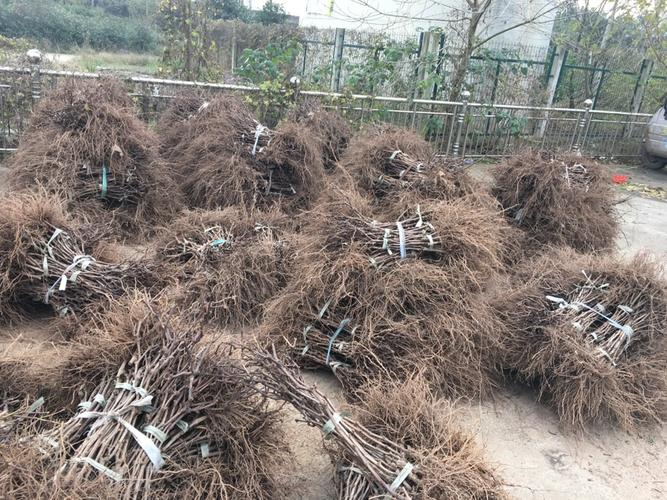
In order to ease the course of the tree, the medium cut, supported by long, short cut. The winter cut usually begins within two to three weeks after the fall of the leaves and ends before the fall, the best time being in january. At that time, organic nutrients in the branches of a year had been trans-shipped by the planting of a number of branches and roots, without loss of nutrients。
2
When the spring grapes are budding, the twin buds, the weak buds and other unnecessary buds are removed at an early stage, the strong buds are preserved and the redundant branches and the weak branches are removed two or three times before the flowers. Those who use mesoly trimmed sprouts of 5-7 sprouts, and when sprouts are ploughed, the quality of the sprouts is separated by 1 sprouts, with a maximum of 3 sprouts, with the final development of a new stubble space of 15-20 cm。
Three. Repeated attention, control growth
After the bouquet, six leaves grow before the bouquet. At the time of the above, five to six leaf blades had been removed and the heart had begun before the flowering 3d and 2 to 3d had been completed by air. At the same time, all sub-polls below the bouquets are removed, with one or two sub-polls above the bouquets, each of which leaves one or three leaves, each of which takes its heart every 10 d or so, two or three times, to control its nutritional growth and ensure that sufficient nutrients are delivered to the bouquets to provide for their growth and development。
Four, flower-swirling
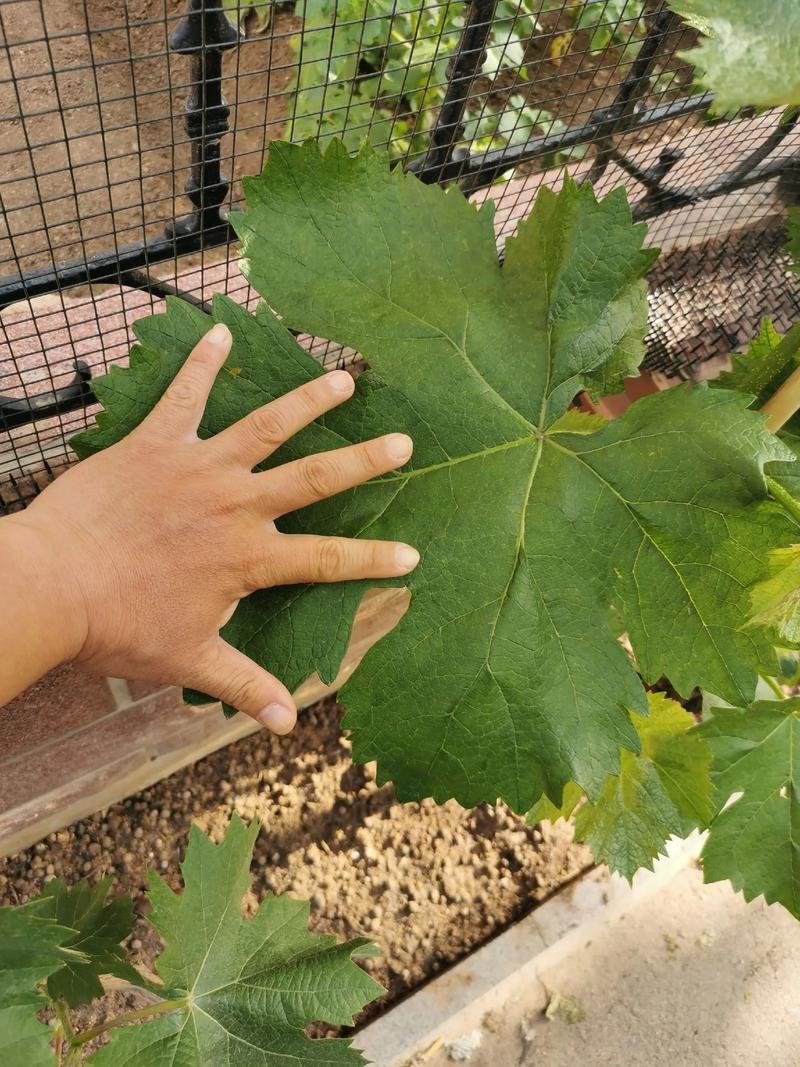
Plumbing increases sit-in rates, so that the ears are compact, full-sized, beautiful and valuable. The method is to remove, in a timely manner, the small, over-created and unsophisticated poaching of small, over-creasing, one-two bouquets in each of the new bouquets, and, in the main, to cut the side of the bouquet before flowering, at about 10d, then to strangle the tip of the ear, at 1/4-1/3 and then to eugenic fruit, and to remove the non-nucleic, deformed, insect and insects, and finally to obscurate, to leave 35-40 pores, to leave 30-35 bouquets in the middle and 25 bouquets in the small。
Water fertilizer management of giant grapes
Usually, a total of 1. 5 kg of nitrogen, 1. 0 kg of phosphorus and 1. 5 kg of potassium per 100 kg of berries are harvested; at the same time, the berries grow with sufficient moisture to increase the grain and increase production. But if the berries are overwatered between color and maturity, they are low in sugar, high in acidity, bad in colour, cracks, fruit and accelerosis, which affects the colour, scent, taste and quality of the pines. The farming community has therefore recommended that the water be filled in an appropriate quantity, especially if the water is stopped 15-20 days before the harvest。
Controlling the application of nitrogen fertilizer, increasing the application of phosphate fattening, and preventing the planting of a venomous young man, the depression of leaves, poor ventilation, insufficient light, which prevents the normal growth and maturity of the berries, the brilliance of the fruit, the thinness of the fruit, and the poor resistance to the various bacteria. In response, 800 times the potassium phosphate solution should be sprayed on the leaves during berries colouring, and the quality of the berries should be improved by another application in half-month intervals. After falling from the fall leaves, 2 per cent of phosphorous fertilizer per acre was applied at a high temperature, which facilitated the decomposition of organic fertilizers and the absorption of nutrients by root systems。
Pest control of giant grapes
1. Frostosis: in the spring and autumn seasons, the incidence is more severe in areas with less wind, more fog, more dew and more rain. Options for inhalant control, such as gold acetoxins, mercurics, fluorine, froste, acethophosphate, mercurics, etc。
2 anthrax: mainly to the point near the ripe fruit, it is also known as the “late morbidity” fungus, the infarction of the oscillation and the axle, and the first disease occurs in the tip of the ears near the ground. The pathogen is mainly the fungus that survives winter in a single year in a tree. The following spring was widely spread with the wind and rain。
3. Albinism: grape albinosis, commonly known as “water rot” or “sweety”, is an important frequently occurring disease, with high temperatures and heavy rainfall contributing to the epidemic, which is often associated with anthrax in years of heavy rainfall, causing considerable damage. Albinosis is closely related to rain. The rainy season is early, the disease is early, the rainy season is late and the disease is late. When the disease occurs in orchards, there is often a single peak of disease after rain. Combat anthrax in conjunction。
4. Black pox: rain and humidity are important conditions for disease occurrence and prevalence. Heavy rainfall and high humidity contribute to the formation, spread and infestation of spasms, especially in the case of young plants and in the event of rainy and wet weather。
Asymosis: asymptomosis is a major disease that seriously affects the growth and storage of grapes, with spring being the main cause of the rotting of flowers, with prevalence rates of over 70 per cent. The mature fruit is also often corrupted by disease during storage, transport and sale. They are diseases that must be combated before and after flowering, especially before flowering。
6. Green-blind verbs: bibliography, also known as floss, insects, etc. The sooner they are dealt with, the better it will be if they are created, the sooner they will be dealt with。
Cultivation and management procedures for large-scale grapes are broadly similar to those for other grape varieties, although they differ in specific management details, as each grape has its own unique growth characteristics, which must be followed in order to achieve high productivity and profitability。