With its unique sense of taste, the giant grapes have become one of the country's main cultivators in their production. The correct mastery of grape management techniques in production is important, and is directly related to the high yield and productivity. And here's what we're going to do with the management of the giant grapes。
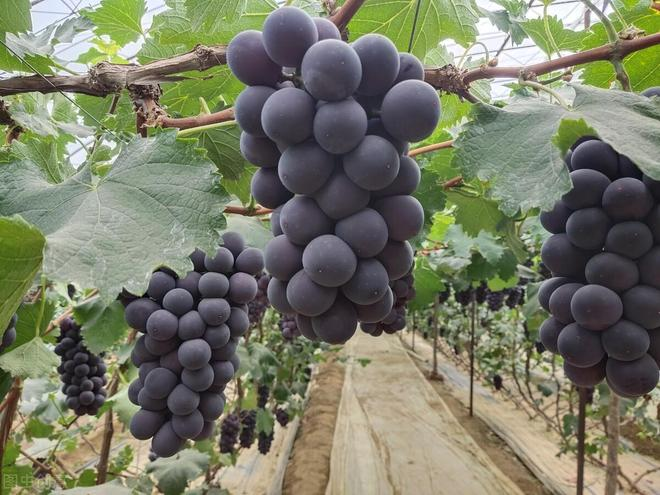
Megaphorus grapes, which are medium-pretty, four-fold varieties, mixed european and american, originating in japan. In 1937, osei was born as a mother of ishihara and moritani was bred as a hybrid. The introduction of china in 1959 and its wide spread throughout the country have now become the main plant species most popular to fruit-farmers。
I. Cultivation techniques
Selection of parks: land for the planting of large-peak grapes is chosen as a high-lying, easy-to-drain garden, and the soil of the plantation is fertile and rich in organic matter, with a ph value between 6. 5 and 7. In addition, there is a need for a sufficient amount of sun and ventilation in the plantations, with no high buildings to cover them。
Selection of fruit seedlings: cultivation of grapes is based on the choice of resistant varieties, with sufficient robust, disease-free and pest-free seedlings, with a high rate of survival and a better future. If the seedlings grow weak, it is not only difficult to survive, but it also affects later yields。
Treatment of planting: just trim the long roots of the fruit seedlings appropriately and cut them up to 20-30 cm, and then soak them in water for one day, allowing them to absorb the water adequately. Cultivation should be carried out in such a way that the roots are sufficiently dispersed, properly stretching their roots and then covering the soil so that its roots and soil are fully integrated. Cultivated, watered and covered by a layer of membrane, so that the temperature and humidity of the ground could be increased as appropriate and in the interest of root growth。
Management techniques
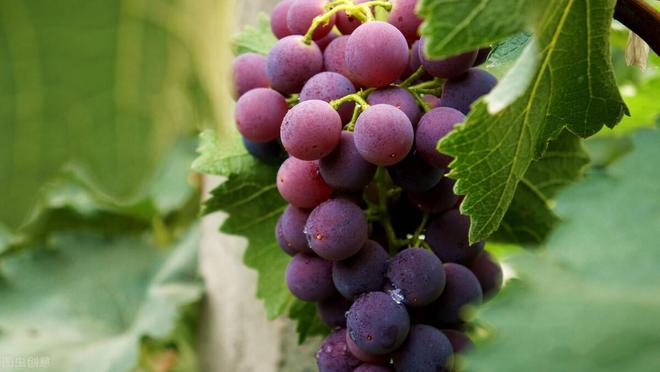
Fertilizers: the high nutrients required during the growth of the giant raisins, which usually increase the quality of grapes by 1 kg of nitrogen, 0. 3 kg of phosphorus and 1 kg of potassium, should be added for each additional 100 kg of berries. During its booming period, it avoids imposing excessive nitrogen fattening, otherwise growing plants are easy to grow and fall fruit and have an impact on production in the second year。
The requirements for fertilizers are more stringent with a total of 1. 5 kg of pure nitrogen for each 100 kg of berries, 1 kg of phosphorus and 1. 5 kg of potassium. At present, however, fruit farmers are applying less organic fertilizers, while the bulk of fertilizer is applied, often mainly by nitrogen, neglecting phosphorus and potassium fat, resulting in the growth of a fertilizer, a strong leaf, high depression, poor ventilation and insufficient light, which prevents the normal growth and maturity of the berries, and the precipitous and thinning of the fruit, as well as poor resistance to various bacteria。
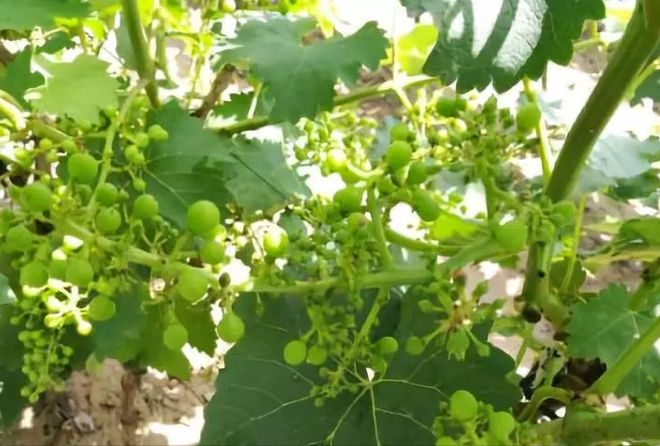
Cutting: when the spring grapes are budding, the twin buds and sprouts are removed and the sprouts are preserved. The two-to-three-time pre-flower grafts are to be removed, the by-products are to be removed, the nutrients are to be delivered more to the part of the flower, the bouquets are to be properly removed, and a quarter-to-one-fifth of the last bouquets are to be strangled three-to-five days before the flower starts, and the nutrients are to be concentrated in the provision of the grains left behind. In winter, mid-long cuttings are introduced, with around 10 to 15 new steps per square metre of surface, staggered upwards and downwards, ensuring 15 to 25 leaves per ear of grapes, and acre production is contained within 2,500 kg. This will allow the fruit to be soared, the grains to be purified and matured, and improve the taste of the berries and their colours。
Insects and pests: 5-percent thiomers of thiomers were sprayed before the sprouting of the prairie of the spring plume and fur disease; 200 times the volume of bordeaux a week after the flower was sprayed to prevent black poxiasis; from the beginning of the first half of june, 400 times ethyl phosphorus for frostic disease and 1,000 to 1,500 times 40 per cent for leukemia, etc. In order to prevent pesticide contamination after grapes are on the market, spraying should be stopped around the first half month of the harvest。
Many fruit-farmers, in pursuit of high yields, do not rouble in the summer, and do not slit their ears, thus dispersing the nutrient supply and reducing the size of the grain. Small and long cuttings during winter seasons, with extra chickens, result in rapid upswing of the results, which binds the ears to the top of the shelf. Poor nutrition due to overload and uneven distribution makes it difficult to produce quality results。
In order to improve the luminous conditions, reduce the disease, and promote thawing and gravy enrichment, grape harvesting is followed by leaf trim. The removal of over-faced, over-strengthed and under-heavy branches, as well as inappropriately-positioned chickens, reduces nutritional consumption and nurtures healthy chickens, while also reducing air moisture under the shelf to avoid disease。
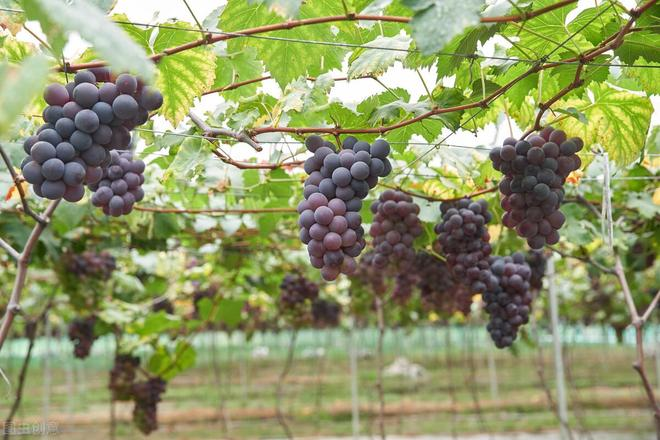
Succeeding: if grape production is too high, the quality will be reduced, so that production is not too high, and the production of an acre is 2000-2500 kg. In the course of the outcome period, fruit-reducing work is done, and for the weak branches and the prolonged branches, there is generally no fruit-bearing. When the grains expand, they are too small, split and infested to be trimmed。
Iii. Timing
Grapes grow from 130-150 days with an effective temperature of 3,000- 3200°c, normally colouring begins in early july and matures in late august, when the various planting measures are appropriate. Starting in late august, berries can be picked only when they are purple, sugar is above 15 per cent, acid is 0. 6-0. 8 per cent and the scent is thicker. In order to reduce the incidence of corrosive disease, the spraying of 700-800 times the methyl tobuzinum over the 7-10 days preceding the removal could significantly reduce the incidence of mega-crop grapes in storage sales。
The extraction shall be carried out in the morning or afternoon after the dry dew and shall not be harvested in the dark or in the fog, in order to minimize the heat and humidity of grapes from the field, and shall be lightly cut, avoiding the breaking of fruit grains and the removal of pollen。