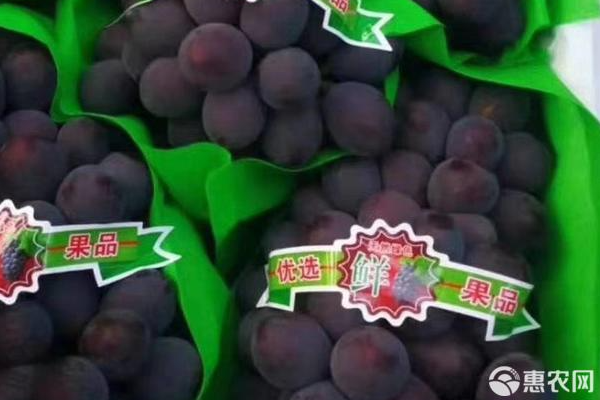
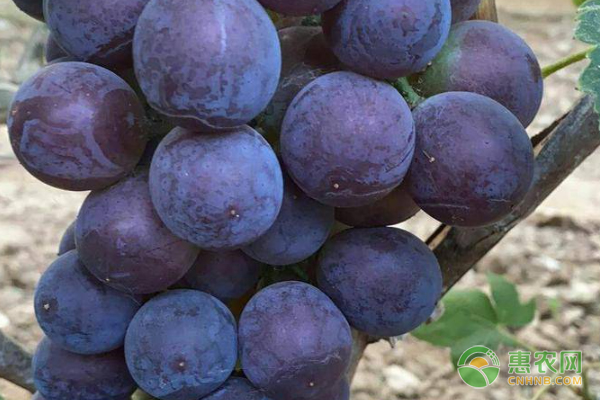
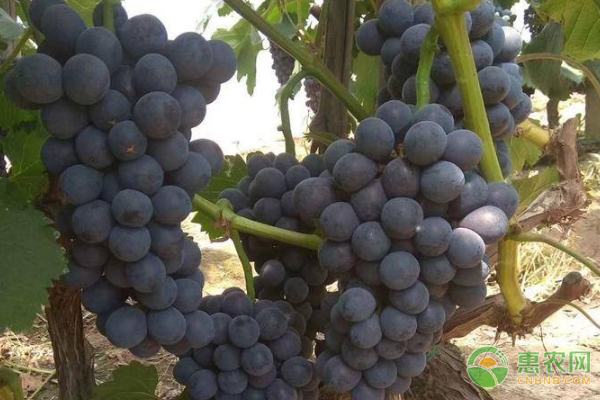
The country has grown a variety of grapes, the name of which is very large, with large and round fruit grains, a conical or cylindrical ear, with mature skins of purple or blue black, thicker and thicker fruit powder, and easy separation of fruit and meat. The fruit is soft and fine, and the juice is full. The following is a study of the methods and techniques used to grow and manage the grapes of mega-peaks。
I. Selected seedlings
When growing the saplings, the choice must be made for the saplings that were born in that year. Many laymen are eager to achieve this by buying two to three-year-old saplings, which they consider to be premature, but in fact the two to three-year saplings are mostly used to capture or claim seedlings, rather than to plant fruit. These seedlings will not only fail that year, but will have a very short life. The formal planting of fruit seedlings from the troupe of grapes must be based on the choice of a strong seedling that is born in that year. In the same year, the branches could grow up to about 2 metres, and higher yields could be obtained in the next year. It is important to remember that the seedlings planted in that year, even if the results were to be found, should be removed from the fruit, otherwise they would affect branch growth and thus production in the second year。
Ii. Building parks
Grapes are more resilient to the soil, but the selection of suitable soils and environments is the basis for the construction of parks. Parks should be selected for sand, adhesion, low groundwater tables, easy drainage, well-lighted water fields or drylands. Prior to the construction of the park, soil disinfection was required for 3 to 5 kg of octhion, 1. 5 to 2 kg of digsone and 100 to 150 kg of lime to ensure the health of the soil and to create a sound environment for the growth of grape seedlings。
Iii. Varieties selection and cultivation
Peak grapes are divided into seedlings and cold-resistant mothers. The selection of varieties should be based on the local natural environment and climatic conditions and be adapted to local cultivation. It is recommended that a major plant species be selected, with appropriate combinations of early and late-maturistic varieties. If the area under cultivation is too large and the spring and summer rainfall is too high, it can lead to fissures and losses, while the area under cultivation at a later stage may conflict with the timing of the marketing of large areas of grape products and reduce economic benefits. When planting, deep pits and shallow seedlings are recommended to increase root levels and drought resistance and nutrient absorption capacity of plants in arid weather。
Iv. Integrative trim
The plasticization and trimping of grapes is a key technique for achieving “one year of gardening, two years of hysteria and three years of production”. The purpose of the shears is to maintain the shape of the plant and to regulate the relationship between nutritional and reproductive growth and to promote its normal growth and results. By artificial insemination, it is possible to shape a reasonable skeleton structure and shape, control tree crown size and make full use of shelf space and light energy for productive and stable purposes。
V. Soil management
Strengthening soil, fertilizer and water management is a basic technical measure for grape cultivation and a basis for quality, high productivity and efficiency. The abundance of organic matter in the soil is an important condition for the production of quality fruit, and the fertility of orchard soils has a direct impact on the yield and quality of fruit. Therefore, soil management should revolve around optimizing soil structure, fertilizing land, increasing organic content, including weeding, inter-cropping or green fertilization, and deep tilling。
Vi. Fertilizer technology
Grapes require a wide range of nutrients throughout their growth and consolidation, including nitrogen, phosphorus, potassium, calcium, magnesium, sulphur, and trace elements such as boron, zinc, manganese, iron, cobalt and copper. Apart from the absorption of hydrogen and carbon from the air, other nutrients are absorbed mainly from the soil through the roots. In addition, the pursuit of pasta supplements tree nutrients. Common organic fertilizers, such as livestock rings, composting, human urine and green fertilizers, are used as base fertilizers. Not only is organic fertilizer nutritious, it also improves soil fertility, water conservation and soil structure。
Vii. Water control
Grapes require different moisture at different stages of growth. More water is needed for the bud and the flowering season, and sufficient moisture enables the bud to grow in full; during periods of berries expansion, berries growth and fresh growth require substantial moisture, accompanied by higher temperatures and increased leaf evaporation, as well as more moisture; when the fruit matures, the water should be strictly controlled to avoid fissures and affect the quality of the fruit; appropriate water is required after harvest to meet the need for a second growth of grapes and increase soil water content。
Viii. Winter shearing
The winter cut of grapes is an important part of production. Every year, when grapes enter hibernation, they need to be trimmed. In winter, shears usually take place after the leaves fall and enter the hibernation period. Cutting should be done by cutting disease branches, pest branches, weak branches, underdeveloped branches, etc., and by retaining a sufficient number of well-established, full-fledged fruit branches and buds. Reasonable cuttings can form a good tree-type structure, even distribution of the face of the chickens, good ventilation, balancing the growth and outcome of the adult tree, so that the plant is robust, laying the foundations for a steady harvest for the second year, and extending the outcome years and lifetime of grapes. The renewal of the fruit branches of the larvae, the renewal of the ageing branches, and the adaptation and adaptation of the tree form are also to be done through winter cutting。
Integrated pest management
Grapes are threatened by multiple pests and diseases during their growth, such as poor control, which can lead to reduced yields and lower quality. Vine diseases are classified as fungal, bacteriological, viral and physiological. Fungal diseases include black pox, powder, anthrax, frosted, brown spots, ravine, ashilosis, black rot, rusty, wheeled stripes; the main causes of bacterial diseases are raisin cancer; viral diseases are mainly raisins, corrosive diseases, embolisms, etc.; and physiological diseases are mainly raisine canal diseases, sunburns, deficiency diseases, etc. Growers should adopt comprehensive prevention and treatment measures, including agricultural, physical, biological and chemical control, according to the type and pattern of disease and pest, to ensure healthy growth of grapes and to improve the quality and production of fruit。
In conclusion, each and every link in the colossal grape cultivation is crucial. Through scientific planting techniques and fine management, growers can achieve high yields, steady production and quality of grapes。
You may be interested in and welcome to the content of the following recommendations of the hinon network:。