It's called lotus. It's a sleeping lotus. From southern asia, high economic value has been extensively planted. The lotus is divided between the raisins, the raisins and the flowers. The main production areas of my province are guangchang, ningdu, ishi city, nan fung, south city, heung guang, gian, yong fung and yuyang lake districts, with the best of guang chang white lotus and the best of qian lien as a vegetable, and i have grown a lot of vegetables。
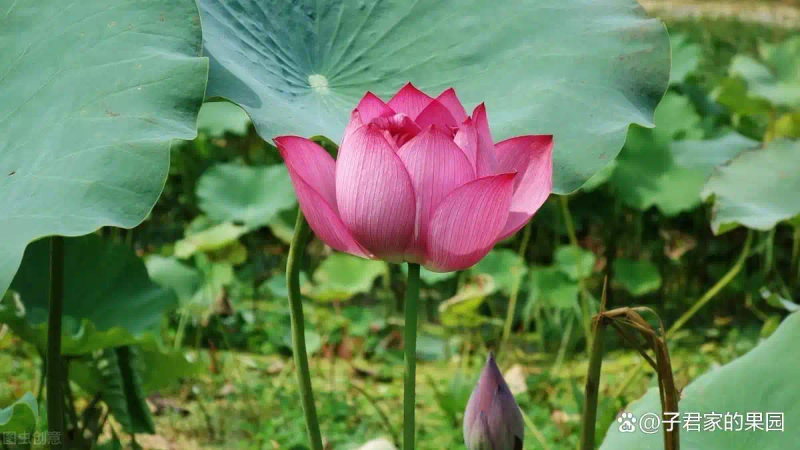
1. Cultivation and management of lotus
(1) cultivation methods: when suitable varieties have been chosen, the field should be turned over, preferably during the summer preceding the planting year, to the ground, which promotes the decaying of grass roots and the fertilization of the soil; deep water lakes are not easily fertilized, usually with acreage of 5,000 ~ 10,000 kg green fat or with human dung of 2000 ~ 4,000 kg, with an appropriate increase of 50 ~ 100 kg grasswood. In the luang-yang lake area, weeding is the main problem. Proper cropping is an important part of increasing the yield of the land. The planting period was easy because of the variety, and we usually plant before and after the light. In addition to conforming to the characteristics of the species, care should be taken to grow on one side of the body. The species must have at least two full sections. In only one section is there a risk of decay due to low nutrients, slow growth and low yields. Cultivation density and use vary according to the conditions and variety of cultivation. Pre-cooked varieties tend to be thicker than late-cooked varieties, and the fields are thicker than the fields and the fat ponds are thicker than the thin ones。
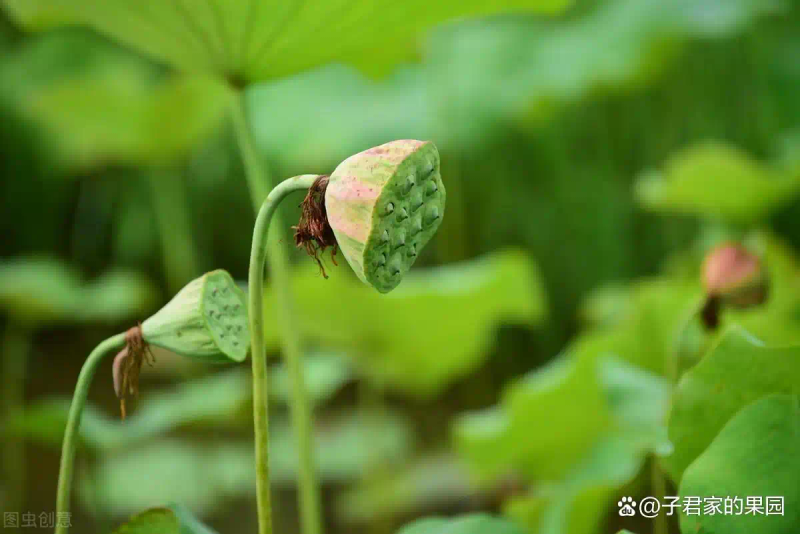
The fields range from 1. 5 to 2. 1 metres in length and the cave from 1 to 1. 5 metres in length, each plant has one or two of its own, with an acreage of 175 to 200 kg. Each plant is grown with a maximum of 150 ~250 kg per acre. In principle, the planting of the field, whether it is a puddle or a puddle, requires that all around it (the sprouts) be directed to the field in order not to stretch out the whip. The rows are staggered and their heads correspond to each other so that the whips and leaves are evenly distributed in the fields. Fields are planted at depths of about 10 to 15 cm, usually in sap shape, with hand-picked ditches, on the principle of non-floating or unshakable. It's usually slashed. The head is slightly deeper, the back section is slightly oscillated at 20-30° or, if the bottom mud is sticky, it is suitable to flatten。

(2) management
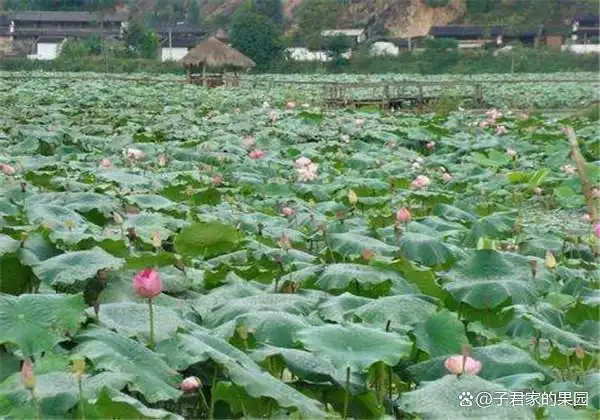
1 water level regulation: the field can easily control the water level, maintain water depths of 5-8 cm in the bud and increase the temperature of the soil: during the booming growth phase, the water level is increased to 10-20 cm, during the condensation phase, with a low water level of about 5 cm, and lastly keep the soil soft and wet, so that it is condensed and mature. If you can dig up a water level, you should be aware of the above, from shallow to deep and from shallow, with particular attention to preventing water levels from soaring, flooding leaves, causing a significant reduction in production even if you leave within one to two days, and causing the death of plant plants if the flooding is too long。
Weeding in china: when leaves are planted approximately half a month later, weeding in china begins, and when weeding in the fields, weeds should be ploughed in the mud. Weeding in china usually takes place 2-3 times until the leaf is full of water. When weeding is found, the field must be removed in time, and the field is strong and often overgrown. The morphological characteristics of wildness are: the twig when the leaves come out of water, the twilight of the leaves, the twilight of the leaves, the rough side of the leaves, the thick and white of the leaves, and the red 3. During the first half of the booming season of the lichen, the saps and leaves grow rapidly, and they are to be followed by the manure, which is to be followed by about 50 days after planting。

Most of the first pursuits occur 20-30 days after planting, and 1,000-1500 kg of acre fatting or human urine when the first and second lobes grow; and more of the second pursuits occur 40-45 days after planting, with two-three levees and beginning to split, 1,500-2,000 kg of manure. If the growth is still not strong, it will be pursued again in half a month. In the pursuit of fat, step injuries or frowns or whips should be avoided. It is generally appropriate to apply platonic or early green fertilizer. 4 turns around: from the beginning of planting leaves and branches to the beginning of the strangulation, the head should be turned periodically (i. E. The whip top) until the beginning of the strangulation. Growing up every three to five days. The approach was as follows: around the field, it was found that the leaves had grown to the edge of the field, indicating that the head had reached the edge of the field and that it should stretch out its own mud, tenderly present its young whips, turn to the fields and press them with mud。
5 pests and pests control: the pests and pests of lotus should be primarily preventive, supported by treatment, and should be checked for early intervention. The principal pests and pests of the larvae are as follows: a. The maggots: most of them occur in the summer, and the larvae suck water on the tubers and roots, making the larvae yellow. At an early age, 10-15 kg of lime per acre was found, which could also be pursued in combination, with targets spreading watergrass and killing pests。
B. Aphids, slashed night moths: 40 per cent of aluminum emulsants 1,500 to 2,000 times diluted liquids, or 50 per cent wetner acetylene powder 1000 to 1,500 times diluted fluids. Selenium moths can produce trichlorfon 1000 to 1,500 times diluted liquids with 90 per cent precision, better if 0. 2 per cent pure alkalin is added to the fluid。
C. Decomposed disease: black spots are detected first on the lobe, then gradually spread, which eventually causes decomposition, followed by leaf handles, subsurface whips and subsequent decomposition. Early detection occurs when the sick leaves are cut and buried deep and leaves are kept connected to the leaf handle so that the water does not enter the plant with a leaf handle wound。
(3) digging and seeding
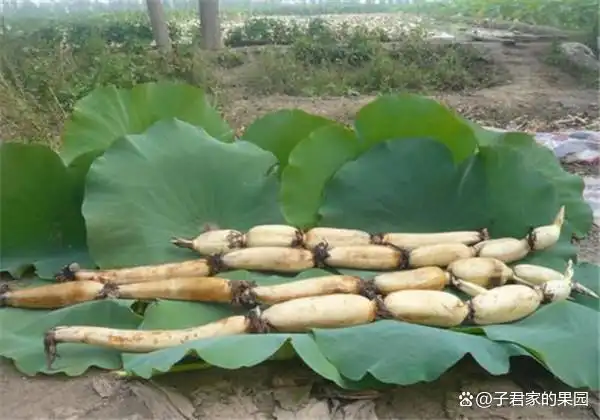
Because of the diversity of varieties, the time of maturity varies, and when leaves appear, their backs are slightly red, the foundational lobes begin to be yellow, there are flowers, the first flower-forming lotus, and bending towards one side marks maturity. Most of the leaves in the plant are green when they are green, so it's better to wait for the leaves to dry, to grow old and to drain the fields. Digging is usually carried out with shovels, then with their hands, and can be kept in the field, delayed until the second spring, but should be dug up no later than three months before the agricultural calendar. When digging, care should be taken to preserve the species, usually from the inside side of the pond in a sequential manner, leaving one metre behind for each 2 to 3 metre wide, leaving it as the mother of the following year. And the excavated twigs, and the slabs are sealed with mud on both ends, so that they may endure, and so that they may endure。