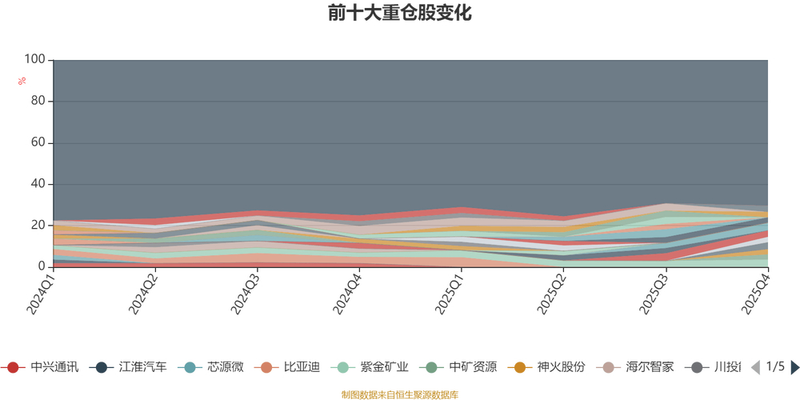
The fund's investment strategy includes, inter alia, asset allocation strategies for classes, equity management strategies and bond management strategies. The fund makes dynamic adjustments in the allocation of assets in categories such as equities (including shares a, certificates of deposit and port shares, etc.), bonds and currency market instruments, based on market trends and comparative risk of expected returns for each asset class, with a view to achieving an optimal balance between risk and return in investment. Using a multi-factor analysis framework, the fund applies a combination of quantitative and qualitative analysis of investment opportunities and risks in the securities market, in terms of the macroeconomic environment, policy factors, market interest rate levels, market investment values, financial supply and demand factors, and the internal dynamics of the functioning of the securities market. (1) macroeconomic environment. The analysis of the macroeconomic environment, which has a general impact on the fundamentals of securities markets, examines trends in macroeconomic performance and the impact on equity markets. The main indicators of the analysis include GDP growth rates, changes in total imports and exports and exchange rates, growth in fixed-asset investment, ppi and cpi data, growth in total retailing of social goods, utilization of productive capacity in key sectors, etc.; and (2) policy factors. A forward-looking analysis of policies and a study of the impact of different policy issuances on different types of assets. The analysis included policies and initiatives to regulate and develop capital markets, fiscal and monetary policies, industrial policies, regional economic development policies, foreign trade policies, etc.; and (3) market interest rate levels. Analyse trends in market interest rate levels and their impact on fixed-income securities. The analytical indicators include changes in interest rates on loans held, interest rates on short-term financial instruments and bond yield curve patterns, and so on; in terms of the balance between supply and demand in the securities market, the main indicators considered were: changes in the supply and flow of money, bond data, market turnover levels; speed of ipo and refinancing, limiting the date and quantity of release of shares, the status of subscription and foreclosure of various types of open funds, progress in the financing voucher policy, etc.; and value of investments. Includes changes in intrinsic values - market as a whole or in the profitability of the industry (income, profits, cash flows, etc.), market values - changes in the valuation levels of the market or industry p/e, p/b and p/cf, and international comparisons; (6) the dynamics inherent in the operation of the market. This refers to the inherent inertia and regression of the securities market itself. Reference is made to market characteristics of policy responses, trend characteristics of international equity markets, investor-based market confidence in the recognition of the value of investments by listed companies, market investment themes, etc.; however, the analytical core focuses on identifying the underlying factors driving the securities market upward or downward. The results of the analysis by the fund manager combining the above factors provide an overall assessment of investment opportunities for assets such as equities, bonds and currency market instruments as an important basis for asset allocation. Fund managers will adjust the allocation of assets such as equities, bonds and currency market instruments based on the expected relative risk returns from stock markets, debt markets, etc. In addition, the fund will use the experience accumulated by its fund managers in the management of long-term investments to adjust tactical asset allocation to market fluctuations resulting from market contingencies, market non-effective exception effects, etc. Equities investment management (1) industrial trends investment strategy the concept of investment in industrial trends means that, in the context of china's accelerated economic development and the transformation of its approach to economic development, many industries are undergoing structural change or continuous rotation, and the fund will focus on finding a share of investment that can adapt to or lead to changes in industries. In the medium to long term, the more forward-looking companies in industrial change, the more their intrinsic value increases, the more they can generate long-term investment returns. For different industries, the fund's approach to industrial trends analysis is divided into three main areas: 1) for new and emerging industries, emphasis will be placed on new subsectors that have emerged in the course of their development, from which investment will be chosen by the best firms. For these industries in the early stages of development, a forward-looking perspective is needed to determine the possible future direction of their development and to select the best firms to invest in the faster and more critical stages of their development. 2) for industries that have been undergoing technological innovation for a long time (e. G. Internet education, cloud applications, etc.), the emergence of technological innovation will affect the competitive patterns of the industry, lead to structural changes in the industry, or lead to significant changes in its growth rate. By taking stock of the changes brought about by technological innovation, the fund will make forward-looking judgements about the direction of industrial development and select the firms in which to invest. 3) with respect to mature industries, which have developed their own unique industrial development cycle, the fund will focus on investments that capture the peaks of their industrial cycle and the pace of rotation, supply and demand changes, and the evolving patterns of competition, choosing among them the best firms that can lead cycle rotations and drive the wheel pulse. (2) basic analysis of the shares although the market price of securities fluctuates, over time prices will certainly reflect their intrinsic value. Key elements of the fundamental analysis of the units include value assessment, growth assessment, cash flow forecasting and industry environmental assessment. The aim of the fundamentals analysis is to identify key assumptions for financial projections, including cash flow discount model input variables, and to assess the reliability of these assumptions, considering both qualitative and quantitative aspects of industry competition trends, major drivers of corporate cash flow growth in the short and long term, key points of business development, etc. 1) value assessment. Analysts use a set of historical and expected financial indicators, combined with qualitative methods, to analyse firm profitability and value relative investments. Key indicators include: ev/ebita, ev/sales, p/e, p/b, p/rnav, dividends, roe, operating and net profit margins. 2) growth assessment. The expected growth rate is mainly based on income, ebitda, net profits, etc., to evaluate the prospects for sustained growth of corporate profitability. 3) cash flow forecast. The company's future free cash flow is obtained through forward-looking estimates of the factors affecting its cash flow. (4) assessment of the stage of the sector and its prospects for development. Following the typical technology life cycle, industrial development generally goes through periods of innovation, growth boom i, shock, growth boom ii and technological maturity. Of these, growth boom i and growth boom ii were periods of gold investment. The cash-flow discount equity valuation model, using methods such as the cash-flow discount model, is an important element in the fundamental analysis. The cash flow discount model used by the fund is a multistage free cash flow discount model, in which the growth rate of the free cash flow is divided into four phases. 1) initial phase: the growth rate of cash flows at this stage will be influenced by internal and external factors. External factors include the overall economic situation and other factors, such as monetary policy, tax policy, and the impact of industrial policy on income and costs. Intra-corporate factors include changes in market shares, business restructuring and changes in the financial landscape resulting from the introduction of new products, such as debt reduction and repurchase of capital. 2) normal stage: at the end of the initial phase, we assume that the company is in a normal economic environment, neither boom nor recession, and that it has reached sustainable long-term growth levels. Corporate cash flows are now growing at roughly the same rate as the industries in which they are located. 3) the change phase: at this stage, the ratio of corporate capital expenditure, the return on equity, the growth of profits and the value of beta are all closer to the market average. This is the result of market competition, as high profits attract new entrants, which are becoming increasingly competitive, and new entrants keep squeezing profit space until the overall industry level of profits falls to the market average, at which point no new entrants are expected. 4) final phase: in the final phase, capital expenditure ratio, beta and cash flow growth rates are equal to market averages. The model ends with the intrinsic value of the stocks, i. E. The sum of the present values of the four-phase cash flows. The difference between market prices and intrinsic values is the basis on which the fund buys or sells equities. Market prices are below the inherent value range, indicating the attractiveness of equities. While using the cash-flow discount model methodology, the fund will also take into account the characteristics of the chinese stock market and the specific circumstances of certain industries or companies. In practice, the cash-flow discount model may not be applied in an optimal manner, and for this reason we do not exclude other appropriate valuation methods such as p/e, p/b, ev/ebita, pe/g, p/rnav, etc. Building and adjusting the investment portfolio the fund, taking into account years of research experience, has introduced the most valuable research findings of analysts, based on a full assessment of risk, assessing the reliability of stock prices and inherent value deviations, buying more attractive stocks for valuation, selling less attractive stocks for valuation, constructing and adjusting the equity portfolio。(3) the trusted certificate investment strategy (4) hong kong equity investments. The fund can participate appropriately in hong kong equity market investments through a mainland interconnectivity mechanism with hong kong stock market transactions to enhance overall returns. The fund will follow the above-mentioned equity investment strategy in the selection of its portfolio, giving priority to the inclusion in its equity portfolio of hong kong's fundamentals, favourable industry performance, valuation advantages and growth, consistent with the investment philosophy of industry trends. The fund uses a “top-down” bond analysis methodology to determine the bond portfolio and manage portfolio risk. (1) basic valuation of bonds is based primarily on a balanced yield curve (equilibrium yield curves). The balanced yield curve is the logical position of the yield curve when all relevant risks are compensated. Risk compensation includes five aspects: time value of funds (compensation), inflation compensation, term compensation, liquidity compensation and credit risk compensation. The balanced yield curve and its expected changes were obtained through a measurement analysis of these five components of risk compensation. The difference between the market yield curve and the equilibrium yield curve is the basis for estimating vouchers for the various remaining periods and the expected return on the portfolio. On the basis of a balanced yield curve, the expected excess returns for different asset classes, different remaining period configurations are calculated and the expected excess returns are ranked as investment. On this basis, bonds with an internal rate of return below the balanced rate of return are sold and bonds with an internal rate of return above the balanced rate of return are purchased. (ii) bond investment strategy. The bond investment strategy consists mainly of a long-term strategy, a yield curve strategy, a class selection strategy and a voucher selection strategy. The contribution of the above-mentioned strategies to portfolio gains and risks varies over time, and the specific strategies applied depend on the degree of risk allowed by the bond portfolio. The long-term strategy is to determine the long-term configuration of the bond portfolio on the basis of a fundamental value assessment, an economic environment and market risk assessment, and the specific risk return requirements of the fund's bond investments. The yield curve strategy is to first assess the level of the balanced rate of return and the reasonable pattern of the balanced rate of return curve. Value deviations under different remaining periods are then assessed by comparing the market yield curve with the balanced yield curve. The configuration is based on the size of the risk-adjusted expected rate of return, meeting the established long-term combination requirement. The category selection strategy refers to the allocation between bond categories such as national, financial, corporate and sub-debts. The inter-class valuation of bonds is based on a quantitative analysis of the underlying factors of the market for type bonds (including spread fluctuations, probability of credit transformation, volume analysis of liquidity, etc.), and the choice of classes of bonds is based on the reasonableness of spreads between classes, following the price/inherent value principle. The voucher selection strategy is to identify, through a bottom-up bond analysis process, bonds whose value has been misvalued by the market, to invest in undervalued bonds and to throw them out. The voucher analysis is based on price/inline value analysis and will take into account credit risk, liquidity and the distinctive factors of the voucher. (3) portfolio construction and adjustment the corporate bond strategy group will assess the reliability of bond prices and inherent value deviations in the context of member bond investment management experience and build bond portfolios accordingly. The bond strategy group meets fortnightly to discuss the bond portfolio, buy undervalued bonds and sell overvalued bonds. At the same time, the impact of adjustments on the long-term composition, category weights, etc., is assessed from a risk management perspective. The fund will focus on the analysis and research of the underlying equities corresponding to convertible bonds, taking into account both the bond value and the conversion option value. The fund manager and the industry researcher conduct an in-depth study of the basics of the company of the transferable issuer and fully demonstrate the profitability and growth of the company. In terms of assessing the value of the swapable bonds, the fund will analyse the fundamental aspects of the underlying equities corresponding to the converted bonds, including the industry, growth, core competitiveness, etc., and, taking into account the valuation levels of the same companies, will study the value of the investments of the issuing company; value its investments in bonds based on an analysis of interest rate levels, the rate of the coupons and the frequency of their assignments, credit risk, etc.; and, because of the right value inherent in the convertible bonds, the fund will use such quantitative methods as options pricing models to estimate the value of the converted bonds and select the investments of the converted bonds with an undervalued value. 5. The value of swapable bonds depends on their equity value, the value of bonds and the value of embedded options. Its bond value is the same as that of a convertible bond, i. E., it chooses to hold a swapable bond until maturity to obtain book value and interest, while its equity value requires attention to the equity value of other listed companies (target companies) held by the issuer. The fund will select swaps with higher investment value to invest in a combination of net debt value of swapable bonds and a comprehensive assessment of the equity value of targeted companies. 6. In order to better achieve investment objectives, the fund uses equity as a future, with a risk management focus and with the aim of hedging. The fund utilizes such features as good futures liquidity, low transaction costs and leverage to improve the efficiency of portfolio operations. The fund uses highly liquid and traded stock-based futures contracts for hedging operations through multiple or empty hedging strategies. In carrying out equity-indicated futures investments, the fund will seek a reasonable level of valuation through a study of trends in the performance of the securities and futures markets and a combination of stock-indicated futures pricing models. The fund manager will make prudent investments through asset allocation, diversity selection, to reduce the overall risk to the portfolio, taking fully into account the profitability, liquidity and risk characteristics of the stock-in-file futures. In the case of equity-supported securities, the pricing is influenced by a variety of factors, including market interest rates, terms of issue, composition and quality of the asset subject, and early repayment rates. The fund will use a quantitative model to determine its intrinsic value, based on a fundamental analysis and a macro-analysis of bond markets. The fund will conduct an in-depth study of the multiple factors affecting the value of asset-supporting securities, assess the credit risk, interest rate risk, liquidity risk and early payment risk of asset-supporting securities, and seek long-term stable investment returns through credit analysis and liquidity management, supported by a quantitative model analysis, which will optimize the portfolio with higher risk-adjusted rates of return。