In spring and summer, the earlier the watermelon was marketed, the more expensive it was to sell, the more productive it would be to grow a unit of land, so that early spring watermelon was becoming the dominant production model in the lower and lower central river. The production of high-yield, high-quality watermelons is a sophisticated management system that covers a variety of technical aspects, including a rational layout, field selection, soil fertilization, good seeding applications, seedling breeding, suitable planting and rational harvesting. However, the level of technology is uneven, with harvest failures due to inappropriate operations. To this end, we have drawn up a set of techniques for the cultivation of watermelons in the early springs and low-temperature oligarchy of the river. The technology not only covers the general elements of production technology, but also focuses more on the avoidance of production technology risks, with a view to providing practical technical support and guidance to producers of early spring watermelons。
1 rationalized duration
The planting period should be reversed according to the type of facility, its own level of technology and the period during which the watermelon is listed. For example, if watermelon is scheduled to be on the market in the first half of may, the planting time will be set for the first half of january and for the first half of january; if watermelon is planned to be on the market in the second half of may, for the second half of february and for the second half of january; and if watermelon is planned to be on the market in the first half of june, for the first half of march and for the first half of february。
2 field selection
2. 1 selection of uncultivated melon plots
In the process of watermelon cultivation, root-genocrines can induce the growth of aging bacteria in the soil, and the accumulation of bacteria in the soil is increasing as the years of cultivation increase. It can cause 30% - 60% death in the field, and even the whole shed to fail. Thus, it should give priority to the cultivation of watermelons on plots that have not been cultivated in the last 10 years in order to avoid the hazards of atrophy and reduce the risk of cultivation。
2. 2 land parcels for the use of herbicides prior to selection as safety norms
The watermelon system is extremely sensitive to herbicides, and its level of victimization is influenced by multiple factors such as the type, frequency, safety interval and cultivation pattern of the former herbicide. As the area of live rice is expanded, the variety of weeds in the fields is becoming more complex, and the abuse of herbicides by some rice farmers has led to an increase in herbicide residues in the fields. If it is followed by the cultivation of watermelons, the plant will show symptoms of the harmful effects, such as the subterranean roots, the absence of white roots, the roots of yellow and black, the slow rise of the upper part of the ground, the contraction of the rhythm, the wrinkles, the small size of the female, and the difficulty of sitting on the fruit, which will result in a significant reduction in production. Herbicides left in the fields are invisible and costly to detect, and therefore damage is often irreversible。
2. 3 selection of roads and high-lying plots
Watermelon yields 2,500 ~ 3,000 kg per 667 m2 and can reach 4,000 ~ 5,000 kg at height and 400 ~ 500 t per acre. As a result, the trans-shipment process is heavy and prone to watermelon damage. When growing watermelons on a scale, parcels of hard roads of 4. 5 m or more should be selected, and the length of the roads should cover the requirements of 5. 5 ~ 6. 0 m-long trucks carrying 10 ~ 15 t per trip. Water is needed for water, but it is more inundated, and once the roots are flooded, their vitality will decline dramatically; a mature watermelon inundates at 2 h in contact with the membranes, which will occur. Watermelons should therefore be grown on high-lying and adjacent riverine plots to ensure the timely drainage of dry fields。
3 freezed soils
The physical properties of soil particles have an important impact on the development of the watermelon system. Excessive soil oscillations reduce the growth space of the root system to the detriment of the full integration of the manure with the soil; particles are too small, and water can easily form a slurry, leading to a deterioration in soil permeability and, when water is lost, to the formation of plate-form structures, which severely hampers the breathing of the root system. As a result, the former paddy parcels are proposed to be thawed and melted in autumn and winter to create a pellets structure suitable for the growth of the watermelon system. Soil conditions suitable for the growth of watermelons: 20-25 cm in depth, less than 2% of grains > 5 cm, 5% ~ 10% of grains > 2 cm and more than 80% of grains < 2 cm。
3. 1 the role of freezing
The first is to reduce the insect base by freezing eggs at low temperatures; the second is to increase the exposure of the soil to fertilizers and to promote full integration of the fertile soil; and the third is to expand the stretching and development space of the root system to facilitate synchronized growth throughout the watermelon。
3. 2 operating methods
Soil freezing should take place during the low-temperature snow season in autumn and winter, with the relative humidity of the soil at 60 ~ 80 %, and the lower the temperature and the longer the treatment time, the greater the effect of freezing. Refrigeration is done in the form of a “one-twirl”. Following the harvest of the former crop, the soil fell 20-25 cm deep and, based on the effects of cryogenic frost, 25-30 d was followed by a first spin round, with 10-15 d in front of the shed。
4. Varieties selection
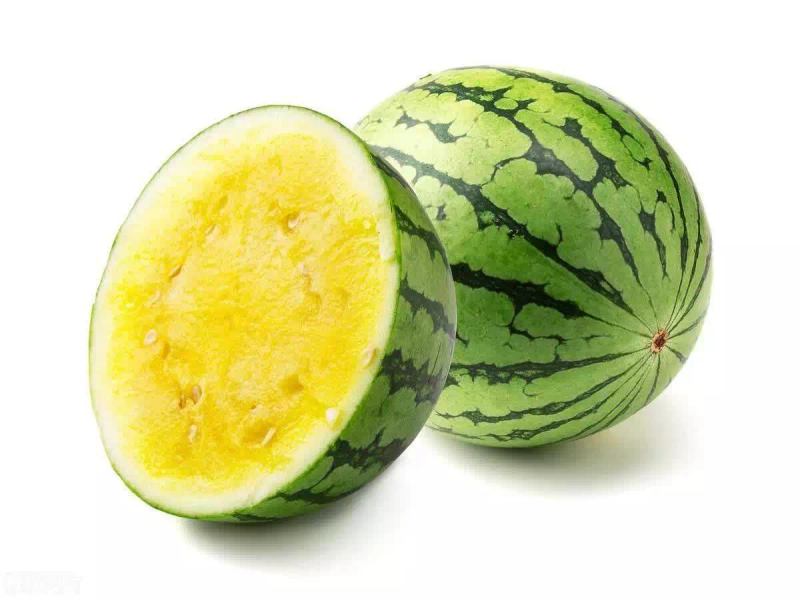
Watermelon varieties should be scientifically selected in accordance with climatic conditions, their own level of cultivation and market orientation. Watermelon type of small gift, recommended for farmer friend ran. The species has a high tolerance for low temperature oligarchy, yellow, high central sugar and, although generally produced, a large quantity of fruit suitable for sale after packaging. There is a wide variety of large and medium-sized watermelons, such as the 84-year-old, the mido, the sweet king series, etc. It is a green, pink, sweet, thin and easy to eat, suitable for local sale or short-distance transport. The melons are dark green, big red, high sweet, thicker than an early 84 and 24, easy to sit on fruit, suitable for medium and long transport. Sweet king's variety is husk, light green, very cosmopolitan fruit, big red tan, thick skin, suitable for faraway sale。
5 cultivation of seedlings
The quality of seedling matrices is crucial, ensuring that they are fresh, safe and consistent with relevant standards, and recommending the use of commodity matrices. In general, 50 l-based bags can be filled with 12-13 seedlings and 600-650 seedlings. Temperatures are low in the spring of winter and are increased during nursery time, with nursery bed temperatures remaining at 28 ~ 32 °c during the day and 18 ~ 20 °c at night. High temperatures during the day are prone to burning and cold seedlings at night. In order to prevent diseases such as sudden fallout and deadness, the seed accelerates are released in time to ensure that there are 2-3 consecutive suns. After seedlings are produced, the base moisture is reduced to promote healthy growth of the seedlings and pre-plant substrate moisture is controlled at 60 ~80% of maximum water holding. (c) sleptage standards: 8-10 cm tall, 4-5 foliages, thick blades, 0. 3-0. 4 cm thick tubing, complete, disease-free, roots。
6 plantation
Temperature of the 15-20 d closed shed before planting has raised the temperature of the 3-5 cm paddy soil to 10-15°c. 50-80 ml for every 667 m 2 sprayed gold, then covering the membrane. Early spring temperatures are so high and so low that the cold tails of the weather should move, with 667 m2 of the medium-sized or large-bearing watermelon planted at 660 ~ 680 and 667 m 2 of the small-bearing watermelon planted at 700 ~ 750。
7 field management
7. 1 temperature management
At the time of planting in december - january of the previous year, extreme temperatures could reach -10 °c, making the seedlings very vulnerable to freezing. After planting, the temperature should be increased to ensure that the temperature is not less than 4°c at night in the shed; the temperature is kept at 28°32°c during the day until the chicken reaches maturity, and the weather can be kept closed at night at a later stage, increasing the temperature differentials during the day and night, and increasing the accumulation of photocolumn; and when the watermelon matures, the sheeting membrane is cooled with a sunnet to extend the harvest period。
7. 2 whole chicken
The small-bearing watermelon species use a three-cranium whole branch, i. E., one main chicken and two sides of the base section; the medium-sized large-bearing watermelon species use two-cranium whole branches, i. E., one main chicken and one strong chicken, with the remainder removed。

Watch the hong kong channel, just buy the top box
7. 3 artificially assisted pollination
Artificially assisted pollination is required for watermelon cultivation in early spring. Vegetable watermelon varieties produce different species of flowers at the opening of each chicken at the 2nd spot, with a difference of 3d between the length of the main side and a higher rate of chicken sitting fruit. The medium-sized large-bearing watermelon species are pollinationed at the second node of the main chicken and the females that follow, while ensuring that the whole plant has 30 to 36 functional leaves, each with one fruit。
7. 4 fertilizer management
7. 4. 1 water management
The plant is replanted with live water, which is kept wet by the soil; the wetting of the membranes during the cranium and before the stinging fruit, depending on the state of the soil; and the inappropriate filling of the water during maturity。
7. 4. 2 fertilizer management
The watermelon needs a high amount of fertilizer, and studies show that per 1,000 kg of watermelon produced, plants absorb the nitrogen (n) 2. 5~3. 2 kg, phosphorus (p2 o5) 0. 8~1. 2 kg, potassium (k2o) 2. 9~3. 6 kg, with a ratio of 3=1 % (3. 5~4. 0). As a result, nitrogen (n) 10 kg, phosphorus (p2 o5) 4 kg and potassium (k2 o) 12 kg are applied for each 667 m2 watermelon production of 3,000 kg. Priority should be given to the use of biomass organic fertilizers, such as fully fermented vegetable cakes, cotton seed cakes and beans cakes, which are not only nutritious but also conducive to improving soil structures. The use of animal excreta, such as chicken dung, pig dung and sheep dung, from unknown sources or from complex farm inputs, is not promoted. In addition, watermelon is an anti-chlorine crop and is prohibited from using composite fertilizers containing chlorine ion throughout the reproductive period, so as not to adversely affect plant growth. Before tillage, 50 ~ 100 kg per 667 m2 pastry and 45% per cent of potassium sulfate compound fatty per 667 m2 before the first spin field. When 70% and 80% of the field plants sit in fruit, use sit-in fat. Single-hull sheds 6-8 m wide, where fertilization is done by means of a dotting application. The precision supply and efficient use of nutrients can also be achieved in areas where conditions exist through the application of n, k or mixed water soluble fertilizers in integrated facilities。
8 pest management
Pre-planting 2d is preceded by the spraying of a microbicide (flucose) in the nursery; the prevention of aphids every 15-20 d for the chicken stretch and pre-sitting period; and the treatment of red spiders with spray before the harvest of 20 d。
9. Timely collection
The suitable harvest period for watermelons lasts only 10-15 d and is vulnerable to natural factors such as temperature, precipitation and typhoons. If the watermelon is in the field for a long time, there may be hysteria (commonly referred to as “inverted larvae”), thickening of fruit skins, and irregular shapes, which can lead to reduced production and commerciality. The harvest period for watermelons depends on weather, market conditions and transport distances. After pollination, ran, a farmer, usually harvests when 28-30 d, tan turns yellow; after pollination, the beauty takes 32 35 d, after pollination when the sweet king's varieties are 33 36 d, and when the tan turns red. Watermelons transported over long distances are collected and loaded at 70 to 80 per cent maturity, and those transported at short distances or sold locally are marketed at the age of eight or nine。