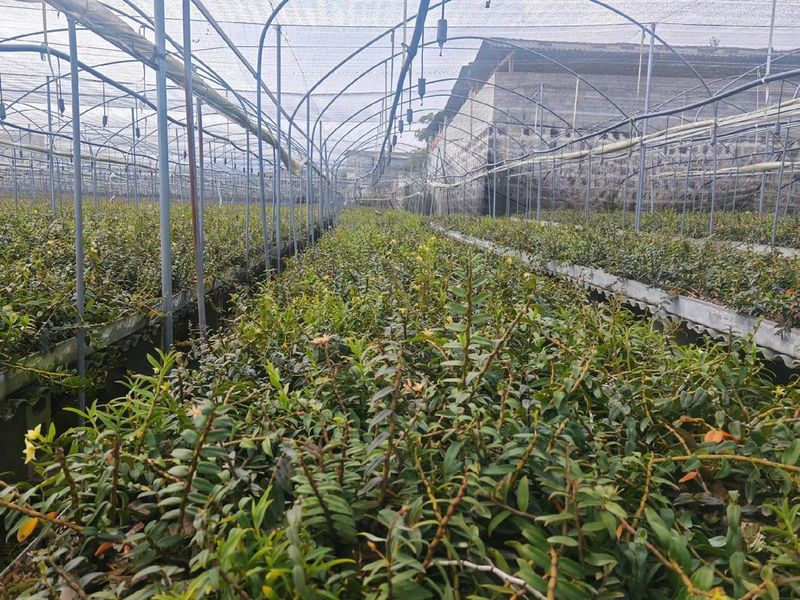
How do you grow the chorus? Plantation techniques
Expert answer
Brief description:
It is called the breuk, the xinjiang, which is a two-year grassland plant that forms the root of the flesh. Fat roots are provided for food, and they are soft and dense, and they are cooked and cooked. Cultivation occurs in europe, asia and the americas。
The difference between radish and radish is that radish and radish belong to the same cross bouquet, and some of the radishs are very similar to the shape of radish, which is a sphere, so some people confuse it. But the two plants are different. The radish is radish, and the small radish has a hard meat, less moisture and soft meat when it matures, so it can be eaten as a staple. The carrots are ripe and juicy. But both are very close to the value of medicine and consumption。
It's not exactly the same shape as kale or sluice。
Plantation techniques:
1. Land selection and breeding
The fields in which the headbrush is grown are thick, easily drained and the soil is fertile. The headlines can also be broadcast and grown, usually mainly by seedlings. The planting period is from late august to mid-september. The variety is based on the use of a hot spring head starter, with 150 grams per acre and 25 to 50 grams per acre。
In the case of seedlings, the bed is carefully prepared and an acre of seedbeds are planted with 250 to 400 grams, which can be grown on 10 to 15 acres of daejeon. It is then covered with straw or sunnets and released after seeding. A seedling of about 10 days after its release, at a distance of 6 to 8 centimetres, is followed once by the application of rare manure. Aphids and viruses are sprayed every 7 to 10 days with 1,500 times less liquid from the first leaf of the seeding period. The seedbed soil is often wet during the nursery period to prevent over-dry in order not to affect root growth。
Ii. Transport
After the field has been harvested, 30 cm is grown, 3,000 kg of calcium perphosphate is fertilized with acres, and 15 kg of potassium chloride or 30 kg of compound triad is used as base fertilizer. It's 1. 3 to 1. 5 meters wide. About 35 days old, not too long. The plant is grown at a distance of 35 centimetres, with an acre of 5,000 or so, and is planted with care that the seedlings shall be buried in the caves, first in the mud, and then slightly upwards, so that the seedlings may reach them, so as not to affect the extension of the root, which is large, and then impoverish it, and so that the water may be poured out, once a day, after five to six days, to grow up。
3. Managing high productivity
After 10 to 15 days of planting, 750 to 1,000 kg of decomposed and rare human urine were followed up once after 10 days. Between late october and the beginning of november, the meat root of the veggies entered a boom and a long life, chasing heavy weight, 1,500 kilograms of manure or 15 kilograms of urea per acre, 20 kilograms of compound fertilisation at a cost of three dollars, before fertilizing pine soil and putting it in the middle of the row. Two days after dry weather fertilization, water is poured once to promote the dissolution of fertilizers for absorption in the root systems. During the period of growth, the soil is emptied from one to two times in order to avoid the greening of the outside of the roots, the thickness and the influence of quality. Combat pests such as larvae, aphids and slashed night moths. The yellow leaves are removed at any time in order to facilitate the ventilation. In december, harvests can be carried over and over and over again, using the same criteria to plant yellow leaves, green-to-yellow roots, and small leaf curls to yellow between the leaves. After the frost, the quality of the headbrush has improved, but the quality of the processing has declined as a result of late harvests, hard-core growth and the development of hard root fibres。
Month applicable
8; 9; 10; 11; 12
4. Fertilizer management
Shrimp periods are vulnerable to the risk of jumpers and should be treated in a timely manner by spreading grasswood ash 2-3 times in the morning or by spraying suitable stomach insecticides 1-2 times. After weeding, weeding, three to four real-leaf-time seedlings, six to seven leaf-time seedlings and the pursuit of nitrogen fertilizer, and the pursuit of potassium phosphate during root expansion. Water should be filled in appropriate quantities when required. Plantation is followed by proper weeding, irrigation and fatting. Rewindproof measures should be taken when the strain is 1 metre high. The application rate for nitrogen, phosphorus and potassium is 1. 5:1:2。
5. Common diseases
Cross-facile vegetable frosting, white spots, black spots, morbid diseases, etc. Insect pests are mainly platinum, wheat hyenas, nails, foliage, cabal moths, etc。
6. Harvest storage
Harvesting and the use of roots can be harvested at below 3-4°c local temperature, and cold-harvested roots are intolerant. Usually, the sun is chosen, the roots are dug out, leaves are cut, external water is dried, soil is removed and stored. The temperature of the cellar is 0-1°c. The leaves are made up of braids and the wind drys. When the whole dry storage is made, the leaves dig up the root, dry the surface water, remove the adjoining soil, cut it into four petals, lace it with the leaves into a little bundle of 2 to 3 kg, and set up a wooden dryer. The selection of roots requires the integrity of the root body, the absence of pests or injuries, the cleanness of the skin and the characteristics of the species. Separate storage, frequent checks, freeze-proof, impregnated and pre-surgery。
As we used to call it, it's a popular dish that we eat in our daily lives. It's very productive, but it's not easy to grow good, and many farmers who grow it wonder how to grow it. Some of the technical points that should be used in planting are described above。
♪ farmers clean ♪