Description of tobacco cultivation
Smoke leaves are important ingredients for making cigarettes. How can tobacco be grown? What methods and techniques? Let's come down to study. It is hoped that this will help you。
Improved tobacco-leaved soil
The long-term intensive application of fertilizers in smoke-planted soils, the low or no application of organic fertilizers, has resulted in strong soil closures during the roasted smoke field growing season, poor permeability, soil nitrogen-to-carbon disorders and low levels of corrosive content, resulting in tight soil sheeting. Long-term failure to add organic matter to the soil makes it more difficult to maintain the fertility and productivity of smoked soil. The preservation of land resources and even of the human living environment requires the use of organic matter to participate in the material cycle, reuse and fattening of agricultural ecosystems in order to maintain the natural cycle and balance of soil ecology, which is key to sustainable agricultural development。
Improving smoke soil properties for sustainable development
Stitch back to the field
Stifling back to the field means the direct application of organic matter such as straw to the soil during the smoke season. It is now widely recognized that the application of organic fertilizers has a slow negative effect. The application of organic fertilizers or organic matter for roasted smoke can easily result in lower and lower weights before the supply of nitrogen in the soil, slow growth in the pre-basket period and later corruption, affecting yields and quality. Studies have shown that, as long as organic matter is selected, applied and applied in an appropriate way, it is matched by a proper quantification of fertilizers, because of the slow decomposition of organic matter during the pre-cooking period, especially when soil moisture is low, the lack of nitrogen competition with roasted smoke, the abundance of soil moisture when roasted smoke enters the long term, the accelerated decomposition of organic matter, the control of excessive nitrogen supply and the reduction of nitrogen absorption from roasted smoke, and the maturity of roasted smoke. Thus, the direct application of organic matter both protects and improves the soil structure and achieves a high-quality production of roasted smoke。
Tobacco growing fertilizer
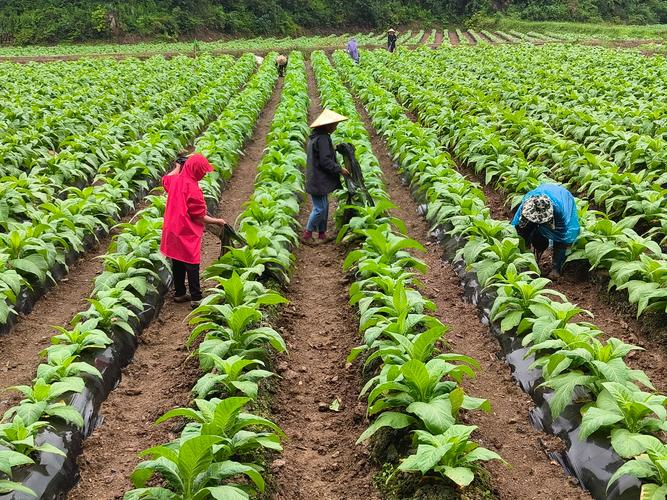
Improve soil alkalinity and fertilizer utilization
In recent years, tests to regulate acidity in smoke-planted soils have shown that proper application of lime can facilitate the conversion of nh4+-n to no3-n in soil, reducing the iron, aluminium and effective manganese levels of exchange in soil; significantly increasing the number of wired bacteria, aerobic fibrosis, nitrous bacteria, reduced fungi, increased acne enzyme and protein enzyme activity in soil; increased use of tobacco fertilizers as a result of lime improvement, improved early and rapid birth of smoke seed, well-developed root systems, increased photocoupling rates, increased number of effective leaves, increased resistance of tobacco strains, increased resistance of tobacco strains to climatological spot diseases, foliosis and black stosis, and significantly improved production and quality benefits of tobacco leaf。
1. Ph for the application of lime and white cloud powder for soil improvement
The application of lime is based on the soil acidity of the pyrotechnic field, with a general application of 0. 067 hectares (60-150 kg) and a application of 0. 067 hectares (100 kg) of plume, which is applied 50 per cent in front of the cropland and 50 per cent in advance of the whole cropland. The use of lime generally does not exceed 200 kg/0. 067 ha at a time, and excessive use can affect the absorption of potassium, magnesium and lead to a lack of boron in the smoke strain; at the same time, the excess of lime has increased the mineralization of soil organic matter and increased nitrogen supply capacity in the later stages of the soil, affecting the maturity of tobacco leaves. The application of lime to regulate soil acidity has some after-effects, usually in alternate years. It's also possible to use albino plaster
Camg (co3)2
(b) the ability to regulate soil acidity, which is more moderate and persistent in white cloud powder and soil acidity, and which has the effect of mitigating magnesium deficiency in smoke strains, avoids the ills of mass application of lime, such as ca, k, mg ions and soil sheeting。
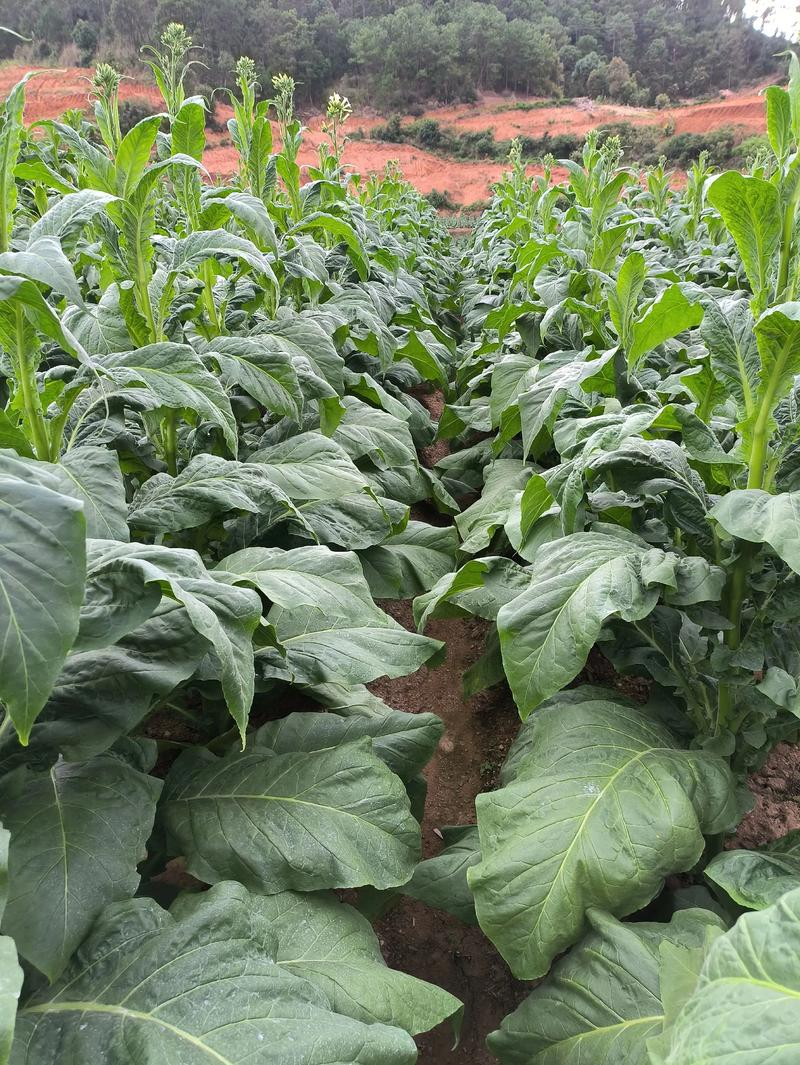
Deep-burning, increasing soil thickness and increasing soil nutrient utilization
For smoke-planting soils with a relatively thin soil layer, the use of organic tillage, which is ploughed to the ground to a depth of 4 to 5 cm per year, and the gradual increase in soil tillage, have a significant impact on the quality of tobacco leaf production. In the case of the red border, where the tillage is shallow, earthy, adhesive and air-absorption is poor, deep tilling techniques can not only thicken the tillage, but also improve the physicogenicity of the soil. In the case of smoke fields that have not been deeply cultivated within three to five years, deep cultivation (30 to 40 cm) should be carried out before the rise. In the case of guest soil, the use of clay-blowning measures is good for the quality of roasted smoke。
Implementation of nutrient integration and promotion of the application of organic fertilizer during or before the dry season
In the context of the establishment of a rational rotation system centred on roasting smoke, systematic control of nutrient inputs and carry-outs over the entire rotation cycle of the pyrotechnic soil is carried out, and soil physicolysis is optimized through the configuration of the pre- and post-basic nutrient systems. Organic fertilizer can be applied during the season or previously. Japan's tobacco production places great emphasis on the use of organic fertilizers, which are divided into two types of compost, which are broken with barks, maize, wheat, poles, straw, leaves, etc., and added to them by adding 2 per cent of grain acreage, 0. 1 per cent of fermentation materials and appropriate water, which are piled for 100 days at 60 to 70°c, and which are stacked four times over the period, and then used by smokers. In high-indexed smoking areas, large amounts of organic fertilizers can be used before roasting. Application of organic fertilizers should be controlled at 9,000-15000 kg/hm2. The improvement of the soil environment through the use of dead oils such as sesame, vegetable seeds, soybeans, peanuts and consumable acid fertilizers can promote root growth and increase the oily and elasticity of tobacco leaves. The presence of residual oil and proteins in dead oil fertilizers is about 50 per cent high and decomposition to amino acids or organic acids can facilitate absorption of the mineral nutrients in the early and later smoke strains in the field. Studies have shown that sesame fertilizers contribute to the absorption of the upper leaf-leaf potassium in the tobacco strain, which can increase almost onefold compared to the comparison. It is important to emphasize that, regardless of the application of fertilizers or oily fertilizers, the insoluble organic nitrogen is decomposed after about 60 days of corroding and decomposition to amino acids, organic acids and ammonium nitrogen in order to ensure the absorption of nitrogen by pre-smoking smoke. Corrosive acid fertilizers complement organic acids in soil decay and are good for promoting the balanced absorption of smoke strains into mineral nutrition。
Subsurface conservation cultivation of tobacco
Protective planting measures, on the one hand, have the effect of increasing temperature and humidity and, on the other hand, avoid the direct impact of rainwater on the surface, resulting in soil slabs. It has a clear effect on maintaining the temperature of the field and promoting the early growth and rapid growth of the tobacco plant and improving the quality of production. The surface-covered straw is in a state of semi-corrupture following the sun, wind blowing, rain showers and microbial decomposition during a roasted smoke growing season, and can be turned into soil soon after the leaf is harvested. In brazil and zimbabwe, the ground is covered with straws, with short poles that are green and fat, such as big weeds, in the middle of the gutter。
Those who saw the "smoking leaves" also saw:
1. How to grow roasted smoke
2. Simple techniques for tobacco cultivation
3. How to improve the quality of roasted smoke
4. How tobacco is grown
5. Advances in rural entrepreneurship
6. Mid-autumn condolences letter