It's the first time i've ever heard of this
Zhao in-zong
At the end of spring and summer, the northern region was characterized by heavy rains and heavy rains. This period coincided with a critical phase in the production of peach fruits, and high temperatures and humidity were extremely prone to pests and pests, which not only reduced yields, but also affected the quality of appearance and economic performance. Peach tree conservation can effectively address the key issues facing peach tree cultivation in the north region and achieve high-quality production of pre-crucified peach cultivation in the north. Through multi-year seed screening and test observations, the three early peaches, the red mango, the gold honey 1, and the medium oil 18, were found to be more suitable for rain-shield cultivation in the northern region. Recommendations for the performance and cultivation of pre-curricular peach varieties suitable for rain-shield cultivation in the north are summarized below for production selection and reference。
General
1. 1 basic test conditions
In march 2020, the peach tree was planted in the peach tree, located in the fao liang district of gyeongde town, using two cultivation models, rain-shielding and field-planting, and rain-shield-planting trees were built in the same year (see figure 1). Plantation ranges of 2 m x 4 m and an average of 84 acres. In the second year of planting in 2021, there was some production in the third year of planting in 2022, and in 2023 it began to gradually enter the production phase. The initial screening of the red mangoes, the gold honey 1 and the medium oil 18 were carried out for quality and yield surveys of the three better performers. These three varieties were introduced from the zhengzhou fruit tree institute of the chinese academy of agricultural sciences and are described as follows:
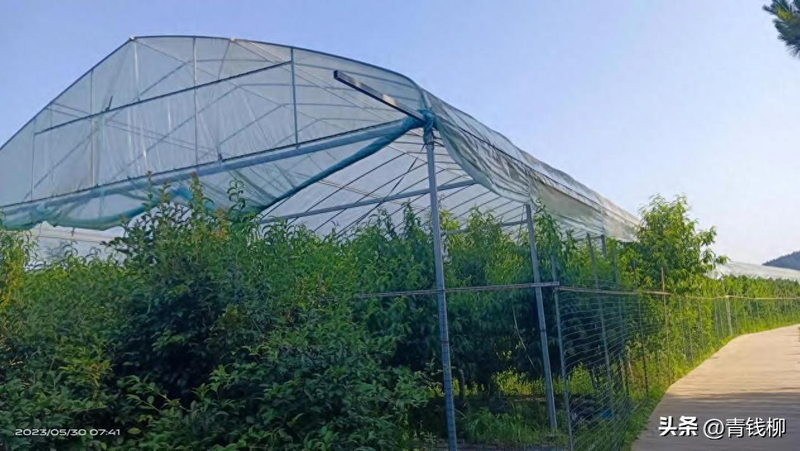
Figure 1 peach tree shelter
Red mango: peaches, zhengzhou area matured in late may and grew for 52 days. Vegetable ellipses, like mangoes, beauty, single fruit mass 90-150 g, yellow meat, sweet incense, soluble solid matter content 14-16%, excellent quality, self-flowering and productive. The fruit-forming beauty, pre-maturity and quality are the preferred varieties of tourist orchards and can be grown on a scale。
Gold honey 1: good early-cooked yellow peach varieties, matured in early june in the zhengzhou region, with fruit growing 65-68 days. The fruit is round, the mass of a single fruit is 150 ~ 175 g, the consequences of ripeness are gold and yellow, and part of the face is red. The fruit is yellow, sweet, fragrance, fragrance, soluble solids of 11 to 14%, of good quality, cuddly, soft and juicy, sticky, self-flowered, productive and stylish。
Medium oil 18: premature white peach, sh meat, matured mid-june in the zhengzhou region, fruit growing 69 days, fruit in full shape, good beauty. It's full of red, colourful, single fruit mass 160-263 g, sweet taste, soluble solid content 13-14%, sticky core, good quality, long tree long, extremely durable transport. There's pollen, very productive. Suitable for large base, long-range distribution。
1. 2 investigation methodology
Two cultivation models, rain-shielding and field-planting, are randomly surveyed 10 peach trees per model, surveying peach tree paths, tree heights, crown bands, number of fruits; and randomly picking 5 fruits on each peach tree surveyed, surveying the quality of fruit single fruit, the content of soluble solids, the diameter of fruit and the trajectories. Each model investigates a total of 10 peach trees, 50 fruit。
2. Cultivation of different cultivation patterns
2. 1 tree growth performance in different cultivation patterns
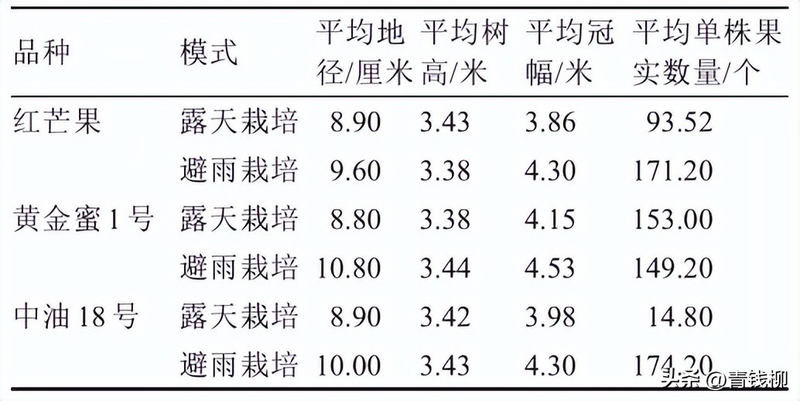
As can be seen from table 1, the diversity of peach tree varieties of different varieties and modes of cultivation is not significant in terms of geometry, tree height and crowning, with an average geometry of 8 cm or more, an average tree height of 3. 40 m, an average crown size of 4 m, and a good overall growth of trees, consistent with the fourth year of peach tree growth. In terms of the average number of single fruit plants, the two varieties of red mangoes and medium oil, which are grown in the open and rain-shield, and the other species of honey, which are not very different, can be presumed to have two causes: (1) in the field, the red mangoes and medium oil, which are fertilized by rain during the flower season, and there is no such problem in rain-shielding; (2) the red mangoes and medium oil, which are all oil peach varieties, are constantly exposed to the weather effects of southern rain during the field-planting and development phase, are susceptible to disease and pests, causing flowers to fall or even to fall from the fall of a rotten fruit。
Table 1
2. 2 material expression of different models
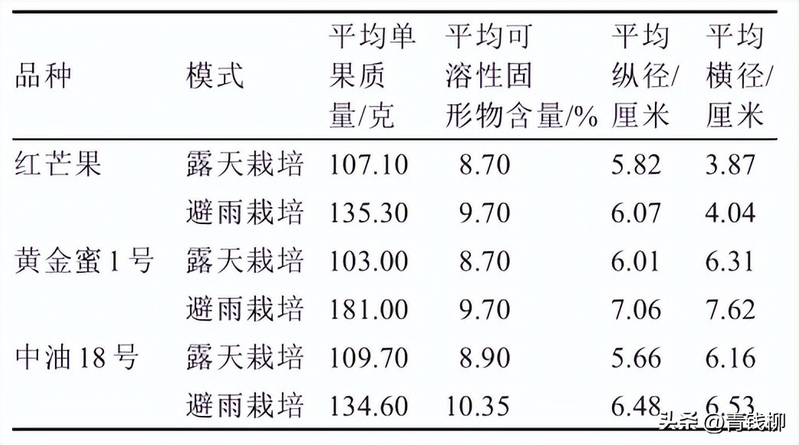
It can be seen from table 2 that the fruits of rain-shielding are generally of greater quality than the average single fruit of open-air cultivation, and it may be that rain-shield cultivation gives them a suitable environment for growth and development and protection from rain and proper wind, where they are prone to wind and rain. In terms of soluble solids content, whether in open-air or rain-shield cultivation, the soluble solids of peach nuts grown in the northern part of the region are lower than in the northern part of the yellow river by 2 per cent to 3 per cent. The most likely cause is likely to be small temperature differentials and accumulation of nutrients in the southern part of the country, followed by heavy rainfall in the south, low photophotophotography and relatively small formations of effective photocolumn products, with some studies showing that the presence of anti-photo-film under the trees has contributed to an increase in the soluble solids content of peach fruit. In addition, all three varieties of fruit soluble solids from rain-shield cultivation are higher than open-air cultivation, which is due to the ability of rain-shield cultivation to artificially control the water fatty supply of the root of peach trees, which can be supplied on demand and, therefore, can appropriately increase the soluble solids content of peach fruit, which is more affected by natural rain, is significantly less manageable, is too heavy, and has low soluble solids of peach fruit and has a different taste。
Table 2
2. 3 different modes of production performance
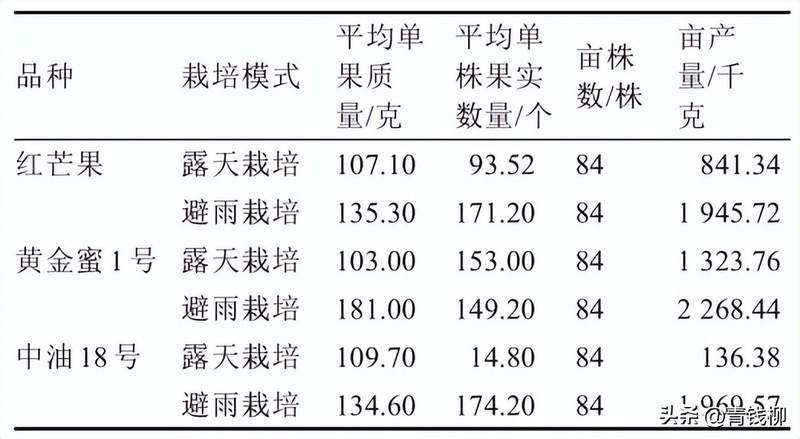
As can be seen from table 3, rain-shield cultivation can significantly increase the production of peach fruits. Rain-shield cultivation provides a relatively superior environment and mitigates the adverse effects of rain-fed water, on the one hand, by avoiding the effects of rain-fed seasons, thereby ensuring the smooth fertilization of pollinators and the proper sit-in rate and average number of single-plant fruits; on the other hand, rain-shielding environments have improved the average single fruit quality appropriately. The dual effect was to increase the production of peach fruits in rain-shielding environments。
Table 3 production performance in different modes
2. 4 infestation of pests
The red mangoes, the gold honey 1 and the medium oil 18 display a fast-growing, disease-resistant and infertile nature under the condition that the facilities are protected from rain. Rainwater-induced pests and pests are rare; anti-earth cultivation shows symptoms such as fluids, fibrosis and asymptomatic diseases. There has been a marked decrease in pests and diseases in the shelter. This may be due to the fact that the rain sheds are effective in preventing rain intrusion, which can flow under the membranes, and that the soil moisture content and air moisture are reduced to a large extent by draining out of the garden, thus inhibiting the growth of the fungi and discouraging the occurrence of pathogens and pests, similar to the findings of the wu gangsing, yellow sensitization。
3 recommendations on cultivation
3. 1 escalation
A combination of rain-shielding facilities can better provide the good field conditions needed for the growth of peach trees in the south. In the event of a cloudy weather, rain-shield facilities can provide cover for the upper lobes of the ground, avoid the direct wash-off of rain and reduce the spread and spread of the disease; raise plants, drain the water in time, protect the subterranean roots, and mitigate or avoid risks such as peach fisssions and floods caused by excessive rainfall. Conditional orchards are recommended to be covered with used plastic sheeting in ditches, which can be released more quickly in the event of a rainy weather。
Following the planting of peach trees, the area of water is increased, covering organic matter such as weeds or crop straws, which can properly prevent evaporation. Organics such as weeds are decomposed into high-quality organic fertilizers, which improve the organic content of orchards, optimize soil physico-chemical structures, improve soil aerobics and soil fertility conservation, increase the number of absorbable root systems, enhance the vitality of microbes, and significantly increase quality indicators such as the quality of single fruit, coloured velvet and soluble solids。
3. 2 fertilizer integration
It is recommended that water be supplied with fertilizer-integrated equipment such as spraying, drip irrigation and seepage irrigation (e. G., figure 2). In addition to being a waste of water, heavy flooding can easily spread the soil sheeting and root disease. A drip irrigation pipe may be laid along each side of the tree, with a distance of 30 centimetres between the dropholes. If no drip irrigation conditions exist, ditch irrigation can be carried out close to a ditch. It may also be possible to use cave-based fatty techniques, i. E. To dig 3~4 pits long, wide, 30 cm deep 40 cm x 40 cm centimetres per cent on both sides of the tree, with weededed grass, such as corn straw, which can be used as water cisterns, only between the lines and fill the cisterns. There will be no need to water later if it is not too dry. The plaque will be dug up during the application of base fertilizers in the autumn, and will be repaired when applied in accordance with normal fertilisation methods。
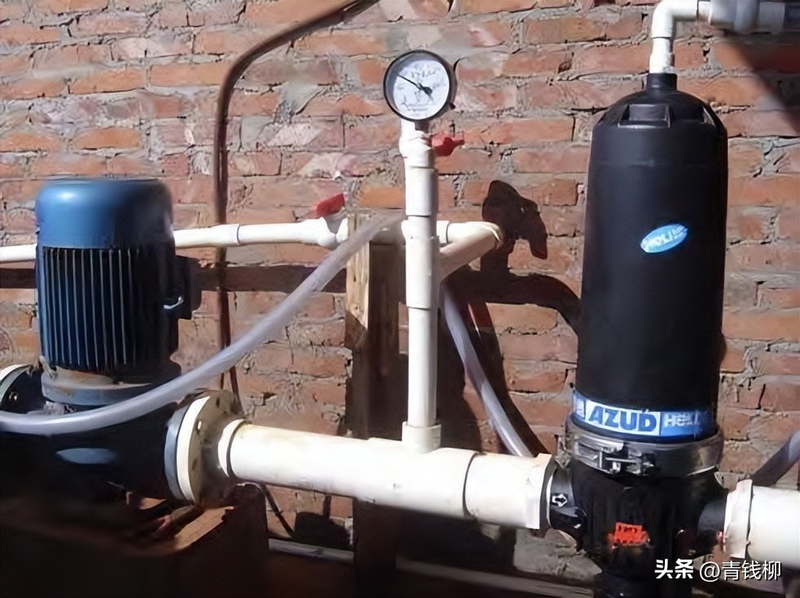
Figure 2
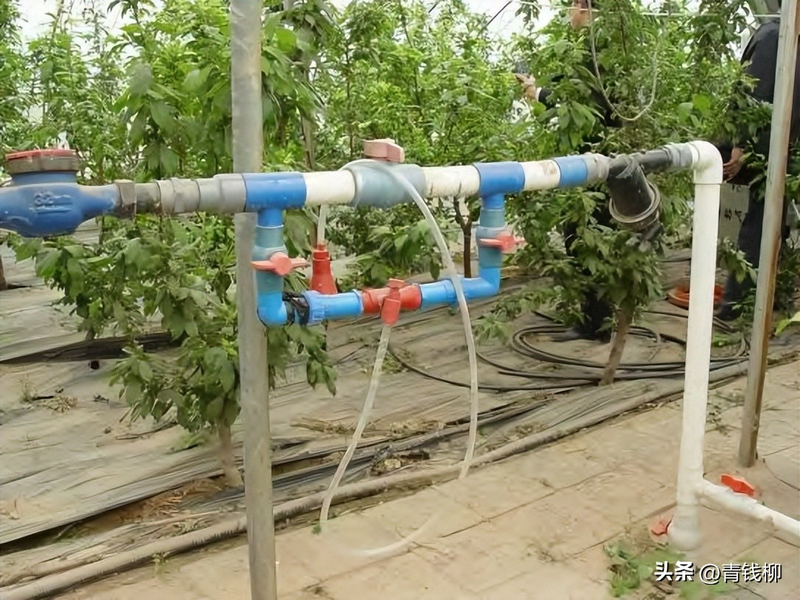
Figure 2
3. 3 package cultivation
The main purpose of bag farming is to improve the quality of the fruit, raise the price of the sale and increase the harvest. The fruit packs make the face clean, beautiful and coloury; prevent cherries; reduce the pest hazard, reduce the number of sprays, reduce production costs and prevent pesticide contamination; and produce non-hazardous, green fruit。
The bag period is usually followed by fruit-refining and fruiting (30 - 50 days after flowering). In the first 5-7 days of the bag, 1 wide-spread insecticide was sprayed, usually using 70 per cent of the methyl tobuzinium 800 times the fluid plus 10 per cent of the chlorocypermethrin 2,500 times the fluid or 1,000 times the world's life plus 5 per cent of the avirin 400 times the fluid. After the spray completes the bag within 10-15 days。
Package method: open the pocket, lift the bottom of the bag, open the air at the two ends and expand the bag. Handbags are placed at 2 to 3 centimetres below the pocket, where they are folded from the middle to the side, in the form of a `flank fan', and the top of the pocket is bound 90 degrees from the connecting point, and the pocket is rotated around the pocket for a week。
The bag is usually 7-10 days before the mature harvest, depending on the maturity of the species and climatic conditions. In some cases, pure yellow fruit is produced (e. G. Figure 3), preferably with a bag harvest, avoiding light colour before the market, and reducing mechanical damage in transport, etc。
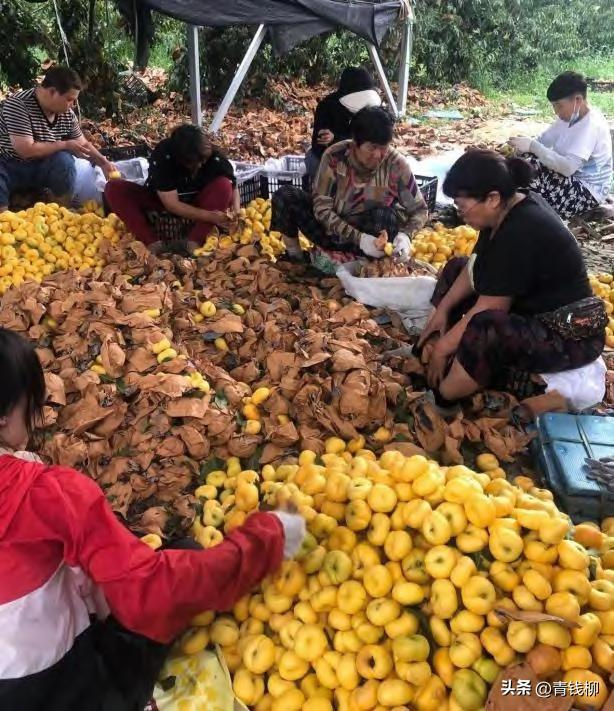
Figure 3 pure walnut bag harvest, grade
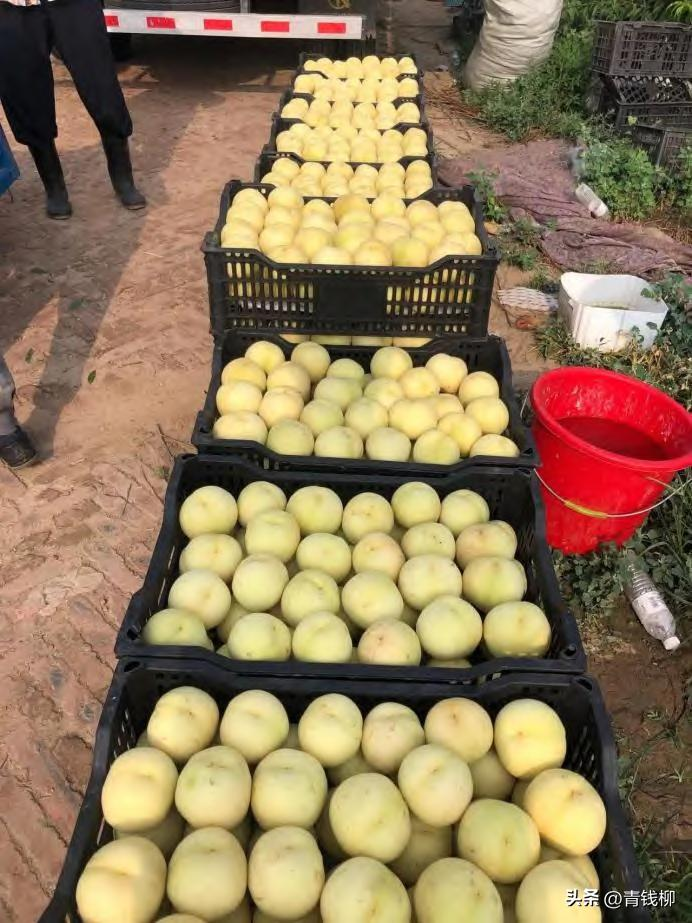
Figure 3 quantities with bags, grade 2
3. 4 focus on summer shearing
Peach is pre-cooked, breechy, freshly grown in the summer trees, with two to three bystands in a new year, but in the case of natural growth, the bystands are high, have large and dense growth, affect ventilation, discourage flower bud formation, and result in large winter shearing, which is both a waste of nutrients and affects the results of the following year. Timely summer trims, improved radiant conditions in the coronary, middle and lower, and increased photolytic efficiency are essential for the fruits to expand, improve the quality of the fruits and improve the quality of the buds。
In the summer, the main method of cutting is sprouts, hearts and twists. Erasing is the removal of young, young, untimided, unwanted, extra-embracing, and has a similar effect as estrangement; it is the heart that removes the top of the young, promotes parts of the branch and limits growth; and it is the twisting of the semi-timber, which inhibits nutritional growth。
3. 5 green pest control
During the pre-plant growth phase, most of the farmers ' friends are well managed and focus on pest control. Once the fruit is harvested, however, it is safe and unattended, resulting in the occurrence and intensification of orchard pests and diseases, which adversely affect the production of peaches in the coming year. It is therefore important to continue to strengthen the green control of diseases and pests after harvest and to reduce the occurrence and harm of red spiders, roll moths, submersible moths and bacterial perforation, white powder, lignosis, etc。