The origins of humans and vegetables began long ago。
While many oversimplified science materials describe “evolution” as a one-way “developmental progress”, the fact is that genetic mutations of species are always confusing, random and random. Some of the less powerful mutations of genes can also occur and be preserved in the dark. Tens of millions of years ago, when human ancestors were still a group of tree animals, an accidental mutation of genes that left us unable to synthesize vitamin c on our own — a mutation that did not have any effect at that time — after all, vitamin c supplementation was not a problem for human ancestors who lived in trees with endless leaves and fruits。
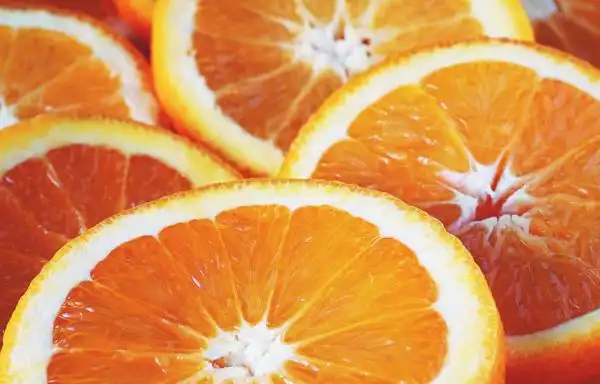
:: fruits such as oranges and oranges contain large amounts of subsistence su
But as humankind evolves, the problem arises. Humans who had left the trees had to consume the necessary vitamins from vegetables and fruits, and when the resources of the wild were insufficient, cultivation became the only option。
Human production of vegetables and fruits is slightly later than that of relatively more important food crops, but it is also thousands of years old. In the episode, which began 3,000 years ago, mention was made of many vegetable foods, such as sunflowers, dunes, berylliums, fungus and melons, most of which were planted artificially. And even in modern times, where vitamins can already be synthesized by industrial means, the cultivation of vegetables continues to develop, as food is already deeply integrated with human culture and habits. For humans who are trying to reach the sea of stars, growing local vegetables will become a necessary subject if they are to be permanently settled on other celestial bodies。
Research on this subject is not very rare, and for a long time, the conclusion has been relatively positive: in more than one experiment, attempts to plant plants from dehydrated and dry volcanic ash soil have been successful, leading many to believe that growing vegetables in soil outside the earth is not, at least, impossible. As a result, a number of science fiction works have “simplified” such bridges, such as mars triples, the most famous of which is mars rescue, known for its scientific knowledge of “hardness”。
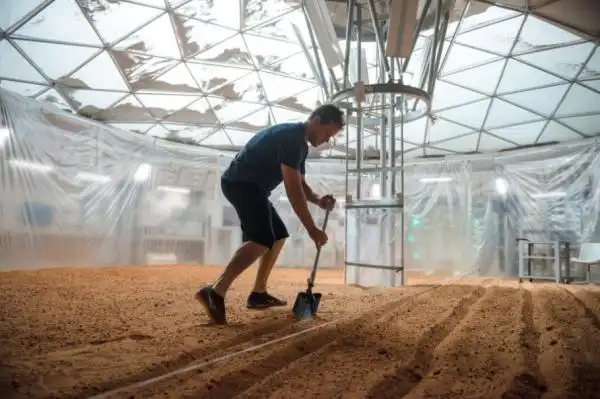
:: in the film mars rescue, the main character grows on mars land beans
In the original novel, the main character was trapped on the surface of mars because he had been accidentally wounded while completing his mars study and preparing to return to earth, and the rescue would not arrive until a long time later. In order to ensure his survival, he had found several raw potatoes that were intended to be used for the festival to celebrate the meal, sowing them as food — naturally, and it was clear to the author that the extremely dry and barren martian soil itself could not be used directly to grow potatoes — but in the novel, the protagonist had managed to obtain enough water and to modify the soil using organic and micro-organisms in the faeces, and then to enter the stage of orderly cultivation and harvesting of potatoes. Even if, for the sake of drama, the story was forced into a few accidents, the end result was still full of potatoes。
However, a recent experiment by the university of florida suggests that the description in the novel may be overly optimistic: in this experiment, the study team took a long time to apply to december (a step much more difficult than the experiment itself, which took 15 years to succeed). This type of subject is therefore not suitable as a graduate dissertation) and comes from the collections of apollo 11, 12 and 17, respectively, for plant breeding. Because of the small number of moons available (after all, the “logistics” between the earth and the moon are very costly), they are divided into 12 micrograms, and plants are selected for south mustard。
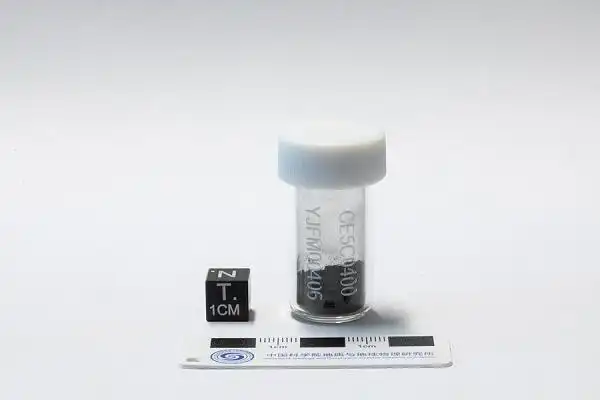
* the moon is seen through the naked eye, like black sand, but the particles are smaller and dry without moisture. But the moon that you see under the microscope has not only colour, but also different shapes. The map is a sample of moonbong no. 5 (source: science and photography union, science and communication bureau, chinese academy of sciences)。
For all those who have some knowledge of the subject of "external vegetables", this plant will not be alien to them: this weak one-year herb plant is small, viable, has a short growth cycle per generation (from germination to flowering less than six weeks) and the genome is simple and has been studied relatively thoroughly, and is therefore suitable as a “road-starter” for experimental plants and bad environments. Many years ago, it was proposed to use an unmanned detector to interview a genetically modified mustard on mars to test the feasibility of planting plants on mars. Of course, this plan was ultimately not achieved, but this time, through being planted on the moon, these invisible weeds have realized the dream of “in outer space”。
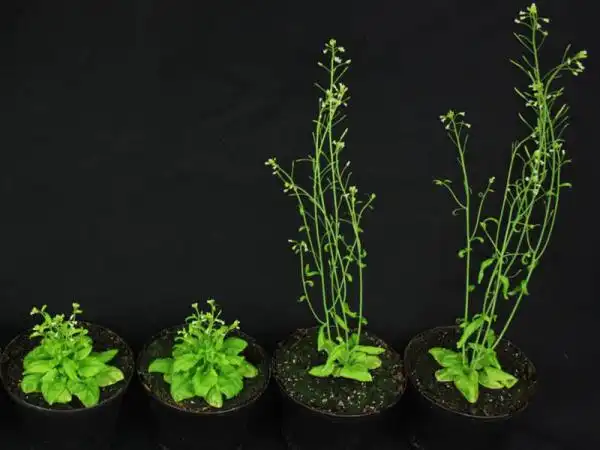
* the mustard mustard south has become the most widely applied model around the world and has been dubbed a “fruit fly in plants”
Of course, like the lead actor in mars rescue, the participants in this study know clearly that it is not possible to plant things directly in the moon, so they have also made the necessary changes against the poor ones: under the moon border, researchers have advanced 7 mm thick, porous cotton rock, stored prepared water and nutrients, then covered a layer of 0. 45 μm filter, and covered each gram of the moon's boundary, allowing nutrient-bearing moisture to penetrate the moon and sustain south mustard growth. Theoretically, after this step has been taken, the transformation of moon has been completed, and all that follows is waiting for new life to break out and bring hope to the world
Of course, the new life did break ground: the mustard seeds planted in 12 moonside samples (2-4 seed) because they were too small to be “sown” with a liquid gun, and the other mustards were planted in artificial simulations of the moon as a control group in the experiment. However, just a week after the onset, the sowing of mustard mustard mustard in the real moon is in question: their root causes are slower than the control group in the long run, and their overall strength is quite different, with some mustard mustard mustards stopping even directly. Three weeks after seeding, genetic sequences of the harvested mustard mustard south indicate that a large amount of anti-salt, anti-metal and anti-oxidation genes were expressed within the real mustard genome in the real moon, a situation that had not occurred in the simulated south mustard planted in the moon. In other words, it is clear that the real moon is much more coercive to plant growth than the simulated moon。
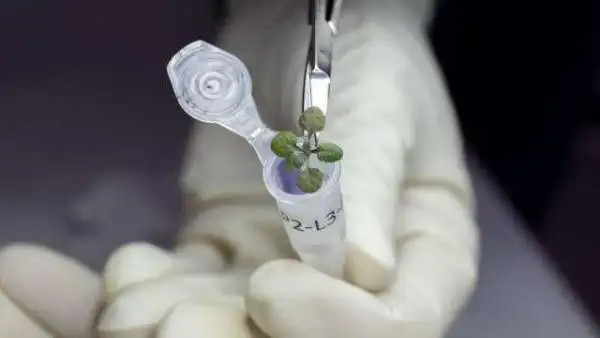
Although after the results of the experiment, part of the online media, which is almost obsessed with giving good news, and since the media immediately began to fire titles such as “external foods are possible!” “closing alien foods!”, it is clear that the results of the experiment itself were successful. As the so-called “practical know-how”, the bad growth of the south mustard cultivated using the real moon has clearly shown that the mere idea of adding enough water and nutrients to the soil of the moon (and probably mars) to grow crops is not very good. In fact, past simulations are not sufficient to adequately simulate the effects of the physico-chemical properties of the soil outside the earth on plants, and their reference value is extremely limited. More importantly, these experiments are still being carried out within the earth's atmosphere, and it is likely that if plants were planted directly on the surface of mars “to improve the environment”, as described in many science fictional works, the results would be very bleak。
This, of course, is not to say that, after leaving earth, we are bound to lose green plants: the simplest way is to leave plants directly in the soil and turn them into plants. This not only saves more space but is also relatively more manageable (nutrients and water for cultivation can be obtained from recycling), and vegetables can be grown even in completely closed small settlements. In addition, improving the plant itself through genetic technology, enabling it to adapt to more coercive conditions and to the local environment, is a viable option, although the obstacles that need to be breached on this road are more and more difficult。
But there is no doubt that, as the history of human evolution of the past hundreds of thousands of years has shown, as long as it is possible, human beings will carry with them the proliferation and reproduction of their species. Even though it is rarely smooth, going out is always the strongest original driver of human populations。