Today, the rapid development of technology, digital television has become one of the important means for people to access information and enjoy recreation. Among them, terrestrial digital television, with its unique advantages, holds a place in the many ways in which television signals are transmitted, bringing a rich audio-visual experience to a wide range of users. So, what's a terrestrial digital tv? What are its characteristics and advantages? Let's unmask it together。
I. What's a terrestrial digital television
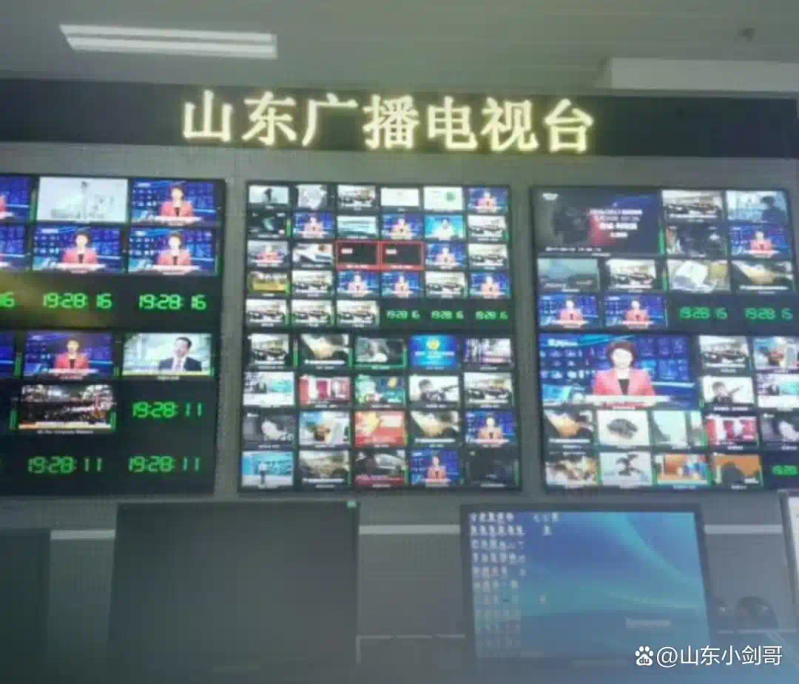
Yamadong high-range digital television integrated broadcasting platform
Ground-based digital television (digital terrestria multimedia broadcast, dtmb, chinese abbreviated number, commonly referred to as terrestrial waves) refers to the technology of transmitting television programmes to users by means of wireless digital signals from terrestrial broadcasts. It uses advanced digital coding and modulation techniques to convert television programming signals into digital signals for transmission, unlike analogue television, which is discontinued, and is then decoded and broadcasted by the user's home's ground-based digital television roof box or the built-in digital television receiver. In simple terms, terrestrial digital television is the digital processing of analogue television signals to make them more stable, efficient and capable of providing better-quality images and sound。
Ii. Working principles of terrestrial digital television
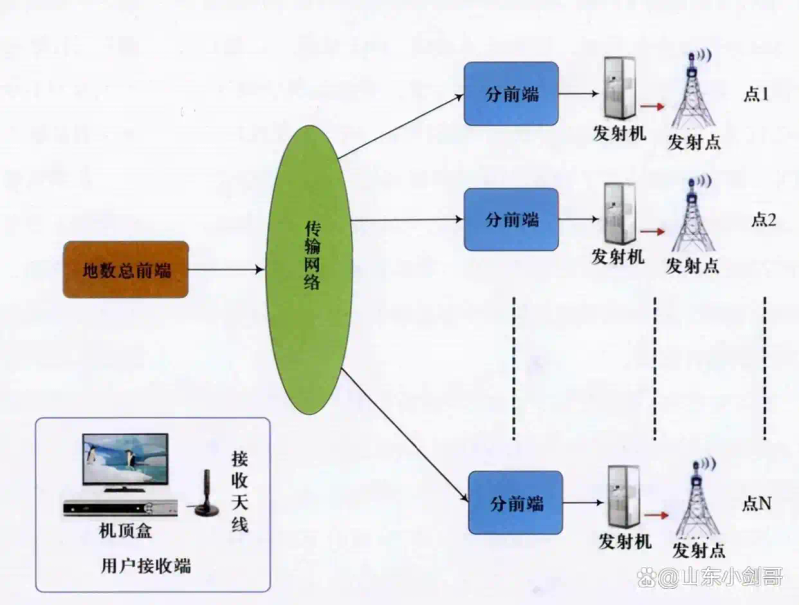
Ground-based digital television launch reception map
The work flow of terrestrial digital television is divided into the collection, coding, modulation, launch, reception and decodering of signals. Television first collects video, audio and data content through various devices, then digitizes the original signals and compresses them using efficient coding algorithms to reduce data volume and increase transmission efficiency. The coded digital signal will be transposed to a specific radio-frequency carrier and launched into the air through a ground-launched antenna. User-end receivers (e. G., terrestrial digital tv roofboxes or digital television sets) receive these signals, decode them, etc., and eventually return the original video, audio and data signals to the user's television screen。
Iii. The advantages of terrestrial digital television
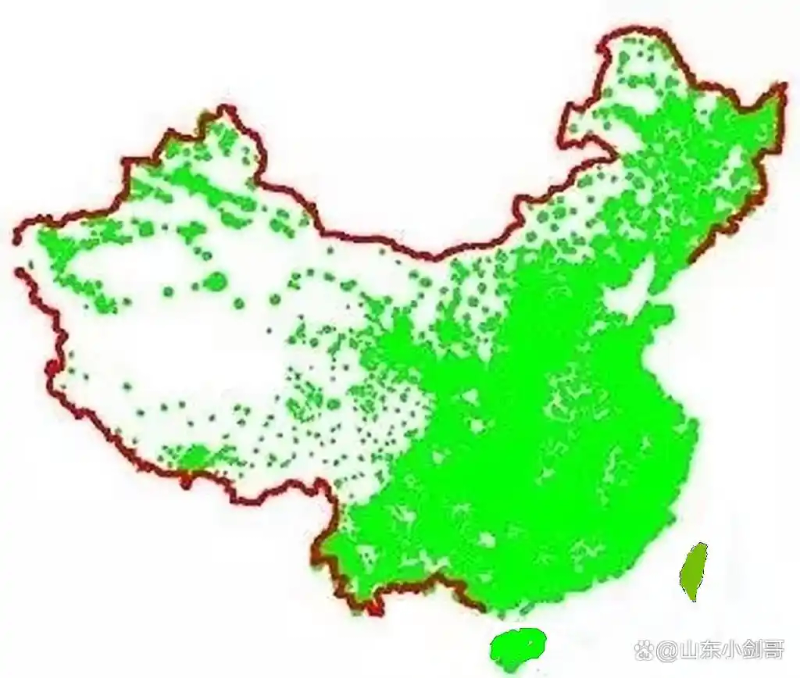
China ground-based digital signal cover area figure
1. High quality of signals: digital signals have a strong ability to resist interference and are effective in reducing all kinds of interference to which they are subjected during transmission, such as snowflakes, photocopying, etc., thus providing clearer and more stable images and sound quality. By contrast, analogue television signals are susceptible to interference in the transmission process, resulting in blurry images and sound distortion。
2. Programme content: the use of advanced digital compression techniques on terrestrial digital television allows for the transmission of more programme content (e. G., 8 programmes on one channel) from limited spectrum resources. More television channels, including high-resolution channels and special channels, are available to users to meet the diverse needs of different groups of people。
3. Free reception: in many regions, terrestrial digital television provides a certain number of free channels (e. G., more than 16 terrestrial digital television programmes can be viewed in the country), which users can view free of charge by purchasing only one ground-based digital television penthouse or digital television set up to connect to the antenna. This is a very beneficial option for some users with limited financial means or low demand for television programmes。
4. Broad coverage: the use of terrestrial digital television for signal coverage through ground-launched rebroadcast stations has made it possible to reach different areas, such as cities and villages, particularly in remote areas, where terrestrial digital television has become an important means of viewing television programmes because of the difficulty of equipping cable networks。
5. Emergency broadcasting: the terrestrial digital television system has an emergency broadcasting function and has the ability to issue timely and accurate early warning information and emergency instructions to the public in emergency situations such as natural disasters and public health emergencies, which play an important role in safeguarding the lives and property of the population。
Iv. How to receive terrestrial digital television
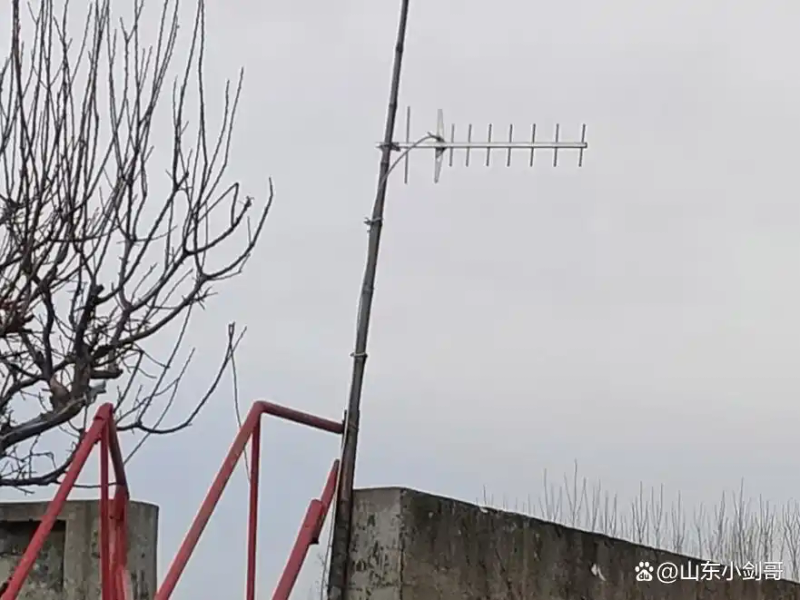
Antenna reception outside the ground digital television room
1. Preparation for receiving equipment: if your television is an old television set that does not have digital television reception, you need to purchase a land-based digital television roof box; if your television sets are a single set that supports terrestrial digital television reception, they can be used directly. In addition, a suitable antenna will need to be prepared to select an indoor antenna or an outdoor antenna according to the signal strength and reception environment of your area。
2. Installation of antennas: installation of antennas in appropriate locations to obtain optimal signal reception. In general, outdoor antennas have a better reception effect than indoor antennas, but need to be mine-proof when installed and distinguish between “level” or “vertical” polarization. For example, local rrt signals are polarized “vertical” with vertical antennas and, conversely, horizontal antennas. Once installed, the antenna signal line is connected to the antenna interface of the terrestrial digital television ceiling box or digital television unit。
3. Search channels: open the top boxes of the terrestrial digital television or digital television sets, enter the settings menu, and select an automatic search channel or full frequency segment search function. The device will automatically search and store the available terrestrial digital radio and television channels, and once the search is completed, you will be able to listen to a variety of radio and television programmes。
V. Prospects for the development of terrestrial digital television

Dtmb ground digital television (known as ground wave)
As science and technology progress and demand for high-quality audio-visual experience grow, terrestrial digital television continues to evolve and improve. In the future, terrestrial digital television will move towards greater clarity, a richer interactive function and a broader area of application. For example, the application of ultra-high-level terrestrial digital television technology will provide users with a more realistic and powerful visual impact; integration with internet technology will give terrestrial digital television more interactive functions, such as online shopping, video on-demanding, play entertainment, etc., and more personalized and diversified services for users. At the same time, terrestrial digital television will play an increasingly important role in areas such as smart city building and emergency communications. The use of terrestrial digital television as an easy, free and high-quality means of transmitting television signals has brought tangible convenience and benefits to a wide range of users. It is believed that in the future, as technology continues to evolve and develop, terrestrial digital television will play an even more important role in people's lives and add more to our audiovisual lives。
[appendix]
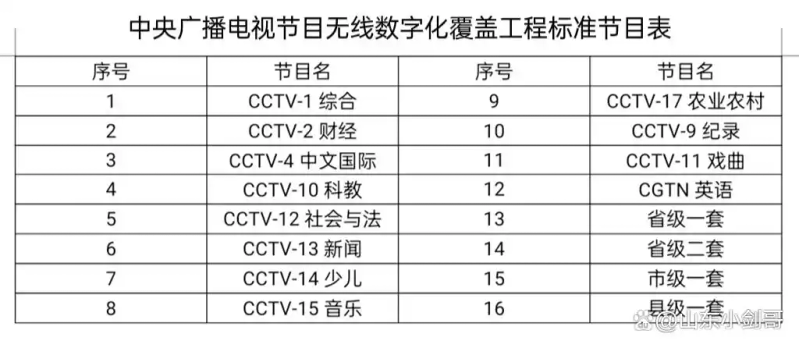
We can receive more than 16 land count programmes free of charge