The core of the nuclear power route is divided into two systems: fissile nuclear power technology (currently the absolute mainstream of global commerce) and fusion nuclear power technology (the ultimate solution for human energy)。
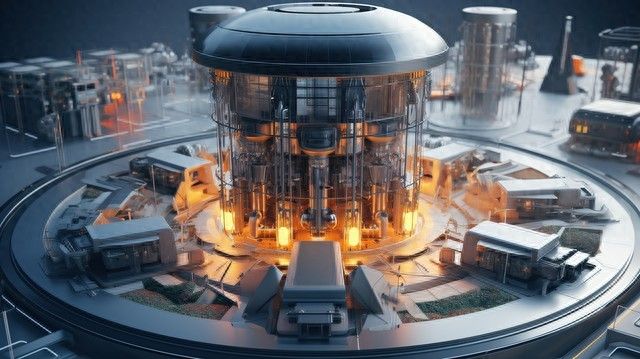
Of these, fission technology can be divided into one to four generations by technological maturity and intergenerationality, with more than a dozen different paths broken down by neutron energy spectrum, slowing agent/coolant type; 99 per cent of the global commercial nuclear power plant fleet is classified as thermal neutron fission reactor, with over 90 per cent voltage, and four-generation, small modularized reactor (smr) is the core increment track for the next 10 years。
Basic framework: intergenerational division of nuclear power technologies
The international atomic energy agency (iaea) and the international forum for fourth generation nuclear energy systems (gif) divided fission nuclear power technologies into four generations, clearly defining the technological positioning and development phases of the routes
Technology intergenerational
Time horizon
Core positioning
Mainstream technology routes
Core characteristics
Development status
Generation
1950s-1960s
Experimental validation type
Early graphite boiling water piles, prototype press water stacks
Technology from military to civilian to verify the viability of nuclear power
All decommissioned, with only a few experimental piles
Second generation
1970s-1990s
Size-based commercial backbone
Standardized pressurized, boiling, heavy water stacks
Technical maturity, low cost, standardized, quantitative construction
Global cargo fleet, over 70 per cent, progressing towards longevity / decommissioning
3 generations / 3 generations + stack
1990s to date
Absolute major for current new projects
Inactive pressurized water piles, advanced boiling water stacks
Core upgrade "inherent safety", core melting probability reduced by 2 orders of magnitude, and seismic and external disaster resilience increased significantly
100% of the world's new fleet using 3-generation + technology, represented by china dragon one, united states ap1000, france epr, russia vver
Four generations
Research and development and demonstration phases
Future advanced nuclear energy systems
Sodium fast reactors, high-temperature coolers, melted salt piles, etc
Four core objectives: extreme inherent safety, maximum utilization of uranium resources, minimization of nuclear waste, prevention of nuclear proliferation
Most of them are in the demonstration engineering/research and development phase, and china's high-temperature cooling reactor has achieved its first four-generation commercial shipment worldwide
Core fission technology route
Core differences in fissile nuclear power, derived from the neutron energy spectrum (thermal neutrons / fast neutrons), the type of slowizer, the type of coolant, and the three core variables, dividing two branches and more than a dozen subdivisions
(i) thermal neutron reactors: current absolute global commercial power
Thermal neutron piles rely on slow agents to reduce the speed of fast neutrons generated by nuclear fission to thermal neutrons, maintaining chain reactions is the most technically mature and commercial route at present, with 99 per cent of the global nuclear power plant in transit。
Boiling water reactors (bwr, boiling water action) 3. Heavy water reactors (hwr, heavy water action) 4. High-temperature cold reactors (vhtr, 4-generation core) 5. Supercritical water reactors (scwr, 4-generation 4-generation route)
The core advantage of fast reactors not using slow agents and relying directly on fast neutrons from nuclear fission to sustain chain reactions is to convert unusable uranium-238 from compact water reactors to fissionable plutonium-239, increasing the utilization of uranium resources from less than 1 per cent to more than 60 per cent, while burning long-lived high-level nuclear waste from compact water reactors is a central route to achieving a closed cycle of nuclear fuel, addressing uranium resource shortages and nuclear waste disposal challenges。
Fast stacks are the most valued and developed branches of the four generations of six major routes, with the core divided into three main mainstream routes according to the type of coolant:
1. Sodium cold fast reactor (sfr, 4-generation first priority route) 2. Lead cold fast reactor (lfr, 4-generation core increment route) 3. Air cold fast reactor (gfr, 4-generation research and development route) iii. Emerging engineering route: small modular reactor (smr)
Smr is not a stand-alone nuclear fission technology route, but a new generation of nuclear power systems based on existing mature stack-type technologies, which are engineering innovations through modularization, miniaturization and plant prefabricateding, with a single stack of rated power usually at 300 mw and below, and an incremental track at the core of global nuclear power in the next 10 years。
By technical route, smr can be divided into five main branches:
Smr: the most mature technology and the fastest commercialization, represented by linglong i (acp100,125 mw), nuscale voygr, united states; high temperature cold reactor smr: inherently safe filled, represented by china htr-pm sm, united states x-energy x-100; melting salt reactor: very small fitness, represented by denmark seaborg, united states terrestrian energy; sodium cold / lead cold fast reactor: achieving closed fuel cycle, represented by the united states of america, russian svbr-100; special field smr: includes marine floating nuclear stations (china acp100s, russian company of romanov), micro nuclear reactors (<10mw, fit to remote areas, data centres, military engineering scenes). Iv. Final energy routes: controlled fusion
Nuclear fusion is the process by which two light atoms, iridium and tritium, aggregate into more heavy atoms while releasing huge energy, and it is the core principle of solar glowing heat. Compared to nuclear fission, fusion core melting risks, long-lived high-level nuclear waste, fuel aluminum can be extracted from seawater (with reserves available for billions of years) and are the ultimate solution to human energy。
The current mainstream technology route is divided into two main branches:
Magnetic bound fusion (mcf): global mainstream r & d routes to maintain fusion reactions through strong magnetic field binding high temperature plasma. Tokamak: the most technically mature and developed route, representing the international thermonuclear fusion experimental reactor (iter), the china eastern ultraring (east), the china cyclops ii m (hl-2m); inertial restraining fusion (icf): the fusion reaction is triggered by laser-bombing of a short-lived compressed target to high-temperature high pressure, representing the united states national ignition device (nif), first achieved in 2022, and is still in the scientific validation phase。
Development status: global fusion has completed the scientific feasibility test to enter the critical phase of the "engineered climber", with iter projecting full power steady operation by 2035, with china planning to build a fusion demonstration power station by 2035, with commercialization expected around 2050。