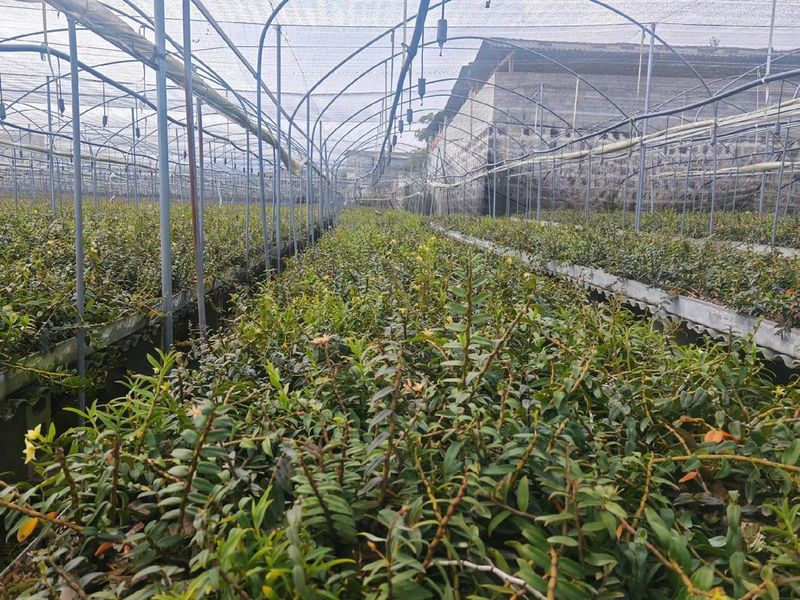
Thermometers in the morning guava shed show below 8 degrees centigrade outside the room, but inside the shed is 25 degrees in the spring, and the green seedlings thrive under multiple thin membranes。
For the northern melons, margarine cultivation can take the watermelon on the market two months ahead, filling the market gap and often doubling prices. However, the technical threshold for margarita cultivation is much higher than in the field。
This paper will provide you with a summary of the key technical points for the cultivation of watermelons in the northern shed, and will present two models of efficient cultivation that will help you to grow high-yield, high-quality watermelons and multiply the benefits。
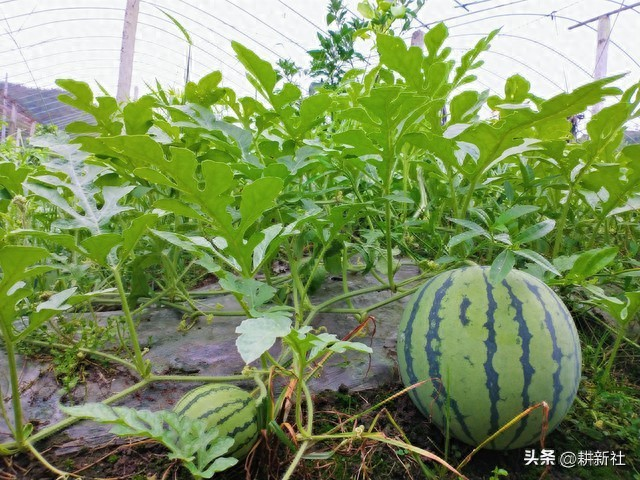
01 crop model selection, basis for efficiency enhancement
There are two main efficient models of watermelon cultivation in the northern shed. The first is the early spring melon replanting model of the arch shed, which achieves two harvests in one year, with a significant increase in land use。
Early spring watermelon seedlings took place in mid-february, in mid-march, and were ready for harvest from late may to early june. Following the harvest of the watermelon, peppers were planted in the ground immediately after the harvest, which was scheduled for mid-june and began harvest in mid-august until mid-october。
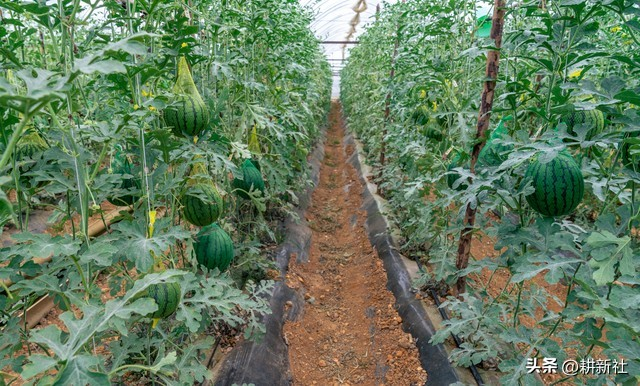
The second is the efficient model of concubines, which has emerged in recent years. A significant increase in planting density and spatial utilization was achieved by making watermelon “relative growth”。
Only about 700 plants per acre can be planted in traditional reptiles, while concretization can increase density to nearly 2,000. This model is particularly suitable for small fruit-type “gang” cultivation, with high value added。
02 varieties selection and breeding, first step in high quality production
The choice of varieties directly affects the success or failure of cultivation. In the early spring of the spring, the arch shed chooses a species that is low-temperature and weak and that is pre-developed。
Varieties suitable for the northern sheds include the kyoutin series, the sweet king series, the good morning series, etc. In the case of chicken ploughing, it would be appropriate to select small fruit varieties such as “spring spring red jade”, “wan fooklai”, or “chong red 6” and “small jade 1” in chinese agricultural schools。
The birth chain is key to ensuring that it is strong. Early spring seedlings need to be carried out in greenhouses, and electro-thermal hotbeds can be built to ensure temperature。
Key seeding parameters are as follows:
• seeding time: early spring watermelons usually grow from mid-january to mid-february
• age requirement: watermelon is 28 to 30 days old and can be determined at a height of 8 to 10 cm, with a weight of 1 in the second leaf shizuku
Temperature management: 28 - 32°c during the day and 17 - 20°c at night before seeding; appropriate cooling after seeding
The introduction of indoctrination can effectively prevent endemic diseases, such as atrophy. The method of marriage consists mainly of attachments and interpositions, with attention to the difference in planting time between watermelon and lumber。
03 temperature fine-regulated to ensure healthy growth of seedlings
The key to successful watermelon cultivation in the shed is accurate temperature control. Temperature requirements vary at different stages of growth and must be carefully managed。
Shrimp periods: no ventilation for three to five days after planting, maintenance of high temperature, high humidity, 28-30°c during the day and no less than 13°c at night。
Roast stretch: the temperature is at 25-32°c during the day and not less than 15°c at night. The small arches could be gradually removed at this time, but care needs to be taken that the vents are opened from small to large and gradual。
Flowering season: this is the most critical period for temperature management. The night temperature cannot be below 17°c, otherwise it will affect pollination. In case of cooling weather, the temperature in the shed is appropriate to reduce or not even ventilate。
The early spring climate in the north is volatile and can be warmed by “three layers of cover”: membranes + small arches + sheds. The small arch sheds may be removed when the external temperature is stable at 15°c or above。
04 scientific management of water fertilization, key to quality and production
Fertilizer management is governed by the principle of “pre- and post-control”, which is precisely regulated according to the needs of the watermelon at different stages of growth。
Cultivation to the condensation period: control of water filling and promotion of rooting. Only when the soil is too dry is watered。
Sprawl up to the flowering: water is filled in sufficient quantities to maintain a soil content of around 60%. If the seedling grows weak, 5 kg urea per acre can be followed。
The period of fruit expansion: when young fruit grows into eggs, it takes a lot of nutrients. This shall be combined with water and 20 kg of high potassium-type water soluble fertilizer (e. G. 10-6-38) per acre。
After the harvest period, consideration may be given to the pursuit of fertilizer for subsequent sedentary results. In the case of continuous melon technology, fattening must be followed up once in each batch。
The irrigation approach recommends drip irrigation, which is effective in saving water and reducing the incidence of disease. The drip tube should be about 45 cm from a watermelon seedling to avoid being too close to the root to cause rotting roots。
05 whole pollination and sit-down fruit, technically determined fruit mass
There are two main ways in which the whole branch can be grown: a single or a pair of chickens is grown more often than a three-cranium。
The whole branch of the three chickens shall be preserved the main chicken and the two strong chickens and the rest shall be removed. The whole branch should not be premature, but may take place as the side chicken grows to about 20 cm。
Artificially assisted pollination is a key measure to increase sit-in rates. The best time for pollination is from 7 to 10 a. M. Each day. Choose the 2nd or 3rd female on the main chicken, which sits in good shape and quality。
Some seven days after the pollination, the eggs of the larvae start fixing the melon. Each of these plants is kept with one chromatic guava that meets the characteristics of the species and the remainder is removed。
Special tip: when a bronchion is grown, the fruit can be hung in a bag for up to a certain hour to prevent a fall。
06 green pest control to keep fruit safe
A “preventive, integrated” approach must be followed, given the vulnerability of large-scale environments to disease and pests。
Main diseases:
Powder disease: 25% ester suspension 1500 times liquid treatment
:: anthrax: 250 grams per acre of smoke control with 45 per cent bacillus smoker
:: decay disease: mainly based on indoctrination, with no effective chemical agent
Main pest control:
• aphids: can be treated with a 35 per cent aphid suspension of 2,000 times liquid
• white lice: installation of a 40-mid insecticide-proof network at vents with yellow sticky panels in the shed
• red spiders: 1. 8 per cent of insecticidal cream can be treated with 1,000 times more fluid
Integrated prevention and control measures include: selection of disease resistant varieties, rearing, rational rotation, cleaning of fields, scientific regulation of temperature and humidity. Chemical control should be carried out on a rotational basis to avoid resistance。
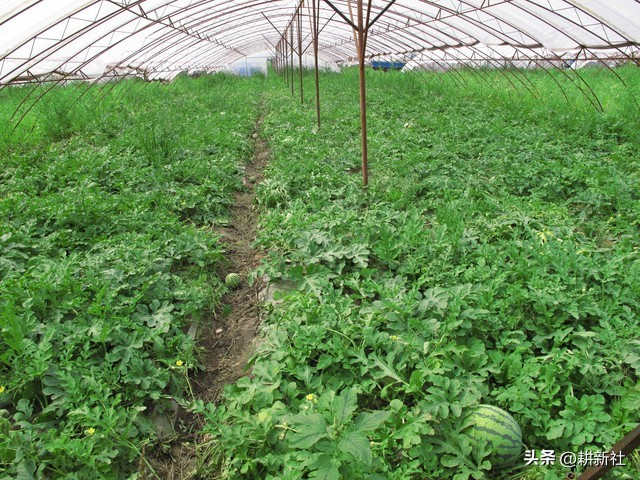
The guacants of wei jiang grow their watermelon acres to a value of rmb 24,000; the farmers of xinjiang use the technique of chicken-creeding, with the proceeds of the acres two to three times the traditional pattern。
Behind these figures are fine temperature regulation, scientific hydrofertilization and green pest control. When watermelon vines climb up the rope, a single symmetrical fruit hangs in half-empty, not only as a result of technology, but also as a prelude to harvest。
The future of the northern shed is moving towards intelligent management and branding operations. A number of production areas have begun to experiment with the “watermelon + tourism + culture” model of industrial integration, giving new life to this traditional agriculture. # i'm interested in the three farmers # # the shed what are the techniques for watermelon cultivation