The silk melon is an important melon vegetable grown in the spring, with long growth cycles and high yields, and strict management requirements for cultivation. The core contradiction of the open spring species lies in the conflict between early spring and low temperatures and the warmth properties of the filament, as well as in the regulation of the balance between nutritional growth and reproductive growth. In order to achieve its objectives of pre-maturity, high-yielding and high-quality cultivation, five core elements of soil improvement, species selection, timely seeding and membrane cover, chicken-laying and stock-planting will need to be implemented with precision management measures. This paper combines field-planting practices with a systematic elaboration of key technical elements to provide scientific guidance on production practices。
I. Soil preparation: estrangement and fertilization based on nitrogen control
Soils are the basis for the growth of silk melons, which in the open spring need to be grown in pine, deep, well drained and organically rich plots, especially sandy or border soil at ph 6. 0-7. 5. A two- to three-year rotational system is required to avoid a connection with melon crops and to reduce the incidence of earth-borne diseases such as deadness and frost。
The core of soil improvement is deep pine + organic fertilisation + strict nitrogen fertilization. Deep tillage, at depths of over 30 cm, was carried out 15-20 days before seeding, breaking the slabs, improving soil aerobics and preserving water fertility. Base fat is dominated by rotting farmers, such as decomposed cow manure, goat dung, composting, etc., with an appropriate amount of potassium phosphorus fertilizer, and the excessive application of nitrogen fertilizer is strictly prohibited to prevent long pre-planting and post-planting. Specific application criteria: 4000 - 5,000 kg of curing organic weight per acre, 50 - 70 kg of calcium perphosphate and 20 - 30 kg of potassium sulphate. When the fertilizer is distributed evenly, the deep tillage is fully mixed with the soil, which is then dredged and flatted to high levels, with a height of 20-30 centimetres, a width of 80-100 centimetres and a ditch width of 30-40 centimetres to facilitate drainage and flood resistance, while creating conditions for membrane cover。
Soil disinfection is then required, with 50 per cent of the acre of more than filamentable powder 2-3 kg, or biosterilization with bacterium sapling to reduce the number of pathogens in the soil. For soil-heavy plots, a suitable amount of fine sand or corrosive soil can be blended to further improve the soil structure and ensure that the roots are lax in the growing environment。
Ii. Varieties selection: adapting to climate conditions, taking into account the quality of production
The selection of species for open spring filaments needs to be based on local climatic characteristics and market demand, with a focus on screening varieties that are cold-resistant, pre-cooked, disease-resistant and productive. Early spring temperatures are volatile and cold-prone, and cold-resistant varieties can be effective in reducing low-temperature injuries; pre-literate varieties can be marketed early to increase economic efficiency; and resistance to disease is key to steady production, with preference given to those that are more resistant to frost, powder and viruses。
The following suitable varieties are recommended, taking into account the cultivation needs of different regions: one is the pre-literated filamental species, such as the “spring euphoria” 805; the “spring euphoria” can be harvested approximately 55 days after planting; the first female has 5-7 knots, with a strong capacity for continuous condensation and suitable for field springs in the yangtze basin and the south-west; and the “sprout flow 805” is well pre-literate, is more resistant to frost, white powder disease, is thick, empty cavity and good merchandise. The second is the elliptical silk melon species, such as “taiwan leather” no. 1, which are hot and wet, smooth and soft, suitable for cultivation in the south and east china regions. The third is suitable species for the north, such as the zinzu zigu, ruth 1, which is highly adaptive and cold-resistant and suitable for the field spring species of the north china。
In addition, formal channels for the purchase of seeds need to be selected to ensure that 95 per cent of the seeds are pure and 85 per cent of the germination rate. Seeds are screened before seed is planted to remove granules, broken particles, pests and diseases and to preserve seeds full of particles and bright in colour to lay the foundation for the growth of seedlings。
Iii. Sowning in due course + membrane cover: seizing hot conditions and nurturing strong plants
The seeding time for open spring guacamole is strictly based on the principle of “temperature stabilization” with a core indicator of 10 centimetres of temperature at 15°c and average daily temperature at 18°c, with the end of the period and no cold tide warning for the next 15 days. The timing of planting varies significantly from one region to another: south china in late february to early march, yangtze in late march to early april and north china in mid-april to early may。
(i) seed treatment
Preplant seeding is preceded by seeding seedlings, which increase the rate of seeding and seeding alignment. The first step is to plant one or two days of sunbath, to eliminate the primal pathogens of the seeds and to enhance their vitality. The second step is to impregnate the seed by placing it in 50-55°c warm water, mixing it for 15-20 minutes and continuing to soak for 3-4 hours until the water temperature is reduced to around 30°c, so that the seed can suck up its moisture. In the third step, sprouts, seed seeds are extracted from impregnated seeds, packaged with wet cloths, placed in an environment of 25-30°c, rinsed with warm water one to two times a day, humid cloths kept wet, white for two to three days, and seeded when white is 0. 5 cm。
(ii) sowing methods
In the open spring, silk can be grown live or by seedlings, which are more conducive to breeding, longer periods and higher yields。
1. Cultivation: 25-30 days in advance of seedlings, using nutritional seedlings with a base ratio of decomposed organic fertilizers: horticultural soil: sand = 3:5:2 to ensure decomposition. One seed of open white per resolution, covering 1-2 centimetres of fine soil, is soaked through the bottom water that small arch sheds are built to protect the temperature. The temperature in the shed is maintained at 25-30°c before the seedling is produced, and the temperature is 20-25°c during the day and 15-20°c at night after the seedling is produced, avoiding the heat wavelength. One week before planting, seedlings were produced to gradually remove the filaments, lower the temperature and increase the resilience of the seedlings, which could be established by a two- to three-leaf seedlings, a thick rod and a green leaf。
2. Live broadcasts: digging holes at a distance of 30 to 40 cm, with 2 to 3 seedlings per lacuna, covering 1. 5 to 2 cm of fine soil, pouring water and covering the membrane until the soil is dried up。
(iii) key membrane cover technologies
Dust cover is a core measure for the cultivation of growing seedlings in open springs, which can effectively increase the temperature of the ground, maintain soil moisture, inhibit weed growth and promote root system development. The selection of a black membrane or silver-coloured membrane with a thickness of 0. 01-0. 015 mm is good for weeding and the silver-coloured membrane is shielding aphids. The cover is covered by spreading the membrane to the surface, and the edges are compacted with soil to prevent the wind from blowing the membranes。
Fields are broadcast live and, when seedlings are released, ambulatory seedlings are released in time, ground-pressed to cover the membranes to avoid thermal burning of the seedlings within the membranes; the seedlings grow up to 2 to 3 leaf-time seedlings, leaving a strong seedling in each den. The seedlings are planted on fields, when they are laid, they are punctured in the membranes, they are planted in the dens, they are watered with water, and they are soared with soil. During membrane cover, if the soil is dry, water can be poured through ditches to avoid flooding, maintain soil moisture of 60-70 per cent and prevent decaying roots。
Iv. Strengthening learning: effective structure for learning
For the reptile plants, field cultivation must be mounted in such a way as not only to avoid the growth of vines and vines leading to high-precipitation and malformations of fruit, but also to improve ventilation in the fields, increase the efficiency of light co-operation and promote melons。
(i) timing and modalities
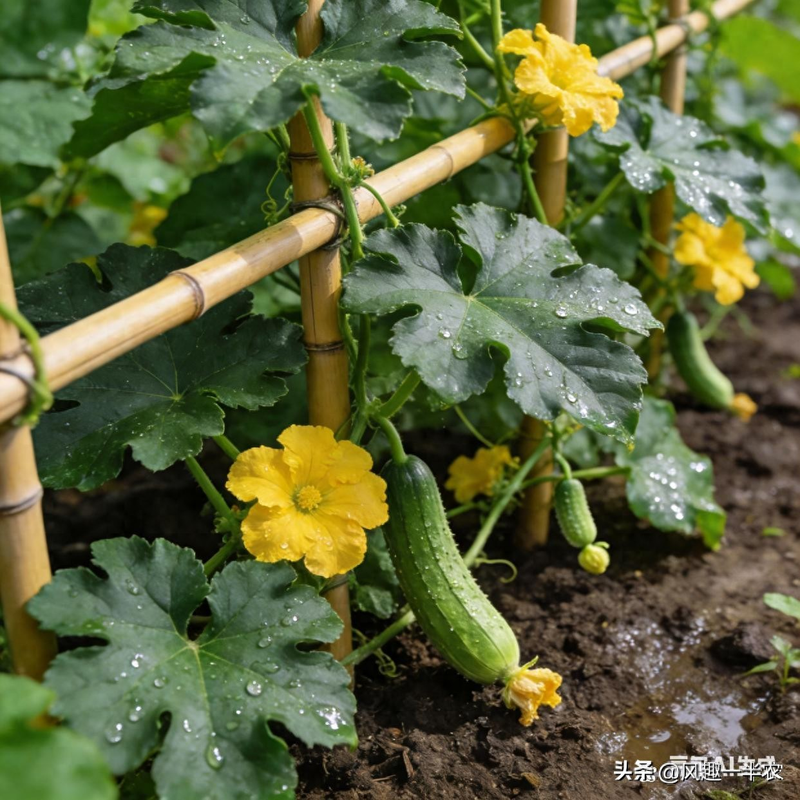
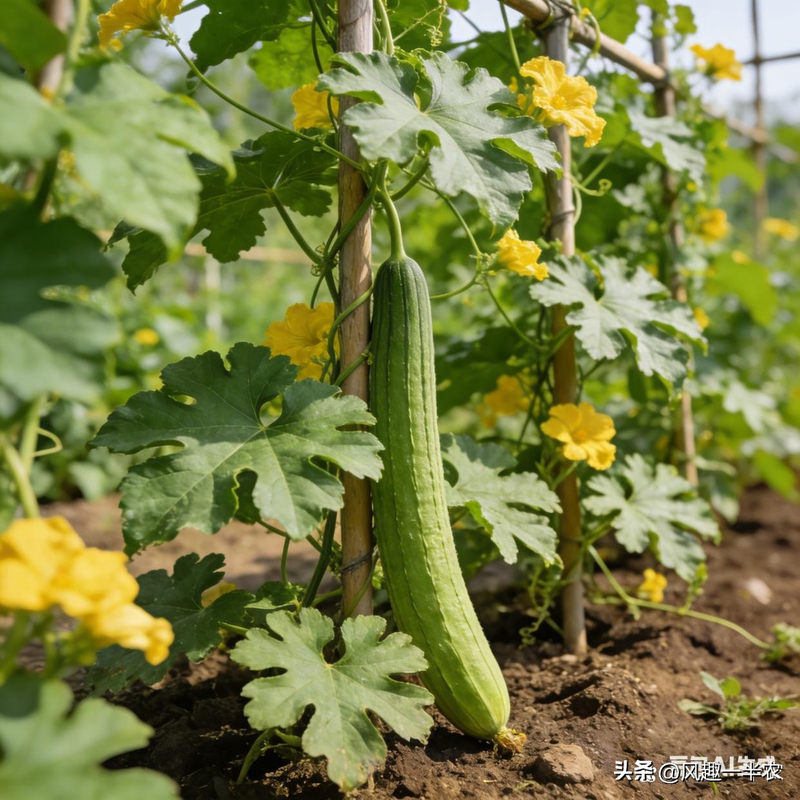
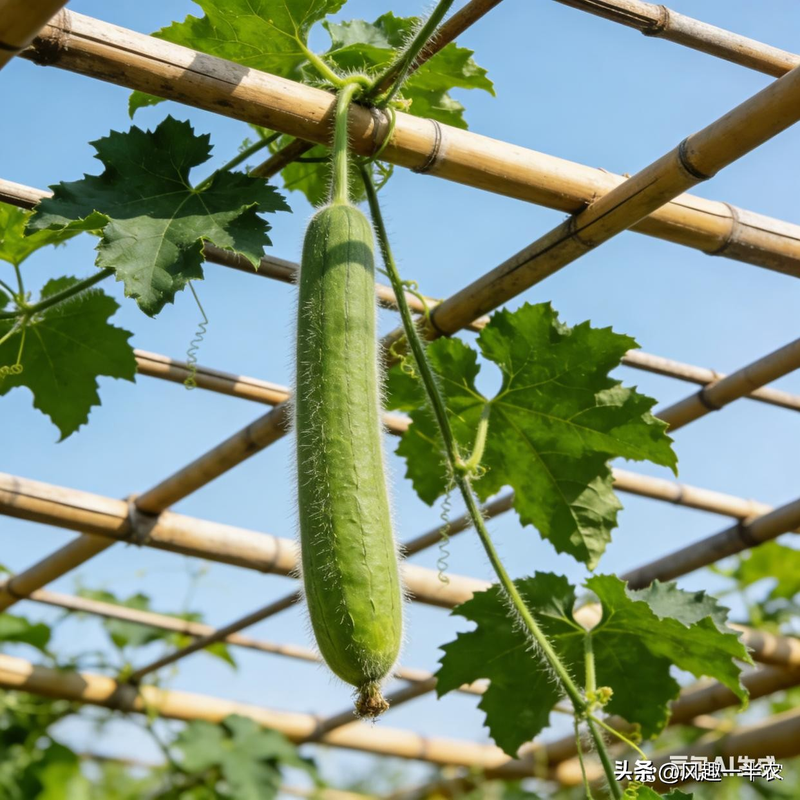
When the main chicken grows up to 30-50 cm, it is mounted in time. In the field, the best is the “human frame”, where materials are selected with poles, poles, etc., 2. 5 - 3. 0 metres in length, 20 centimetres into the soil, cross-fixed at the top, and cross-strength, and cross-strengths to connect to the next-of-the-person frames to form the overall architecture, enhance stability and resist wind weather. Each acre requires 600-800 poles to ensure that the shelf is solid enough to bear the weight of vines and fruits。
For smaller-density plots, a “parallel” or a “fence” may also be used, but the human scaffold is the most ventilated and more suitable for silk melon growth. It is necessary to be careful about the height of the frame, to avoid low-impact extension of the vine and excessive management difficulties。
(ii) roasted and trim
When the main chicken grows to 13-14 leaves, it starts to draw the chicken on the shelf and chooses to take place in the middle of the day in the afternoon, when the vine is soft and easy to break. When the chicken is drawn, the main chicken is towed upwards along the poles, with the word “the” shape used to tie the chicken, and the chicken material is to be tied with plastic rope or straw, so as to be moderate and avoid damage to the vines, while leaving room for their growth。
The chickens are transported at intervals of two to three days, and the sides and rolls are directed to the frame in a timely manner to avoid the entanglement of the vines. Decreasing nutrient consumption by removing the inert swabs and leaves from the base of the main chicken. In the case of growing vines, growth can be properly inhibited to ensure that the vines are evenly distributed on the shelf and there are no closed areas。
V. Complete twenty: through through through through through and between enforcement and regulation
The ability of silk melons to split into branches, if not complete in time, can lead to excessive nutrient growth, reduced reproductive growth and a phenomenon of “nature-free chickens”. At the heart of the fine branch is a capping, strangulation, and control, which improves production and commerciality by adjusting the plant form and concentrating on the supply of melons。
(i) pumping (side branch treatment)
Different strategies are adopted according to the characteristics of the species: the main cranberry guacamole (e. G. Spring cucumbers) requires the complete removal of all branches and female flowers below the 13-14 leaf of the main chicken, with only the preservation of the cranberry cucumbers and the reduction of nutrient consumption; the cucumber bouquets (e. G. Taiwan's leather melons), the retention of 3-4 strong chickens and the removal of the rest of the side branches, leaving the sides with the task of semeloning。
During growth, the thin, sick and dead branches are removed in time to avoid competition for nutrients with the chicken. When the side cranium is grown, it is appropriate to remove the growth point at the top of the side cranium and control its length。
(ii) top (crystal)
The aim of the top is to break the top edge, promote the growth of the side of the penis and achieve continuous melonization. After two to three melons of the main chicken, one to two strong branches of the top are removed in time to continue to grow, and after two to three melons of the side branches, the side branches are removed and the first three to four changes are repeated so that the whole branch is no longer intact at the later stage of growth。
At the top, it takes place in the middle of the sun to heal the wound and avoid infection. For pre-cooked varieties, the pre-cooked species can be capped at an appropriate early stage, promoting early chicken hair and increasing early yields; for late-cooked varieties, the pre-cooked species can be capped at a later stage, prolonging the length of the bronchion and increasing the number of pickles。
(iii) auxiliary control and fruit-cutting
If the plant is growing too fast and has a prototyping phenomenon, it can be chemically controlled with chlorophyll 150-3000 times more, balancing nutritional growth with reproductive growth. At the same time, detached deformity, pathological melons and small melons in a timely manner, each of which is kept with three to five healthy fruits, with a concentration of nutrients for quality fruit growth。
In the later stages of growth, the plant is crawling over the shelf, and if the branch is too dense, it can remove parts of the old, sick and yellow leaves, improve ventilation and light conditions and reduce the growth of pests and diseases. Discrepancies, sick leaves and deformities are removed from the fields and are destroyed centrally to prevent the spread of the disease。