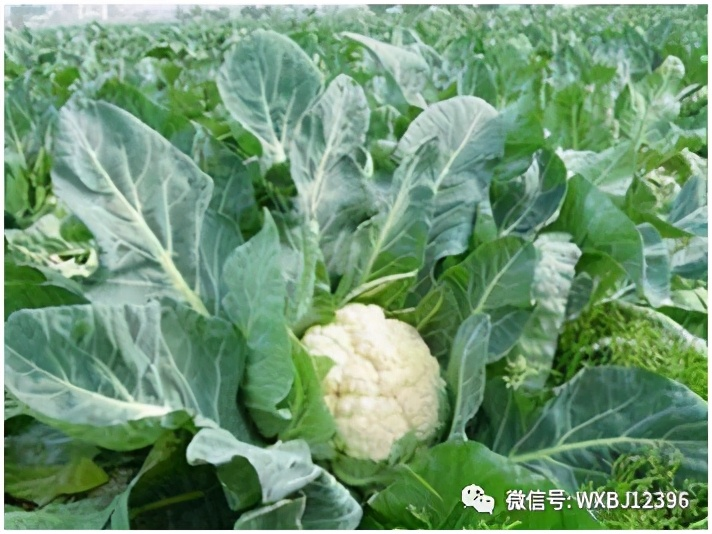
The early cultivation of broccoli plastics in the spring is done in winter, early spring and early summer harvests, making up for the shortage of vegetables in the early summer and making the planting more productive, and hence in the wider area。
1. Choice of varieties
Select more of the spring eco-type, i. E. The species of seedlings that can grow normally at lower temperatures and plant plants that can form a flower ball at higher temperatures. Among the better varieties are the more winter-oriented varieties of snowflakes, snowflakes, zin, 70, and spring snow 1, which are well organized and have concentrated harvest periods. Autumn varieties cannot be selected to prevent early flowering。
2. Cultivation
(1) cultivation due
It is advisable to choose a well-conditioned solar-temperature nursery, which is growing during the cold winter season, with short light and low temperatures, and therefore longer than normal. The conditions in the greenhouses also differ, so the planting time depends on the specific conditions of the greenhouses and the manner in which the seedlings are grown. The average solar greenhouses are about 50 days old, and the nursery time is shorter than the nursery time. It is possible to plant in late december-mid-january, depending on the circumstances。
(2) sowing
A small arcade should be set up to protect the temperature. About 15 to 20 days before the show, shelved herbs were warmed, baked, the temperature of herds was increased as much as possible, and herds were applied to sufficiently decompressed organic base fertilizers, with an acre application of between 4,000 and 5,000 kg. The seeds of broccoli can also be immersed in warm water for two to three hours at 20 to 25°c and can be fertilized in about 20 hours. Before seeding, the nursery is watered and permeable at 10 cm depth. Seeding, 1. 5 to 2. 0 g dry species per square metre, with 1 cm of fall back。
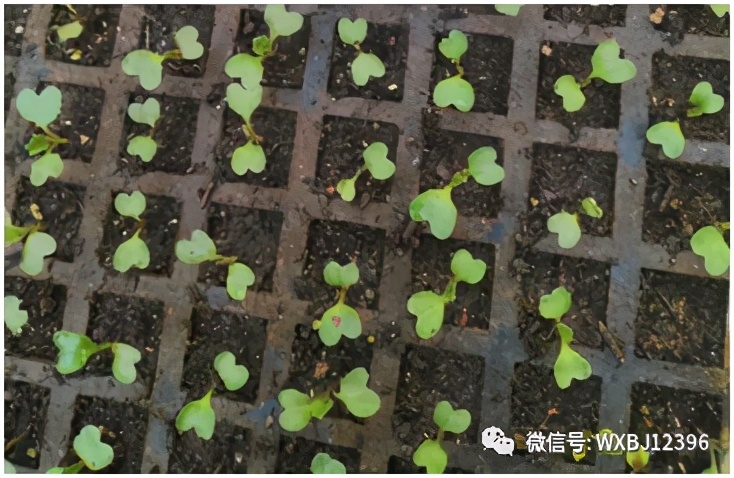
(b) cave seeding: 72-hole seedlings are selected, with well-equipped nutrients fed into the cavity, with light pressure on the nutrients, resulting in a dent in the core of the cavity from 0. 5 to 0. 8 cm down, with one grain per cavity, with an increase of 0. 8 to 1 cm。
(3) shrimp management
The focus of seedling management is on temperature protection. The maintenance of temperatures at around 25°c during the day and at no less than 6-8°c at night promotes the rapid release of seedlings. The seedling should be ventilated to the surface of a leaf, so as to prevent the growth of the seedlings. 20 - 25°c during the day and 6 - 8°c during the night. The first leaf appeared to the seedlings, and the management was dominated by temperature preservation. Three to five days before the sapling, the internal temperature of the platinum is appropriately reduced in order to exercise the seedling. The seedlings will then be able to disperse the earth once, each of which will be about 0. 3 cm thick, in order to prevent the cracking of the surface, to protect it and to increase its temperature. The seedlings are spread over the leaves and take place once each time the first leaf is revealed, at a distance of 1. 5 to 2. 0 cm. The seedlings take place about a month after they are broadcast and take place between the two and three leaves. The construction of saplings is the same as that of seedlings. The day before the seedlings were distributed, the seedlings were soaked with water that the seedlings were raised and the roots were not injured. The density of the saplings is 10 cm x 10 cm, which is immediately watered. The seedlings are immediately covered with rigid plastic film, which is unventilated for five to six days, with maximum temperature in the sheds, and which promotes slow seedlings. The seedlings are followed by the planting of pine soil 1. 5 to 2. 0 cm in the light of warm weather. Seven to eight days later it's a little pine, two to three centimetres deep. The seedlings are slow and pre-planted, so as to keep the temperature safe so as to avoid a pre-eminence. Scavengers were cut up 5 to 7 days before planting, and the temperature of seedlings was reduced and seedlings were prepared for planting。
3. Plantation
Prior to planting, the temperature of 10 cm in the shed was stabilized at more than 10°c. The spring-type single-slanted shed was suitable for mid-february in the northern part of the country, and the arch-shaped shed was in late february and early march. Fashion-based fertilizers are applied prior to planting and organic fertilisers range from 4,000 to 5,000 kg in acres. The 15 to 20 days before it was set up, the curtains were lifted, the temperature of the shed was raised as much as possible, and roasted. The seedlings must be carefully grown and planted, with a distance of 50 to 60 centimetres and a distance of 40 to 50 centimetres, with 2600 to 3,000 units per acre。
4. Post-plant management
The temperature is maintained at 20-25°c during the day, up to 28°c, and at 8°c-10°c during the night. Be careful to ventilate when it is slow and the temperature of the shed is around 20°c during the day. When the flower ball appears, the ventilation is increased and the temperature is maintained at 18-20°c and above 8°c at night. The first fertilization was followed by a combination of water injection, usually 15 kg urea per 667 m2. The lichen leaves are formed for a second fattening in combination with water, ranging from 15 to 20 kg of urea per 667 m2 or 3 yuan compound fat, and then for 3 to 5 days, they are then ploughed, ploughed and ploughed in order to prevent the longing of the leaves and the late heart. Lotus leaves begin to show wax powder and end up in saplings at a diameter of 2 to 3 cm, and when the plume reaches 5 cm, water is combined to chase up to 3 kbs per 667 m2. Since then, the entire peanut population has been chronically water-free and water has been poured every 5-7 days to keep the ground wet. In order to prevent the rewinding of the plant, one soil can be cultivated in the tuber. In order to prevent a flower ball from becoming yellow in the sun, and to reduce its commerciality, it should be folded to cover the balls when they are about 10 centimetres in diameter。
5. Pest management
The incidence of broccoli is mainly black, frost, rusty and so on, and is generally less frequent when seedlings are treated with seed and soup. In nursery and long-term management, care is taken to reduce environmental humidity, reasonable temperature management and balanced application of fertilizers, which can effectively prevent the occurrence of fertilisation and long-term diseases. In the event of an illness, the use of targeted medications at the beginning of the onset of the disease can yield better protection。
Insects are generally grown in smaller cyanobacteria, with individual cases of kale acetate, which can be used for physical control on cedars and, where necessary, with insecticides such as amphibians and avil。
6. Collection
Standards suitable for harvesting: the flower ball is fully grown up, its surface is white and fresh, its surface is smooth, its cavity is small and its edges are not yet scattered. The ball is cut off with a knife and leaves three to five leaves close to the ball to protect it from contamination. The initial period was around 15 april and the end date was around 5 may。