Yunan taco seed
Cultivation in the environment is a semi-negative crop with low altitude areas that must be accompanied by planting under the forest or protected by shades. Instead, it is chosen to grow in the slopes, with the cultivation of tara divided into winter and spring species, with the choice of winter species in low-altitude areas, the choice of spring species in high-altitude areas, the most appropriate altitude between 1,000 and 2,000 metres, not more than 2,700 metres above sea level and not less than 500 metres below sea level。
The selection of the earth's taro is the most suitable for the deep, loose, high organic content, high aerobic and well drained slopes or ladders. The soil is suitable for sand, black and red brown,* with ph values ranging from 6. 5 to 7 (alkalin acid). The clay is not suitable, and because the root is empty inside, it is not conducive to breathing, it prefers air-transmitting soil。
3. In order to improve, as far as possible, the land requirements of the earth's ferocious seedlings, which have long suffered from fear of sun and sun, wet and wet stains, fertilizing, cold and nitrogen-frosting, as well as the use of potassium fertilizer。

1. The flat ground requires high-level cultivation, so that the soil is smooth and so deep as possible. Depending on the location, each is generally about 0. 8 m-1 m. Wormback. More than 30 centimeters。
2. The slopes can afford to be low, but it is necessary to dig drains around the plot, with larger land openings in the middle。
Iv. When farmers are buying seeds back or raising them, they must keep them safe. A one-to-two-day tan in order to prevent seeds from growing infectious bacteria during transport. To the extent possible, the injured seed is selected, the damage is cut out with a small knife, and the wounds are covered with multi-dimensional disinfection powder. Or we'll put grass and ash on it, and we'll be able to plant it when it's dry。
V. Sowning
The seeding method requires the selection of a generation of seeds, depending on the size of the seed, given that one generation of seeds survives ***, is resilient, is less likely to be ill, has a steady yield, a generation of specifications of about 5-30 g in size, about 100 kg of an acre, two years of harvest, approximately 3-4 tons of acreage, most of the seeds of a generation are drenched in ditches, the second generation generally selects between 50 and 300 g of seeds, the second generation collects one year of seeds, the second generation produces about 3-4 tons of acre, and the second breed uses cave-sowning, which is managed and harvested. (b) the planting of seeds that are more than 45 degrees of tara at 50 grams and above, and the prevention of rain that accumulates between the budding nests of the tara in the event of rain, which causes the cultivation of tara to rot, the large of the second generation, the low rate of survival, the particularly poor resistance to disease itself and the particularly low chances of success in planting, suggest that two generations be reduced
2. The distance between seeding is also determined by the size of the seed seed, with seeds ranging from 15 cm to 25 cm, seed seeds ranging from 50 to 150 g, seed seeds ranging from 20 cm to 25 cm, seed seeds ranging from 100 to 300 cm and seed seeds ranging from 30 to 35 cm
3- the octopus is a semi-negative crop growing at an altitude of about 500 metres; the area between 1,000 and 2,000 metres above sea level can be protected from the shade, and, if it is better, between 2000 and 2,500 metres above sea level, regardless of sea level, if it is under the forest。

6. Fertilizing taro is a much more fertile crop that must be re-fertilized to produce more. A combination of 60-80 kg of pure potassium fertilizer per acre, followed by bioorganic fertilizers, is used mainly in the form of fertilizers produced by regular manufacturers or (after decomposition) farm fertilizers. The use of high nitrogen-containing fertilizers is strictly prohibited. Remember, low nitrogen high potassium, low nitrogen fat, high potassium fat
Weeding, weed protection and wett protection. Crop straws, such as porcelain needles, straws, maize straws, leaves, etc., can grow weeds after seeding of the tarp, while at the same time keeping warm and wet. It is a necessary measure. Potatoes are strictly forbidden during their growth, and if they do, they are susceptible to contracting morbid diseases. And that which harmeth the growth of the tara, neither shall the roots hurt. So the taro is forbidden in the fields to weed out using such tools as hoes. Manual extraction is required, and most people are now mowing their herbs with herbicides that are used only to save time。
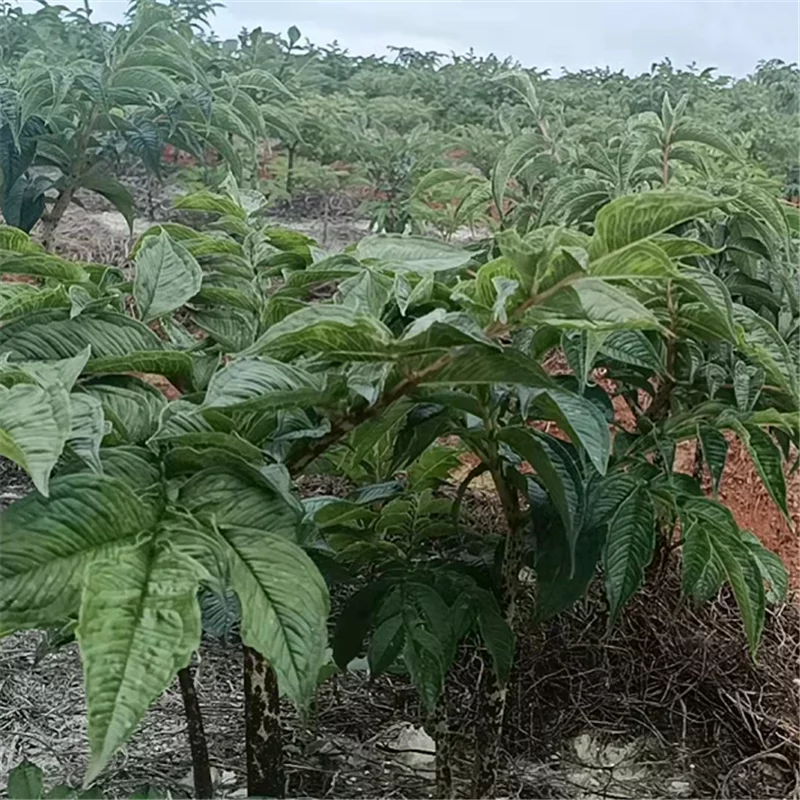
Viii. Field management and sick tart are prone to soft rotor diseases and white scabies in the process of planting; they are harmful by soft rotor diseases*. There is a need to sterilize the taro, and the soil in rotation. During the extension of the leaves, the tarmac is mixed with 200 ml (a bottle) + 200 ml (a bottle) of morbid spirit, and every other month thereafter until the tarmac matures. And those who find the tara ill during their growth shall be uprooted and destroyed immediately, and lime shall be laid and laid after the extraction, and the fungus shall be protected from spreading。
9. Digging and storing tara is a six-month growth cycle, usually resulting in a natural seedling in late october and early november. Fifteen days after the fall of the seedlings, it is possible to dig for commercial tara. Potato mining can be carried out 30 days after the fall of the seedlings, where the soil is wetter in the winter, where the seeding takes place over the winter and 15 days before planting in the spring of next year。