On august 14th, china net, it's now the time of lilies. Hongqing, a group of six villagers from the shiang village of the hmong shiang commune, hunan province, has been busy digging for lilies for several days. “good production, at current market prices, with more than 40,000 gross revenues per acre.”
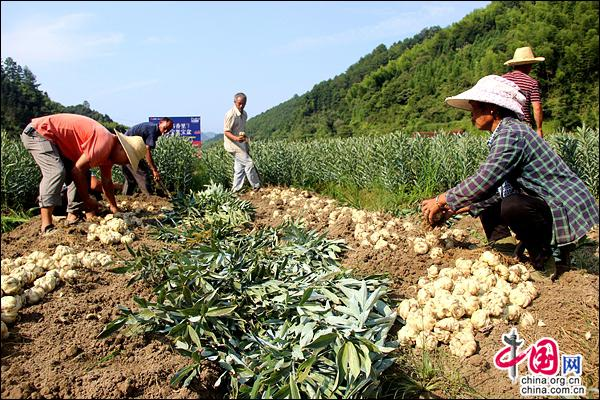
Last year, three members of the hongqing coalition rented more than 30 acres of land in their village's new village and started planting the dragontooth lily. Under the elaborate management of hong qing and others, more than 30 acres of dragon-tooth lily have been harvested. On these days, they invited more than 10 villagers to dig for lilies. Looking at a bag of lily harvests, hong qinglai calculates income: “the average acre production is 2250 kg, seed purchase price is $24 per kilogram, and lily purchase is $16 per kilogram. The net earnings per acre exceed $20,000, excluding the cost of $15,000.”
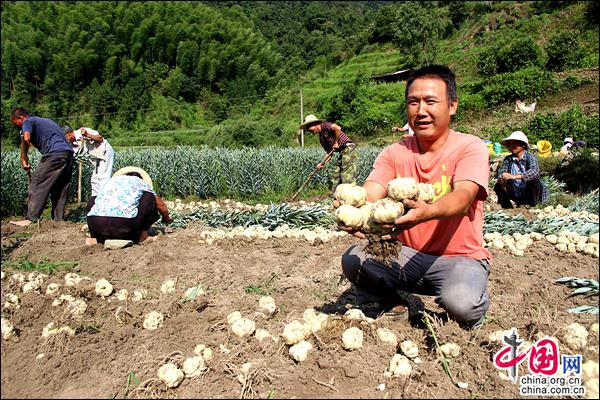
As in hongqing, more than 20 households in ingong village have planted lilies. Little 100 synthesizes the “gold puss” from which the people of the injection are rich。
Ingpeng is a poor village at the district level, with 320 families, including 52 poor families, and 200 poor families. It's in the mountains, where the natural conditions are very suitable for lilies. As early as 2008, there were test lilies in the village of ingpeng, but they were not visible and dynamic due to their small size and technical deficiencies. Later, as growers continued to search and practice, the lilies industry brought significant economic benefits to the villagers。
Hong sang-ryong, the current village secretary, is one of the rich farmers growing the lilies and is a leader in the local lilies industry. In 2012, hong sang-long, together with five other villagers, planted more than 10 acres of lilies, which yielded good harvests. Hong sang-lone recalled that this year was the best price, with seed purchases worth $72 per kilogram, lilies worth $25 per kilogram and a acres of gross revenue of $80,000。
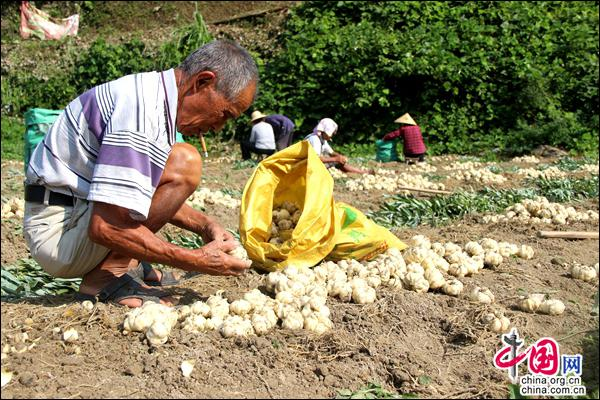
As the economic benefits of lilies became apparent, more and more villagers joined the growing ranks, giving rise to a large grower and a wealthy man. Three groups of villagers, o'henjie, began planting five acres in 2013 to 18 acres this year, increasing their annual income from $150,000 to $540,000, becoming the village's lilies。
“the common people grow lilies, like sweet potatoes.” huang yin, a village official, laughed. From outsiders to growers, hong sang-long and o'hungji depend on continuous practice, search for information and ask for advice on growing large families in the field. The village growers were also quickly equipped with lilies management techniques under their hands。
“the lilies industry is a high-input, high-output, high-risk industry. If cultivation techniques fail to keep pace, losses are incurred.” according to hong sang-long, lilies are unsustainably grown, usually rotated over three years in water fields and five years in drylands. Starting in 2016, lilies in ingong village began to expand to the outer villages. In 2017, the village's villagers planted 50 acres in the outer villages; in 2018, more than 100 acres were grown into three townships。
How can the increasing production of lilies translate into real income? To this end, the village has established the green hills poverty alleviation professional cooperative, which provides services to farmers for the sale of lilies through technical training, collection of market information, and joint subscriptions by contacts with customers。
“assisting the government, this year it's no problem to get out of poverty.” the establishment of the hong chamber of the poor in the sixth platoon last year applied for $50,000 in government interest-rate loans to develop four acres with the support of cooperatives, with a net income of 40,000 yuan this year。
“my husband works in the field, i work in the village and earn $100 a day.” a three-day series of lilies for the women left behind, ping loi, said. During the lilies, weeding and digging season, many poor families and women left behind earned “petty money” in front of their homes. At present, more than 20 poor families in the village are involved in lilies。
“our lilies are of excellent quality and have been in short supply. In the medium term, off-site vendors enter into purchase agreements with growers on their own initiative.” hong sang-ryon said that there were four of his employers who had contacted him this year to purchase lily. In an effort to scale up, the united villagers of hong sang-long leased more than 30 acres of land in the nearby village of toshida, and six acres have now been planted。
Today, the indian lilies industry has embarked on a path of expansion, scientificization and industrialization. From more than 10 acres in 2012 to more than 400 acres, they produce more than 12 million yuan, and small hundreds of people have become rich and poor。
♪ to the clouds, to shen liqin ♪